

More news on this day
Travelers across the United States faced fresh disruption today as Hartsfield-Jackson Atlanta International Airport recorded 186 delayed departures and 24 cancelled flights, sending schedule problems rippling through Spirit, Frontier, Delta and other carriers on routes linking Fort Lauderdale, Miami, Philadelphia and additional cities.
Get the latest news straight to your inbox!
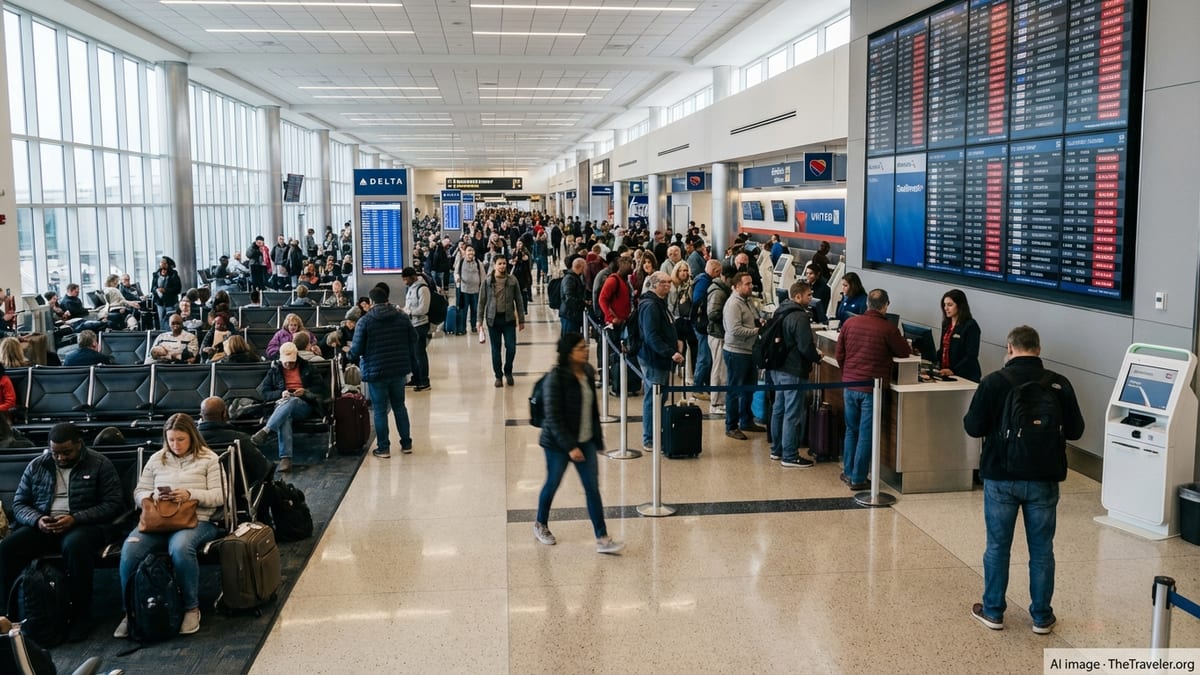
Atlanta Bottleneck Strains the Nation’s Busiest Hub
Publicly available flight-tracking data for April 7 indicates that operations at Hartsfield-Jackson Atlanta International Airport once again came under pressure, with a combined 210 disrupted departures and arrivals. The tally of 186 delays and 24 cancellations placed the world’s busiest passenger hub at the center of a wider network slowdown affecting large parts of the US system.
Industry coverage notes that the latest disruptions in Atlanta follow a turbulent spring period in which the airport has repeatedly struggled with weather shifts, congestion and tight aircraft and crew scheduling. Recent reports documenting elevated disruption levels at multiple US hubs show Atlanta featuring prominently, underscoring how quickly problems there can radiate outward through connecting flights.
Operational data from airline and airport reports highlights that carriers with large presences in Atlanta, particularly Delta Air Lines and several low cost competitors, remain especially sensitive to even moderate interruptions. When one bank of departures is pushed back or cancelled, subsequent rotations can accumulate minutes of delay that ultimately turn into missed connections and overnight misalignments for aircraft and crews.
Travel analysts point out that Atlanta’s role as a primary connecting gateway magnifies every schedule issue. Even a relatively contained number of cancellations can cause disproportionate disruption for travelers attempting to reach secondary destinations across the Southeast, Midwest and East Coast, many of whom rely on single daily frequencies or tightly timed connections.
Spirit, Frontier and Delta Among Carriers Most Affected
Publicly available airline performance summaries for the day indicate that Delta, Spirit and Frontier were among the carriers most affected by the Atlanta-centered disruption. Delta, which operates its largest hub at Hartsfield-Jackson, absorbed a notable share of the delays and several of the cancellations, in line with its dominant share of daily movements through the airport.
Low cost operators such as Spirit and Frontier, which run concentrated schedules linking Atlanta with Florida and East Coast leisure markets, also experienced notable operational strain. Reports from recent days show these carriers posting elevated delay counts and scattered cancellations on their networks, a pattern that can be exacerbated when a single hub event disrupts tightly utilized fleets.
Previous industry analyses of carrier punctuality suggest that ultra low cost airlines, which often deploy aircraft on dense point to point routes with rapid turnarounds, may have less flexibility to recover when delays accumulate. When an aircraft intended to fly several short segments passes through a congested hub like Atlanta and loses its schedule slot, each subsequent leg risks running late, increasing the likelihood of missed curfews or crew time limits.
For passengers, the result is a mix of extended gate holds, rolling departure estimates and, for some, last minute cancellations that leave limited alternative options on the same day. Public reports and travel advisories emphasize that travelers relying on the most heavily affected carriers should maintain flexible plans and monitor status updates closely when flying through Atlanta and other high volume hubs.
Disruptions Spread to Fort Lauderdale, Miami and Philadelphia
The knock on effects of Atlanta’s congestion were visible along key Southeast and East Coast corridors, particularly routes linking Hartsfield-Jackson with Fort Lauderdale, Miami and Philadelphia. Flight-tracking snapshots and airport information boards for April 7 show a string of delayed and cancelled services touching these cities, involving Spirit, Frontier, Delta and other operators.
Fort Lauderdale and Miami, both heavily served by low cost and leisure-oriented carriers, registered elevated delay counts as aircraft arriving late from Atlanta struggled to turn around on schedule. In some cases, afternoon and evening flights from Florida back to Georgia departed behind schedule after inbound aircraft landed later than planned or crews approached duty limits following earlier disruptions.
Philadelphia also featured in the disruption pattern, with publicly available flight-status tools listing delayed departures and isolated cancellations on services connecting the city to Atlanta and South Florida. Because many of these routes operate only a few times per day, a single cancellation or a lengthy delay can effectively erase same-day connectivity options for affected travelers.
Analysts note that this kind of cascading impact illustrates how apparently localized problems at a single hub can reshape the travel day for passengers hundreds or even thousands of miles away. When hub and spoke carriers cannot reposition aircraft quickly enough, secondary airports with fewer frequencies may see entire waves of service compressed, delayed or removed from the schedule.
Weather, Congestion and Holiday Demand Create a Volatile Mix
While investigations into specific flight delays and cancellations take time to filter into official statistics, recent coverage of US aviation performance points to a combination of spring weather patterns, sustained leisure demand and airspace congestion as key background factors. Storm systems and unsettled conditions moving across the Southeast have repeatedly triggered ground delay programs and reduced arrival rates at major hubs.
Atlanta’s geography makes it particularly susceptible to fast changing thunderstorms and low cloud ceilings that can temporarily constrain runway capacity. When paired with a high volume schedule and intensive use of regional jets feeding mainline connections, even short weather-related pauses can generate long queues of aircraft waiting for departure or arrival slots.
At the same time, the post holiday and early spring travel periods continue to draw strong passenger volumes, based on airport traffic reports and airline bookings data discussed in trade publications. Full or near full flights limit the ability of carriers to re-accommodate travelers quickly when disruptions occur, meaning more passengers face extended waits for open seats on later departures.
Congested airspace over the eastern half of the country further compounds the challenge. When multiple hubs, such as New York area airports, Orlando or Chicago, simultaneously experience weather or traffic management restrictions, the options for rerouting aircraft and flights around Atlanta narrow, leaving carriers with fewer tools to restore schedules before the end of the operating day.
What Travelers Can Expect in the Coming Days
Based on patterns observed in similar disruption events earlier this season, travel analysts expect some residual impact on US flight operations even after the day’s worst delays subside. Aircraft and crews that ended April 7 out of their normal positions are likely to influence the first wave of departures on April 8, especially from Atlanta and other heavily used hubs.
Passengers booked on Spirit, Frontier, Delta and other carriers that rely on Atlanta, Fort Lauderdale, Miami and Philadelphia connections may see minor schedule adjustments, equipment substitutions or isolated additional delays as airlines work to realign networks. Public advisories from travel organizations often recommend that travelers confirm flight status repeatedly in the 24 hours before departure during such periods, even if tickets were purchased long in advance.
Some industry commentators suggest that sustained episodes of disruption this spring could increase pressure on carriers and infrastructure managers to refine scheduling practices, invest in additional staffing and explore technology upgrades that improve situational awareness during fast moving weather events. However, they also note that the combination of high demand and constrained capacity means that large hubs such as Atlanta are likely to remain vulnerable to periodic bouts of volatility.
For now, travelers passing through Hartsfield-Jackson Atlanta International Airport and its key partner cities are being urged by consumer advocates and travel planners to allow extra time, build longer connection windows and prepare backup options where possible. As the busy spring and summer travel seasons approach, the latest wave of delays and cancellations serves as a reminder that a single day of turbulence at a major hub can reverberate across the national network.