

More news on this day
Severe storms sweeping across the Southeast have triggered more than 300 flight disruptions at Hartsfield-Jackson Atlanta International Airport, snarling operations at the world’s busiest hub and adding fresh turmoil to an already strained spring travel season.
Get the latest news straight to your inbox!
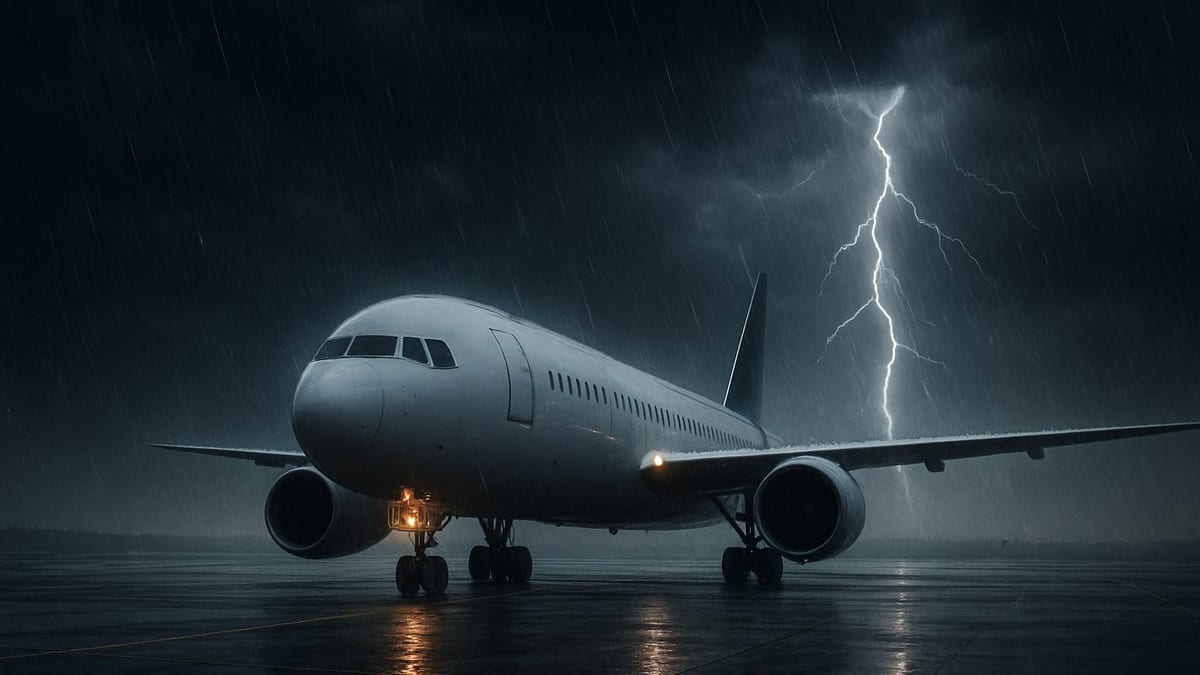
Storm Cells Stall Operations at World’s Busiest Hub
Published data from flight-tracking and aviation analytics platforms for early April indicate that Atlanta has recorded hundreds of weather-linked disruptions across several consecutive days, with delayed departures far outnumbering outright cancellations. Over the Easter period and into the following week, counts at Hartsfield-Jackson repeatedly exceeded 300 affected flights in a single day when delays and cancellations are combined, reflecting how quickly storm systems can overwhelm tightly timed airline schedules.
On April 7 and April 8, reports show a delay-heavy pattern at the airport, with well over 200 delays on each day and several dozen cancellations layered on top. Earlier in the holiday window, similar tallies were reported as thunderstorms, low clouds and lightning in the wider Atlanta region forced traffic flow restrictions and runway adjustments. This rolling disruption has produced a cumulative impact for travelers whose journeys connect through the Delta Air Lines megahub.
Weather-related bottlenecks in Atlanta rarely stay local because of the airport’s central role in domestic and international networks. When storms block arrivals or slow departures, aircraft and crews arriving from other cities miss their scheduled turns, feeding a cascade of secondary delays into the evening bank of flights. Publicly available data for the first week of April show exactly this pattern, with disruption peaks often appearing later in the day as networks struggled to recover.
Ripple Effects Across National Airline Networks
According to recent nationwide disruption tallies, the turbulence in Atlanta has been part of a broader spell of storm-driven issues across the eastern half of the United States. Over the past several days, travel-industry reports note thousands of delays and hundreds of cancellations across major hubs including New York, Chicago, Boston, Orlando and Houston, with Atlanta frequently listed among the hardest-hit airports for total affected flights.
In this environment, airlines using Atlanta as a primary or secondary hub have faced particular challenges. Published coverage highlights that carriers such as Delta, Southwest, American and several low-cost operators have all reported disrupted services into and out of Hartsfield-Jackson as storm bands drifted across the Southeast. Aircraft and crews scheduled to operate multi-leg rotations through Atlanta have been especially vulnerable when any one sector encounters lightning, heavy rain or air-traffic control flow limits.
Once a critical mass of flights is delayed, the knock-on effects can be felt as far away as the West Coast or international gateways in Europe and Latin America. Even routes that do not directly touch Atlanta can be affected when aircraft that were supposed to feed them are trapped on the ground in Georgia. Recent analytics snapshots show that as Atlanta disruption worsened, other airports saw rising delay counts for services operated with the same fleets.
Passengers Face Long Lines, Missed Connections and Overnight Stays
For passengers, the headline figure of 300-plus disrupted flights translates into hours of practical inconvenience. Reports from the past week describe long security and check-in lines, crowded gate areas and a spike in missed connections as inbound flights arrived too late for passengers to make their onward services. In some cases, travelers arriving in the late evening have been forced to accept hotel stays and rebooked flights the following morning when remaining departures were full or when crews approached duty-time limits.
Consumer-advocacy resources monitoring Hartsfield-Jackson over the Easter travel period noted that delayed flights significantly outpaced cancellations, underscoring that many services did eventually operate but often several hours behind schedule. That pattern offers some hope of eventual arrival but makes planning difficult for travelers with tight connections, ground transfers or time-sensitive events at their destination.
Guidance circulating from travel specialists in recent days has focused on practical steps for those caught up in the Atlanta disruptions. Passengers are being urged to monitor airline apps closely, check flight-tracking platforms for real-time status changes, and keep boarding passes and receipts in case of later claims related to meals, hotels or alternative transport. Although compensation rules vary and weather is often treated as outside airline control, many carriers provide meal vouchers, hotel discounts or complimentary rebooking during severe disruption.
Storm Season Exposes Structural Vulnerabilities
The latest round of severe-weather delays at Hartsfield-Jackson comes after a winter and early spring marked by repeated storms, from blizzards in the Midwest to strong thunderstorm systems across the South. Earlier in 2026, large-scale winter storms and ice events produced thousands of cancellations nationwide and significant operational strain at Atlanta and other hubs. Publicly available historical data on those episodes show that when the airport’s schedule is heavily disrupted for even one day, residual effects can linger for several days as airlines reposition aircraft and crews.
Aviation analysts have pointed to several structural factors that leave Atlanta particularly exposed when storm systems move through. The airport handles a very high volume of daily movements, much of it built around coordinated “banks” of arrivals and departures that enable short connection times. This structure is efficient in normal conditions but creates little slack if a thunderstorm line forces a temporary ground stop or if lightning closes ramp areas, preventing aircraft from being serviced.
Broader industry trends also play a role. Schedule optimization and high aircraft utilization mean airlines operate with fewer spare planes and leaner staffing than in previous decades. When weather blocks a major node such as Atlanta, the limited reserve capacity can be used up quickly, leading to rolling delays as airlines reshuffle aircraft and crew assignments. Recent reporting on the Atlanta disruptions has emphasized this combination of weather volatility and tight operating margins as a key reason why disruption numbers have remained elevated across multiple days.
What Travelers Can Do Ahead of Future Storms
With the spring and summer thunderstorm season just beginning in the Southeast, the disruption seen in Atlanta over the past week is likely to be a preview rather than an exception. Travel advisories and expert commentary suggest that passengers flying through Hartsfield-Jackson in the coming months should build extra time into their itineraries, especially for tight domestic connections or same-day international links.
Practical suggestions highlighted in recent coverage include choosing earlier flights in the day when possible, since morning departures are less likely to be affected by knock-on delays from prior storms. Travelers are also being encouraged to sign up for airline text alerts, monitor weather forecasts along their route and consider travel insurance policies that provide some protection against extended delays or overnight disruptions.
For those already en route when storms hit, remaining flexible can be critical. Same-day rebooking onto alternative routings that avoid known weather hotspots, asking airlines to reroute through less congested hubs, and proactively requesting assistance when long delays appear likely can all help reduce time spent in crowded concourses. As the latest Atlanta storm delays have shown, once more than 300 flights in a single hub are affected, options narrow quickly, making early action and good information some of the most valuable tools available to travelers.