

More news on this day
Severe spring storms sweeping across the southeastern United States have triggered widespread disruption at Hartsfield-Jackson Atlanta International Airport, with more than 300 flights delayed or canceled and knock-on effects spreading throughout the national air network.
Get the latest news straight to your inbox!
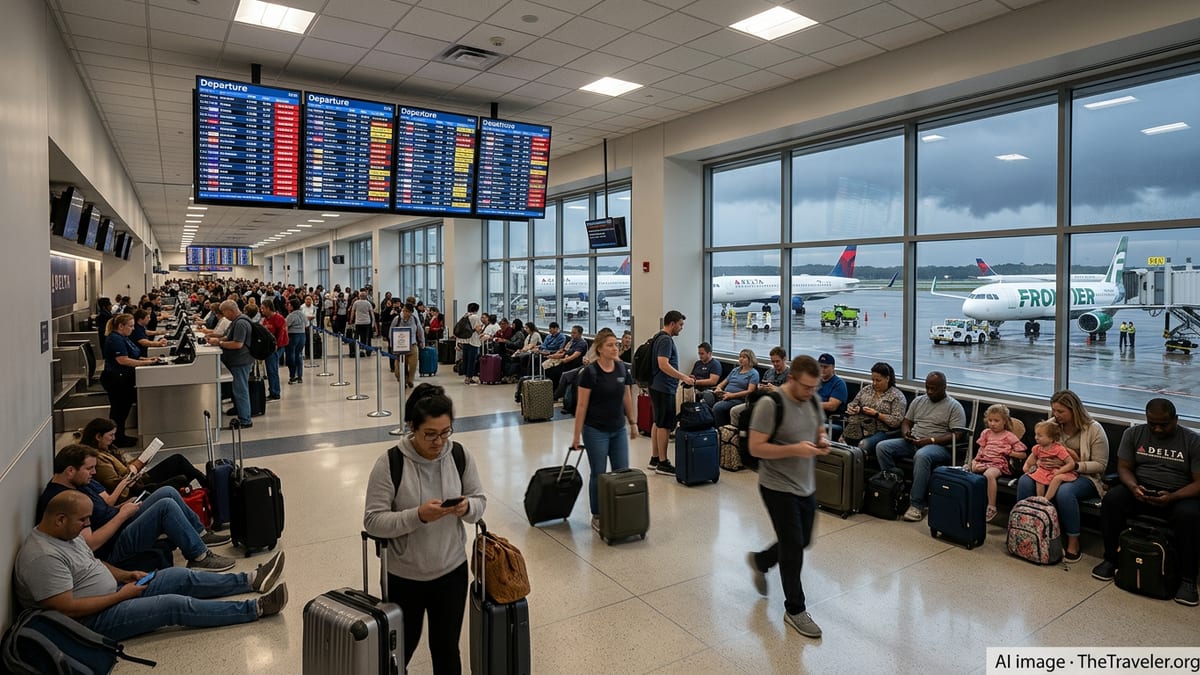
Storm System Slams Key Southeastern Hub
Weather disruptions over the Easter and early April travel period have again exposed the vulnerability of the U.S. air system when storms hit major hubs, with Atlanta’s Hartsfield-Jackson at the center of the latest turbulence. Flight-tracking data and airport status boards show that on April 5, at least 285 flights to and from Atlanta were delayed and 76 were canceled, pushing the number of affected flights well beyond the 300 mark in a single day.
The latest round of delays followed earlier March and April storm systems that swept across large parts of the country and repeatedly disrupted operations at major airports. National coverage indicates that Atlanta has appeared consistently among the top affected hubs in these events, alongside Chicago, New York, and Orlando, as strong winds, heavy rain, and thunderstorms have moved across key air corridors.
Publicly available information shows that these conditions created periods of reduced arrival and departure rates in the Atlanta area, as ground controllers and airline operations centers worked within tighter safety margins. Even short ground stops and flow restrictions resulted in significant queues of aircraft on the ground and in the air, given the volume of daily movements handled at Hartsfield-Jackson.
As a result, passengers arriving into Atlanta encountered crowded gate areas, rebooking lines, and rolling departure time changes that stretched into the evening, while outbound travelers from the Southeast faced last-minute cancellations and lengthy waits for open seats on later flights.
How More Than 300 Disrupted Flights Rippled Nationwide
Because Hartsfield-Jackson serves as the world’s busiest passenger airport and a primary connecting hub for domestic and international routes, disruption affecting several hundred flights in Atlanta can quickly cascade across the country. Airlines schedule tightly banked waves of arrivals and departures through the hub, so delays to one set of flights can strand aircraft and flight crews needed for subsequent segments.
Reports from flight-tracking platforms and passenger-rights sites indicate that the April storm-related problems in Atlanta coincided with weather and congestion at other large airports, amplifying the impact. Late inbound aircraft from Florida and other storm-affected regions arrived off schedule, which in turn delayed departures from Atlanta and reduced the options available for rebooking missed connections.
Airline networks rely on precise timing to maintain efficient use of aircraft and crews. When thunderstorms or high winds force traffic to slow or pause over a hub, the resulting backlog can take many hours to unwind. In this latest episode, Atlanta’s disruption was not an isolated event but part of a broader pattern of weather-related slowdowns across multiple hubs, leaving some travelers facing overnight stays and improvised routing to reach their destinations.
Even passengers not originally scheduled to connect through Atlanta felt the effects, as carriers adjusted flight timings and aircraft assignments across their national networks to absorb the storm-induced shock at one of their core nodes.
Passenger Experience as Chaos Unfolds at ATL
For travelers on the ground, the combination of storms, cancellations, and rolling delays translated into crowded concourses and long waits. Social media posts and traveler accounts referenced extended queues at check-in, security, and customer service desks, as people sought new itineraries or attempted to confirm whether their flights would depart at all.
Travelers reported missed connections after long holding patterns in the air, diversions to alternate airports as storms moved across the Atlanta region, and instances of aircraft waiting on taxiways while crews awaited updated departure slots. In some cases, passengers described multiple schedule changes within a single day, with departure times repeatedly pushed back as weather and air-traffic constraints evolved.
The timing of the latest disruption at the tail end of the Easter holiday period meant that many flights were already heavily booked. That limited the availability of spare seats for rebooking, prompting some travelers to accept routings with additional connections or to delay trips by a full day or more in order to secure confirmed reservations.
While Atlanta was not the only U.S. airport dealing with storm-related congestion, the scale of its role as a connecting hub magnified scenes of frustration and fatigue for passengers navigating the sprawling terminals with limited real-time certainty about their onward journeys.
Why Spring Storms Hit Atlanta Air Travel So Hard
Meteorologists and aviation analysts point out that spring is a particularly volatile period for air travel in the southeastern United States, where rapid shifts between warm, moist air and passing frontal systems can generate strong thunderstorms, low visibility, and wind shear. When those conditions occur near a large hub such as Atlanta, the effect on flight schedules can be immediate and far-reaching.
Published coverage of recent events underscores how even a few hours of intense storms can lead to hundreds of delays and cancellations in a region where many long-haul and regional routes converge. With airlines operating near pre-pandemic capacity levels and using highly optimized schedules, there is limited slack in the system to absorb sudden weather shocks without widespread knock-on effects.
Past incidents at Hartsfield-Jackson, including ground stops during severe summer thunderstorms and winter weather episodes that cut arrival capacity, illustrate how quickly conditions can deteriorate. When strong cells form close to the airport or along critical approach paths, air-traffic managers often must hold or divert arriving flights and meter departures, trading schedule reliability for safety margins.
These recurring patterns explain why Atlanta so frequently features in national tallies of weather-related disruptions, particularly during transitional seasons when severe storm outbreaks are more common.
What Stranded Travelers Can Do During Major Disruptions
Consumer advocates emphasize that travelers affected by major disruption in Atlanta or at other hubs should act quickly when storms begin to impact schedules. Public guidance from passenger-rights organizations recommends checking flight status frequently through airline apps and airport information screens, as changes can occur with little warning once traffic-management programs are in place.
When flights are canceled or significantly delayed, passengers are generally entitled to rebooking on later services operated by the same airline, subject to seat availability. In many storm situations, published advice suggests that contacting the airline digitally, through apps or messaging, can sometimes yield faster options than standing in long airport service lines, particularly when hundreds of flights are disrupted at once.
Recent federal discussions about strengthening passenger protections have also drawn attention to how airlines communicate during irregular operations, including expectations around meal vouchers, hotel stays, and refund eligibility when trips are significantly affected. While weather is often categorized as outside carrier control, publicly available information encourages travelers to document their disruption and review airline policies, which can vary from one carrier to another.
For those planning to travel through Atlanta in coming weeks, industry observers note that monitoring regional forecasts and building extra time into itineraries during storm-prone periods can reduce the risk of missed connections. Nevertheless, as the latest episode of storm chaos at Hartsfield-Jackson shows, even well-prepared passengers can face substantial disruption when severe weather intersects with the nation’s busiest air hub.