

More news on this day
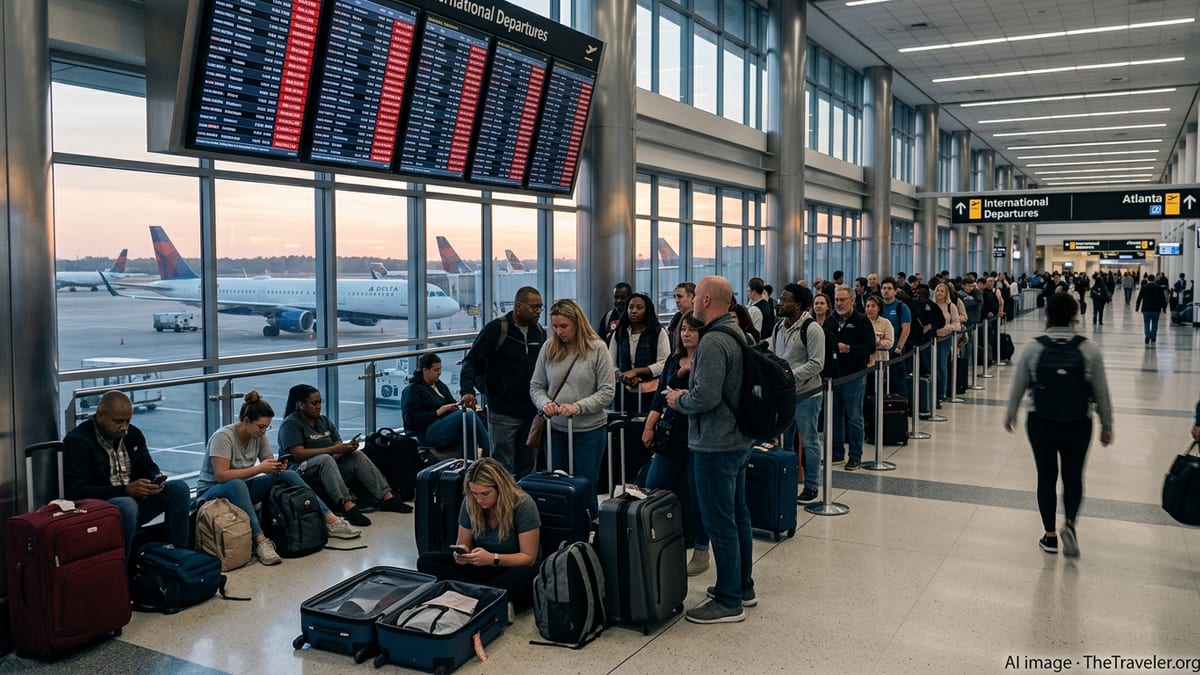
Global airspace closures triggered by the escalating conflict between the United States, Israel and Iran in the Middle East are now being felt in Atlanta, where Hartsfield-Jackson Atlanta International Airport is grappling with delayed departures, diverted routes and stranded travelers as airlines rework networks that once relied on Gulf mega-hubs.
Middle East Closures Reach the World’s Busiest Airport
While no flights depart directly from Atlanta to Gulf hubs such as Dubai, Doha or Abu Dhabi, Hartsfield-Jackson’s role as a major North American gateway means the shutdown of large swaths of Middle East airspace is reverberating through its terminals. Airlines are reconfiguring long-haul routings to avoid skies over Iran, Iraq, parts of the Gulf and the eastern Mediterranean, adding hours to journeys and compressing already tight global capacity.
The ripple effect began in earnest after key Gulf and Levant airports halted or sharply curtailed commercial operations at the start of March, forcing thousands of Europe–Asia and Africa–Asia flights to reroute or cancel. With many of those itineraries feeding into US-bound services, passengers in Atlanta are increasingly discovering that their onward legs via Europe or Asia no longer line up, or that the aircraft they were due to board never left its previous station.
Delta Air Lines and its European partners have been trimming frequencies and padding schedules to accommodate longer flight paths that loop south via the Arabian Sea, Egypt and Turkey or north over Central Asia. That has reduced flexibility for rebooking and contributed to rolling delays that show up on departure boards far from the conflict zone, including in Atlanta’s international concourses.
Stranded Passengers Confront a Patchwork of Reroutes
For travelers in Atlanta with tickets that originally relied on Middle East connections, the past week has turned into a lesson in aviation geopolitics. Some who planned to reach destinations such as India, Pakistan or East Africa via Dubai or Doha are now being told their best options run through European hubs like Paris, Amsterdam or Frankfurt, or across the Pacific via Seoul and Tokyo.
That reshuffling has created a clear divide between those who booked on large network carriers with multiple alliance partners and those on more fragmented itineraries. Passengers on joint tickets have, in many cases, been automatically rebooked through alternative hubs, albeit with significant extra travel time. Others have found themselves stuck in limbo, queuing for hours at transfer desks or on customer-service phone lines as limited seats on substitute routes quickly disappear.
Families returning to South Asia from Atlanta after school breaks and business travelers heading to technology and energy hubs in the Gulf have been among the hardest hit. Many booked months ago on attractive one-stop itineraries funneling through Dubai, Abu Dhabi or Doha; with those hubs effectively sidelined or operating only limited relief flights, entire journeys must now be rebuilt on the fly.
Operational Strain and Longer Flying Times
The disruption has also introduced fresh operational pressures for carriers serving Atlanta. Aircraft that previously used efficient great-circle routings across the Middle East are now flying longer, more convoluted paths that burn more fuel and require additional crew duty time. That, in turn, leaves fewer aircraft available for rotations in and out of Hartsfield-Jackson.
Industry analysts say that even routes that do not physically cross Middle East airspace are feeling the squeeze as airlines redeploy long-haul jets to cover their most profitable or strategically important sectors. US-bound flights from Europe and Asia have largely continued, but many are operating with revised timings, making traditional evening banks of transatlantic connections less predictable for Atlanta-origin passengers.
Compounding matters, aviation insurers and regulators have taken a cautious stance on overflights in proximity to the conflict zones, tightening operational envelopes and sometimes forcing last-minute changes to filed flight plans. Dispatch teams for global carriers, including those with large presences in Atlanta, are engaged in near-constant replanning as airspace notices evolve, which can translate into same-day departure delays or aircraft swaps for travelers on the ground.
What Atlanta Travelers Can Expect in the Coming Days
In the short term, passengers flying from Atlanta to destinations in Europe, Africa, South Asia and the Pacific can expect continued knock-on disruptions even if their printed itineraries do not mention the Middle East. Longer flight times on feeder routes, constrained aircraft availability and shifting connection windows are likely to remain features of the international schedule as long as key regional airspace corridors stay restricted.
Travel advisors and airline representatives at Hartsfield-Jackson are urging passengers with upcoming trips to monitor their bookings closely and to remain flexible about routings. Same-day rebookings that once might have secured a comparable departure time may now entail overnight stays in intermediate hubs or substantial detours, particularly for those bound for secondary cities in Asia and Africa that previously relied on Gulf connectivity.
For travelers already on the road, experts recommend building additional buffer into itineraries that link domestic US segments with transatlantic or transpacific legs. Even modest delays on inbound flights to Atlanta can now result in missed long-haul connections if replacement options are limited by crew and aircraft rotations stretched thin by the global rerouting effort.
Broader Implications for Global Air Travel Networks
The strain showing up in Atlanta highlights how deeply intertwined the world’s air corridors have become, and how a regional crisis can reverberate across continents. Over the past decade, Gulf super-connectors turned cities like Dubai and Doha into indispensable waypoints linking North America, Europe, Africa and Asia. Their partial standstill has exposed just how many itineraries, including those starting at US gateways such as Hartsfield-Jackson, depend on the smooth functioning of Middle East skies.
Airlines and airports are now engaged in an urgent recalibration of their networks, seeking to build resiliency into schedules that have long prioritized efficiency. That may mean more reliance on secondary hubs in Europe, Africa and Central Asia, as well as a renewed focus by US carriers on operating more nonstops to key long-haul markets to reduce exposure to chokepoints.
For the millions of passengers who pass through Atlanta each month, the current turmoil serves as a stark reminder that even the world’s busiest airport is not insulated from shocks that unfold thousands of miles away. As carriers work toward restoring a semblance of normalcy, travelers are likely to face a new reality in which flexibility, advance planning and close attention to fast-changing conditions are essential parts of any international journey.