

More news on this day
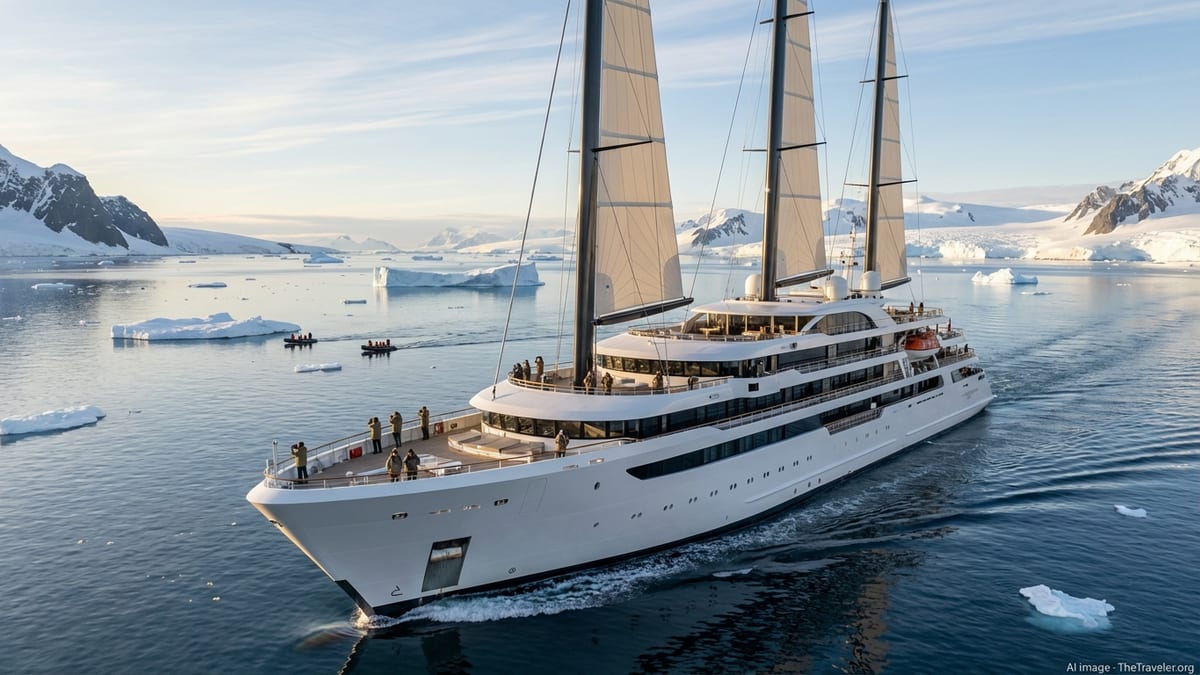
The next big disruption in high-end travel is not coming from the skies but from the sea. Atlas Ocean Voyages has confirmed it is building Atlas Adventurer, a new luxury expedition sailing yacht scheduled to enter service in 2028, combining the intimacy of a small expedition ship with the trappings of a contemporary superyacht.
With solid sails, hybrid propulsion and a design conceived for long-range, low-impact exploration, the vessel signals a shift in how affluent travelers will soon experience some of the planet’s most remote frontiers.
More News
- Caribbean Travel to U.S. Upended by New Visa Freezes and Expanded Bans
- Mexico Restores E-Visas for Brazilians, Paving the Way for Borderless Tourism
- Philippine Airlines Joins Regional Carriers Powering Southeast Asia’s Tourism Boom
A New Kind of Luxury Expedition Yacht
Atlas Adventurer is being positioned as the line’s first Atlas class vessel and a defining statement of intent in the increasingly competitive luxury expedition market. According to Atlas Ocean Voyages, the ship is conceived as an eco-friendly exploration yacht equipped with hybrid propulsion and three carbon masts carrying solid sails, aiming to reduce emissions while preserving the comfort standards expected in the upscale segment. The company describes the project as a natural evolution of its World class expedition fleet, which already operates with fewer than 200 guests per voyage.
Initial technical details underscore that this is not a mere stylistic refresh but a step-change in scale and capability. The Atlas Adventurer is planned at around 26,000 gross tons, with capacity for approximately 400 guests in 200 all-suite accommodations and a crew complement of about 274. That ratio places it firmly in boutique territory compared with mainstream cruise ships carrying several thousand passengers, while still allowing for multiple restaurants, a full spa and an expanded range of onboard and shoreside experiences.
Atlas executives describe the yacht as purpose-built for global exploration, with systems designed to support operations from the polar regions to equatorial archipelagos. Zero-speed stabilizers are set to enhance comfort both at anchor and underway, while the combination of advanced marine battery technology and sail-assist aims to enable quieter, more fuel-efficient navigation in sensitive environments.
Specifications Designed for the Edges of the Map
The emerging technical profile of Atlas Adventurer reads like a blueprint for long-range expedition cruising. The 690-foot vessel will carry an Ice Class 1B hull, corresponding to Polar Category C, allowing it to operate safely in areas with first-year ice in the Arctic and Antarctic shoulder seasons under appropriate conditions. While not an icebreaker, this rating supports the kind of itineraries Atlas already runs with its smaller expedition ships to Antarctica and the Arctic, but with added comfort and range.
Speed is another differentiator. The yacht’s design speed of about 16 knots and typical sailing speed of 14 knots will be powered by dual-fuel engines paired with electric-hybrid propulsion and a nine-megawatt marine battery system. Crucially, Atlas highlights that the vessel will be capable of sail-assisted and, in some circumstances, sail-priority operation, using its triple-masted carbon rig. Combined with electric propulsion, this is intended to create what the company calls acoustically discreet exploration, a benefit for wildlife-rich regions where underwater noise pollution is a growing concern.
Beyond the engineering, the layout is being crafted to sustain expedition logistics at scale. Plans include a marina platform with an ocean-level pool, a separate on-deck pool and whirlpools, and a fleet of Zodiacs for landings and coastal safaris. Private motor launches will handle shoreside transfers where local conditions allow, while generous open-deck observation areas are being emphasized for wildlife viewing, scenic cruising and sail handling operations that will become a visible part of the onboard theater.
Onboard Experience: Yacht Lifestyle Meets Expedition Rigor
The guest experience on Atlas Adventurer is being framed as an evolution of the line’s yacht-style expedition ethos. The ship will house 200 suites, with select configurations designed to interconnect for families and small groups, and some suites accommodating up to three or more guests. This is a subtle but important shift as expedition cruising broadens beyond traditional retired couples towards multigenerational and experience-focused travelers who want more flexible accommodation options without sacrificing space or privacy.
Atlas intends to translate its existing “always included” model to the new platform, which on current ships covers premium beverages, gratuities, Wi-Fi and many shore excursions. On Atlas Adventurer, that concept will be supported by seven distinct dining experiences, from elevated main restaurants to more casual or specialty venues that reflect regional flavors. The line has already experimented with intimate culinary concepts like its Explorer’s Table tasting menus in domed lounges on existing vessels, and industry observers expect similar chef-driven, small-scale venues to be central to the new yacht’s identity.
The wellness and social spaces will mirror top-tier ocean and river ships. Plans include a dedicated spa and fitness center, observation lounges configured for enrichment talks and scenic sailing, and bars and performance areas for low-key entertainment between landings. With a guest count capped at roughly 400, the goal is to maintain a residential feel, where staff can quickly learn preferences and expedition leaders remain highly accessible throughout the voyage.
From Polar Frontiers to Around-the-World Odysseys
While Atlas Ocean Voyages has built its brand largely around Polar Expeditions by Atlas, particularly to Antarctica aboard its World Voyager, World Navigator and World Traveller yachts, the Atlas Adventurer is being devised for a far broader mission profile. The line is signaling “extraordinary expeditions” ranging from 22 to as many as 128 nights, suggesting a mix of grand itineraries and sectional segments.
Given the vessel’s Polar Category C hull and sail-assisted configuration, itineraries are likely to braid together the company’s established polar seasons with warmer-water regions. Long-haul voyages might, for example, link Antarctica with South Georgia and the Falkland Islands before continuing north via the Atlantic islands, or connect Arctic archipelagos such as Svalbard and Greenland with Northern Europe and the Mediterranean over several weeks. Atlas has already diversified its deployment with Arctic expeditions, including shorter six and seven night sailings in 2026 that pair new ports in Greenland, Iceland and northern Norway with pre-cruise hotel stays in gateway cities.
The ambition for extended voyages reflects a broader ultra-luxury trend. Across the sector, brands are assembling multi-month grand journeys, effectively slow-motion world cruises tailored to guests who want deep, expert-led immersion while still enjoying high-end comforts. Atlas Adventurer’s design capacity and expedition toolkit, from Zodiacs and marina platforms to advanced navigation and hotel systems, appear calibrated for such long-duration programs.
Competitive Landscape: Luxury Expedition Arms Race
The announcement of Atlas Adventurer lands in a market that has seen rapid growth in small, ice-strengthened ships aimed at the top end of the cruise spectrum. In recent years, established names and new entrants alike have launched high-spec expedition vessels with gourmet dining, all-suite accommodations and spa facilities once reserved for larger ocean liners. At the same time, luxury lines are ratcheting up their offerings in conventional cruising with record-setting suites, residential concepts and increasingly elaborate onboard amenities.
From ultra-luxury ships planning multi-level suites rivaling top hotel penthouses to residential projects converting former cruise ships into private floating communities, the spectrum of sea-based luxury is widening at pace. Against that backdrop, Atlas Adventurer’s hybrid sailing and expedition profile aims to carve out a distinct niche, one that merges the intimacy and authenticity of expedition travel with the cachet and romance of a contemporary sailing yacht.
Atlas Ocean Voyages is also leaning into an adults-focused, experience-led positioning in line with broader currents in the industry. While Atlas has not formally declared an adults-only policy, its small-ship, enrichment-heavy model naturally attracts a demographic seeking quiet sophistication, curated adventures and high crew-to-guest ratios. The arrival of a flagship sailing yacht with fewer than 500 people on board at full complement reinforces that emphasis on space, privacy and personalization.
Sustainability and the Future of Remote Exploration
Atlas Adventurer’s technical concept arrives amid growing regulatory and consumer pressure to reduce the environmental footprint of ocean travel, especially in fragile polar and island ecosystems. Hybrid propulsion, extensive battery capacity and sail-assist technology are all part of a broader maritime pivot toward cleaner, quieter ships. For expedition cruising in particular, the ability to operate with lower emissions and reduced underwater noise can be a commercial differentiator as well as a regulatory necessity.
The yacht’s Ice Class 1B hull and relatively modest size compared with conventional cruise ships allow it to access regions that are difficult or impossible for larger vessels. This mirrors Atlas Ocean Voyages’ current approach in destinations such as Svalbard and Greenland, where stricter regulations on ship size and emissions are reshaping itineraries across the industry. By investing in a platform designed from the outset around environmental performance and expedition functionality, the company is signaling that future growth will be tied to responsible access rather than mass deployment.
At the same time, the decision to incorporate solid sails and advanced hybrid systems taps into a revived romanticism about wind-powered travel, updated with modern materials and control systems. For guests, that promises not only quieter, smoother passages, but also a visual and emotional connection to the act of voyaging that can be more powerful than simply sailing from port to port under conventional power.
What This Means for High-End Travelers
For affluent travelers who have already ticked off bucket-list destinations via private jets and villa stays, the rise of high-luxury expedition ships like Atlas Adventurer represents an evolution from place collecting to experience layering. Instead of merely claiming to have “been” to Antarctica or the Arctic, guests increasingly seek narratives shaped by scientific briefings, wildlife encounters, cultural exchanges and the sense of traveling aboard a ship designed as a tool for exploration.
On board a vessel of Atlas Adventurer’s scale, the ratio of guest to expedition staff typically allows for smaller, more nimble landing groups and a more flexible daily program that can adapt to weather, sea conditions and wildlife sightings. That agility, combined with the yacht’s comfort levels, makes it conceivable to spend weeks or months aboard without the sense of compromise that earlier generations of expedition ships often required.
The project also underscores how lines are betting that future luxury consumers will be willing to invest substantial time, not just money, into a single journey. With potential itineraries stretching to 128 nights, Atlas Adventurer is as much a temporary home as a holiday vessel, reflecting a shift in high-end travel patterns toward seasonal migration and extended stays in curated, all-inclusive environments.
FAQ
Q1. What is Atlas Adventurer and who is building it
Atlas Adventurer is a new luxury expedition sailing yacht being developed by Atlas Ocean Voyages. It is the company’s first Atlas class vessel, conceived to blend small-ship expedition capabilities with the amenities of a contemporary luxury yacht.
Q2. When is Atlas Adventurer expected to launch
The yacht is currently slated to enter service in 2028, following the continued rollout of Atlas Ocean Voyages’ polar and Arctic seasons on its existing World class expedition fleet.
Q3. How many guests will Atlas Adventurer carry
The ship is designed to accommodate around 400 guests in approximately 200 suites, supported by a crew of about 274. This relatively low guest count for a ship its size allows for generous space per passenger and a high level of personalized service.
Q4. What makes Atlas Adventurer different from other expedition ships
Atlas Adventurer combines an Ice Class 1B hull and full expedition toolkit with a hybrid propulsion system, a nine megawatt marine battery installation and three carbon masts with solid sails. That mix is intended to support quieter, lower-emission operations while still delivering a full suite of luxury amenities.
Q5. Where will Atlas Adventurer sail
Atlas Ocean Voyages has indicated that Atlas Adventurer will operate globally, including polar regions and warmer-water destinations. The company is planning “extraordinary expeditions” ranging from about 22 to 128 nights, likely tying together Antarctica, the Arctic and a range of remote coastal and island regions.
Q6. What kinds of experiences will guests have on board
Guests can expect a yacht-style environment with multiple dining venues, a spa and fitness center, observation lounges and an ocean-level marina platform, combined with expedition activities such as Zodiac safaris, guided landings, wildlife watching and culturally focused shore excursions.
Q7. How is sustainability being addressed in the design
The vessel will feature dual-fuel engines, electric-hybrid propulsion, substantial battery capacity and sail-assist via three carbon masts with solid sails. Together with its ice-strengthened hull and relatively compact size, these features are geared toward reducing emissions and underwater noise while enabling access to sensitive environments.
Q8. Will Atlas Adventurer be adults only
Atlas Ocean Voyages has not publicly announced an adults-only policy for Atlas Adventurer. However, the brand’s small-ship, enrichment-focused style and expedition programming naturally draw an adult, experience-driven audience, and families considering a voyage should review age guidelines on a sailing-by-sailing basis as launch approaches.
Q9. How does Atlas Adventurer fit into Atlas Ocean Voyages’ wider fleet
The yacht will join the existing World Voyager, World Navigator and World Traveller expedition ships, which already operate in regions such as Antarctica and the Arctic. Atlas Adventurer will sit at the top of the range as a flagship sailing yacht with higher capacity and extended-range itineraries.
Q10. When can travelers book a voyage on Atlas Adventurer
Atlas Ocean Voyages is currently promoting Atlas Adventurer as “arriving 2028” and inviting prospective guests to register for updates. Formal deployment details and booking windows are expected to be released closer to the launch date as construction milestones are reached and itineraries are finalized.