

More news on this day
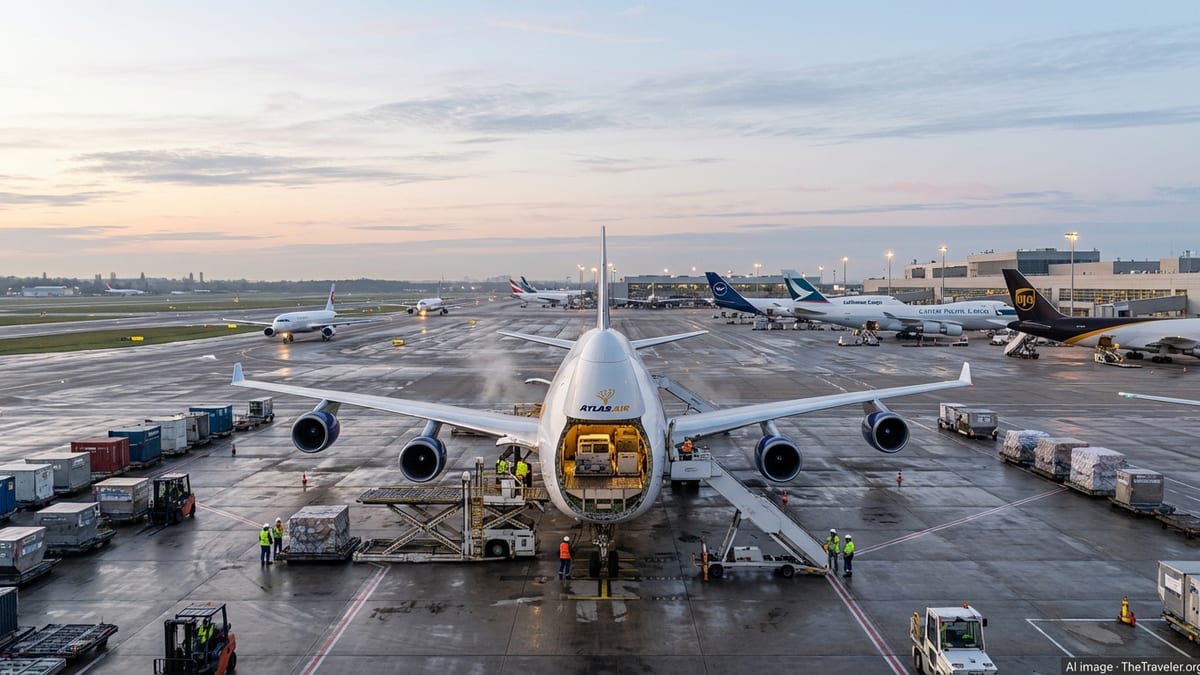
Atlas Air’s latest expansion of its Boeing 747 freighter fleet is reinforcing the status of the nose-loading jumbo as the workhorse of global logistics, keeping the iconic front-hinged door at the centre of long-haul cargo and the tourism economies that depend on fast, reliable air freight.
A Renewed Bet on the Jumbo Freighter
When Atlas Air Worldwide disclosed that it would add three more Boeing 747-8 freighters to its fleet under long-term lease agreements, industry analysts saw more than just another capacity play. The move signalled a fresh vote of confidence in a four‑engine aircraft that most passenger airlines have already consigned to history, but which cargo operators still regard as indispensable for heavy and outsized freight.
Atlas, already the world’s largest operator of 747 freighters, continues to double down on the type even as new‑generation freighters like Boeing’s 777‑8F and Airbus’s A350F face delays to late this decade. With global supply chains still recalibrating after the pandemic and geopolitical shocks, the carrier is positioning its 747‑400F and 747‑8F fleets to cover looming gaps in widebody cargo capacity.
The strategy places Atlas alongside Air China Cargo, Lufthansa Cargo, Cargolux, Korean Air Cargo and Emirates SkyCargo, all of which continue to fly 747 freighters on trunk routes linking Asia, the Middle East, Europe and North America. While cabin crews and holidaymakers increasingly board twin‑engine jets, the distinctive hump‑backed profile of the 747 remains a common sight at cargo ramps worldwide.
For shippers and tourism destinations alike, Atlas Air’s decision underscores a simple reality: until a new generation of freighters can match the 747’s volume, range and unique loading options, the jumbo’s nose door will continue to shape trade lanes and passenger flows.
Why the Nose Door Still Matters
The defining feature that keeps the 747 freighter in a class of its own is its full‑width, swing‑up nose door. Unlike standard side cargo doors, which limit the dimensions and orientation of pallets and containers, the nose opening allows cargo to be driven or rolled straight into the main deck on motorised rollers. That capability unlocks shipments that would otherwise be impossible or prohibitively expensive to move by air.
Industrial turbines, oil and gas components, large vehicles, long sections of pipe, wind‑farm equipment and high‑value factory tooling are among the items that regularly move through the 747’s open nose. Operators such as Cargolux and Atlas Air use specialised cranes, high‑loaders and custom-built pallets to exploit the unobstructed access to the 747’s full fuselage length. Cargo pieces 20 metres or more in length and more than three metres high can often be accommodated, making the aircraft a go‑to choice for outsized logistics.
The technical solution is relatively straightforward but robust. An electric drive system in the nose actuates threaded shafts connected to hinges beneath the cockpit, raising the entire forward fuselage upward. Once closed, multiple mechanical latches and hooks lock the structure, with cockpit and deck indications ensuring that every latch is engaged before departure. The system is entirely independent of the engines, removing the risk of inadvertent activation in flight.
Crucially, no other modern production freighter offers an equivalent feature. Converted passenger jets rely on side doors, and even purpose-built widebody freighters from Boeing and Airbus are designed without nose loading. For logistics planners, that makes the 747 freighter not only a capacity provider but a unique enabler of missions that require bespoke handling and routing.
Atlas Air Joins a Select Global Club
Air China Cargo, Lufthansa Cargo, Cargolux, Korean Air and Emirates SkyCargo represent a geographically diverse group of carriers that have kept the 747 at the heart of their long‑haul freight strategies. Atlas Air’s continued investment in the type cements its place within this club of nose‑door specialists whose networks span many of the world’s fastest‑growing trade corridors.
From hubs in Luxembourg, Frankfurt, Seoul, Zhengzhou, Shanghai, Dubai and Anchorage, these operators map out dense schedules that connect factory zones in Asia with consumer markets in Europe and North America. Atlas supplements these flows with charter and ACMI operations for other airlines and logistics companies, often deploying its 747s on seasonal or event-driven missions that require surge capacity and flexible routing.
The common thread is the ability to offer solutions that smaller narrowbody freighters or even large twin‑engine widebodies cannot. When a power plant in an island nation fails, or a mining project in a remote region needs urgent replacement parts, the 747 nose‑loader often becomes the only realistic way to transport heavy equipment quickly enough to avoid prolonged shutdowns.
As Airbus and Boeing grapple with supply chain and certification delays for new freighters, the collective fleets of these 747 operators effectively form a bridge between the current era and the next generation of cargo aircraft. Atlas Air’s choice to expand its 747‑8F fleet, rather than solely shifting capacity into newer twins, reflects a calculation that the nose‑door niche will remain lucrative for years.
From Cargo Hold to Hotel Lobby: How Freight Drives Tourism
At first glance, the link between a steel nose door in an out‑of‑the‑way cargo apron and a beachfront resort might not be obvious. Yet the economics of global tourism are tightly intertwined with the performance and flexibility of the air freight sector, particularly on long‑haul routes where passenger demand fluctuates with seasons while cargo demand is more constant.
High‑value, time‑sensitive goods carried in 747 freighters underpin critical supply chains for the hospitality industry. Luxury hotels, cruise operators, event organisers and even adventure tour companies rely on air freight to deliver everything from kitchen equipment and furniture to audiovisual systems and exhibition stands. When a destination gears up for a major event or opens a new resort, many of the fixtures that guests take for granted arrive in the bellies and on the decks of freighter aircraft.
Express e‑commerce shipments transported aboard 747s also influence where people choose to travel. As travellers increasingly expect the same brands, electronics and fashion in far‑flung cities that they enjoy at home, the availability of fast cross‑border logistics becomes part of a destination’s appeal. Cities that serve as regional air cargo hubs are often better stocked with international products, supporting retail precincts that double as attractions for tourists.
There is also a network effect. Extensive cargo connectivity often justifies the development of additional airport infrastructure, which in turn supports more passenger services. When a 747 freighter route makes a secondary city in Southeast Asia or Central Europe commercially viable for large logistics companies, passenger airlines can piggyback on that investment, opening non‑stop flights that bring in leisure visitors. In this way, Atlas Air’s and its peers’ jumbo fleets quietly expand the map for global tourism.
Balancing Old Airframes with New Environmental Pressures
The persistence of the 747 in cargo fleets comes at a time when aviation faces intensifying scrutiny over emissions and noise. Four‑engine aircraft typically burn more fuel than comparable twins, and many passenger airlines retired their 747s during or just after the pandemic in search of lower operating costs and a smaller carbon footprint.
Cargo operators argue that the calculus is more complex. The 747‑8F in particular offers a step change in efficiency over older 747‑400 variants, while still providing unmatched volume and nose‑door capability. For missions that would otherwise require multiple flights on smaller aircraft or lengthy diversion to seaports and overland trucking, a direct 747 operation can actually reduce overall emissions per tonne of freight.
At the same time, the industry recognises that many airframes are approaching traditional retirement thresholds. Estimates from freighter fleet forecasts suggest that more than one hundred large widebody freighters worldwide are already older than twenty‑five years, raising questions about maintenance cost, reliability and compliance with future noise and emissions rules. For Atlas Air and its fellow operators, carefully managing heavy checks, engine overhauls and structural upgrades is critical to keeping 747s economically viable.
Several carriers are investing in more sustainable practices around their jumbo fleets, including increased use of sustainable aviation fuel where available and the optimisation of flight planning to minimise fuel burn. As regulators and customers set more ambitious climate targets, the operating window for older 747s will narrow, but the most modern examples and the best‑maintained fleets are expected to retain a role in hard‑to‑serve cargo niches.
Capacity Crunches and the Case for Keeping the Jumbo Flying
Forecasts from manufacturers and industry analysts point to a near‑doubling of global air cargo traffic by the early 2040s, with particular strength in emerging markets across Asia, Africa and Latin America. While part of that growth will be absorbed by converted narrowbody and medium widebody freighters serving regional routes, demand for long‑range, large‑capacity aircraft is set to expand significantly.
Yet the pipeline of new production freighters is thin in the short term. Boeing and Airbus have both faced supply chain constraints, labour shortages and certification hurdles that have pushed back entry‑into‑service dates for their latest cargo models. With older jets already flying at high utilisation rates during peak seasons, there is limited slack in the system to accommodate further surges in demand or unexpected disruptions.
For Atlas Air and its 747‑operating peers, this imbalance creates both risk and opportunity. On one hand, they must manage higher maintenance costs and potential operational interruptions as aircraft age. On the other, constrained capacity supports stronger yields on long‑haul routes, especially for charters and specialised shipments that command premium rates. The nose‑door 747 sits squarely in this sweet spot, enabling missions that competitors cannot easily replicate.
Industry executives increasingly speak of the current decade as a transition period, during which veteran jumbos will coexist with a slowly growing fleet of new‑technology freighters. The decisions taken now on whether to retire, convert, or upgrade existing 747s will shape cargo capacity, trade resilience and, indirectly, tourism flows for many years.
Tourism Hubs Built on Cargo Connectivity
Some of the world’s best‑known tourism hubs have also become major cargo gateways, and the 747 freighter is deeply embedded in that story. Dubai, Hong Kong, Anchorage, Miami, Frankfurt and Seoul are all examples of airports where cargo volumes and passenger traffic reinforce one another, creating aviation ecosystems that attract airlines, travel companies and investors.
In Dubai, Emirates SkyCargo’s historical use of 747 freighters alongside its twin‑engine widebodies helped establish the city as a logistics and travel crossroads linking Europe, Asia and Africa. The constant movement of machinery, pharmaceuticals, fashion and perishables into and out of the emirate has supported a diversified economy and a vast hospitality sector, from luxury resorts to budget hotels catering to transit passengers and city‑break tourists.
Cargolux’s operations in Luxembourg, and Atlas Air’s across multiple US and Asian hubs, play a similar role on a smaller scale. By ensuring that critical goods can reach landlocked or peripheral markets efficiently, they encourage investment in manufacturing, technology and services, which in turn generates business travel and, eventually, leisure tourism. Conference centres, cultural attractions and sporting facilities often follow, backed by the confidence that hardware, staging and supplies can be flown in when needed.
Even in destinations better known for beaches or heritage sites than warehouses, cargo access quietly shapes development. Island nations that depend on tourism, for example, rely on freighters for urgent shipments of infrastructure components, medical supplies and hotel equipment. When a new resort opens or a major festival debuts, a 747 nose‑loader may have played a backstage role long before the first guests arrive.
The Future of the Nose Door in a Twin‑Engine World
As aviation technology advances and economics continue to favour fuel‑efficient twin‑engine jets, the 747’s dominance can no longer be taken for granted. The production line is closed, and no manufacturer is currently proposing a new nose‑loading freighter. In that sense, the existing fleet represents a finite resource, one that operators must extract maximum value from before regulatory or cost pressures force retirement.
However, the nose door’s unique capabilities have proven stubbornly hard to replace. For certain sectors, such as energy, aerospace, heavy engineering and humanitarian logistics, there is still no practical alternative to a full‑width forward opening combined with intercontinental range. Creative workarounds using smaller aircraft and multimodal routing can sometimes bridge the gap, but often at higher cost, longer transit times and greater risk.
Atlas Air’s continued commitment to its 747 freighters, alongside the fleets of Air China Cargo, Lufthansa Cargo, Cargolux, Korean Air Cargo and Emirates SkyCargo, suggests that the market for nose‑door missions will remain healthy for at least the remainder of this decade. As long as those operators can balance environmental expectations, maintenance economics and safety oversight, the iconic hinged nose is likely to keep swinging upward at cargo ramps from Shanghai to Chicago.
For travellers watching from terminal windows, the sight may simply be a reminder of aviation’s golden age. For the communities and tourism economies on the receiving end of those flights, it is a vital link in the chain that keeps hotels stocked, attractions built and journeys possible.