

More news on this day
Greek ferry operator Attica Group is accelerating a sweeping fleet renewal program that combines six vessel disposals with three targeted acquisitions, aiming to improve energy performance, cut emissions and modernize coastal shipping services across the Aegean and Adriatic.
Get the latest news straight to your inbox!
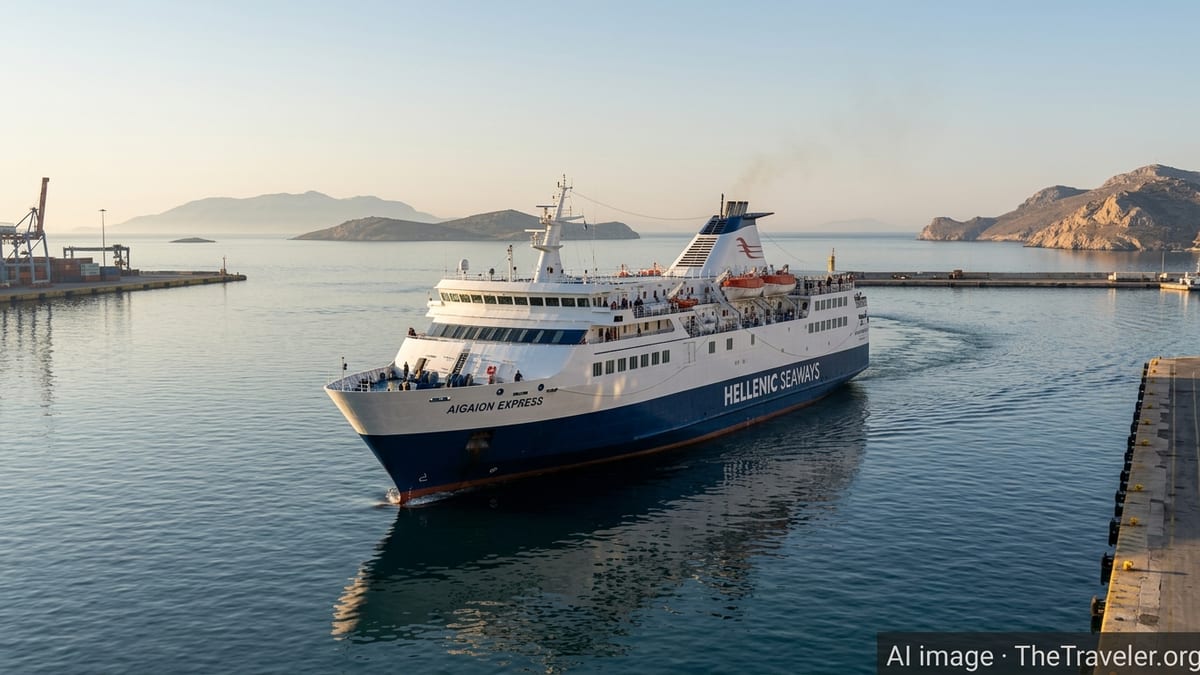
Strategic Vessel Sales Target Older, Less Efficient Ships
Publicly available information shows that Attica Group has recently stepped up the withdrawal of older tonnage from its fleet, focusing on conventional Ro-Pax ferries with higher fuel consumption and maintenance needs. The group has completed six vessel sales, including aging ferries transferred for certified recycling, in line with European ship recycling regulations.
Reports indicate that landmark disposals such as the ferries Kriti I and Kriti II are emblematic of this shift. These vessels, built in the late 1970s and integrated into the network through the acquisition of ANEK Lines, had long served routes between Crete and mainland Greece. Their removal reduces the share of energy-intensive ships in the coastal fleet and frees capital and operational capacity for newer, more efficient vessels.
Attica’s latest financial disclosures highlight that the sales are not limited to one-off retirements but form part of a broader, multi-year effort to reshape route economics. By exiting older hulls, the group is lowering average fleet age, trimming fuel and maintenance costs, and preparing its network for stricter climate and efficiency rules under evolving European maritime policy.
Industry coverage suggests that the company has also completed the sale of smaller high-speed ships and legacy units that no longer match demand patterns or emissions expectations on domestic routes. Together, these six disposals mark a decisive turn toward a leaner, more environmentally aligned fleet profile.
Three New Acquisitions Support Fleet Renewal and Capacity Needs
To balance the withdrawals and sustain coverage on dense island networks, Attica Group has complemented its divestments with three strategic vessel acquisitions. According to financial statements and sector reporting, the group has recently brought into full ownership or added to its fleet modern Ro-Pax and high-speed units designed to offer improved fuel efficiency and passenger comfort.
Two of the additions involve Ro-Pax ferries previously under long-term bareboat charter, now acquired outright and integrated as owned tonnage. The vessels Kissamos and Kydon, built in the early 1990s but significantly upgraded, offer substantial passenger and vehicle capacity on key domestic routes. Their purchase consolidates control over assets that already operate within the network, providing stability for long-term planning and future environmental retrofits.
A third acquisition focuses on a high-speed passenger and vehicle vessel suited to shorter Aegean routes that demand frequency and reliability. Publicly available information shows that this ship features more efficient propulsion and hull design compared with earlier high-speed craft, helping to moderate fuel use and emissions at higher service speeds.
These three acquisitions are aligned with Attica’s stated objective of renewing capacity while maintaining or improving service levels. By selectively adding ships that outperform the retired units on both efficiency and passenger experience, the group is reshaping its portfolio around vessels that can operate competitively under rising energy and environmental pressures.
Energy Efficiency and Emissions Reduction at the Core
The balance of six vessel sales and three acquisitions forms part of a wider transition strategy that places energy efficiency at the center of Attica Group’s investment decisions. Company presentations and specialized maritime coverage describe a program that prioritizes optimized hull forms, modern engines, and hybrid-ready systems, backed by digital tools for route and fuel management.
In parallel with changes to the existing fleet, Attica has committed to new-generation Ro-Pax ferries based on the E-Flexer design. These larger units, under construction at Asian shipyards and secured through long-term charter agreements with purchase options, are designed to operate on multiple fuel types and incorporate advanced energy-saving technologies. They are expected to replace several older vessels while maintaining or increasing freight and passenger capacity, further reducing emissions per transported unit.
Attica’s latest disclosures highlight additional technical measures already being deployed across the fleet. These include propeller and rudder upgrades, advanced hull coatings to reduce drag, energy management systems, and power optimization projects such as the installation of solar panels for auxiliary electricity needs. Collectively, these steps aim to cut greenhouse gas emissions, improve Energy Efficiency Existing Ship Index performance and align with forthcoming FuelEU Maritime requirements.
According to published coverage of the group’s financial results, these initiatives have already lowered the average age of the fleet and improved the operating profile of several key routes. While short-term capital expenditure has increased, the company is positioning itself to benefit from lower unit fuel costs and reduced exposure to future environmental compliance charges.
Modernized Coastal Shipping for Greek Islands and International Routes
The modernization of Attica Group’s fleet has implications that extend beyond corporate efficiency metrics. As a dominant player in Greek coastal shipping, operating under brands including Blue Star Ferries, Superfast Ferries and Hellenic Seaways, the company’s choices directly influence the environmental footprint of passenger and freight transport to and from the islands.
More efficient vessels can reduce emissions and fuel consumption on heavily trafficked corridors linking Piraeus with the Cyclades, Dodecanese, Crete, the North Aegean islands and the Saronic Gulf. At the same time, upgraded Ro-Pax ferries serving the Greece–Italy routes help lower the carbon intensity of international connections that are vital for tourism and trade. Reduced fuel usage also offers a partial buffer against price volatility, which in turn can support more stable ticket pricing for residents and visitors.
Analysts note that the integration of newer ships is accompanied by broader operational changes, including route optimization, digital booking enhancements and improved on-board services. These elements, combined with upgraded hardware, are intended to make ferry travel more attractive compared with alternative modes, supporting the competitiveness of coastal shipping in a market where travelers increasingly factor environmental performance into transport choices.
By aligning its fleet renewal with European climate objectives and maritime standards, Attica Group is also signaling a longer-term shift in the Greek ferry market. The company’s investment program is being closely watched by other operators, port authorities and shipyards, as it may serve as a template for how coastal shipping can evolve toward lower emissions without compromising connectivity across archipelagic regions.
Investment Outlook and Sustainability Commitments
Attica Group’s combination of vessel disposals and acquisitions represents only one component of a broader investment plan that encompasses digitalization, hospitality projects and port-side infrastructure. However, fleet renewal remains the largest element in financial terms and the clearest indicator of its sustainability trajectory in the coming years.
Recent results presentations underline that the group is maintaining a strong focus on liquidity and leverage while advancing major shipbuilding commitments. The sale of older vessels generates cash and reduces technical risk, while the gradual introduction of newbuilds distributes capital requirements over several years. This staged approach is designed to allow the company to respond to shifts in demand and regulatory developments without overextending its balance sheet.
Environmental transition objectives are embedded across this investment framework. Publicly available information describes a roadmap that includes participation in European research programs on low- and zero-carbon fuels, pilot projects for alternative bunkering in key ports and continued cooperation with classification societies on energy-saving retrofits. The six sales and three acquisitions now visible in the fleet are early, concrete expressions of that roadmap.
For Greek coastal shipping as a whole, Attica Group’s strategy signals a decisive move toward more sustainable operations in a sector long reliant on older hardware. As new vessels enter service and additional legacy ships are retired, travelers and island communities are likely to see tangible changes in the form of quieter, more comfortable and more energy-efficient ferries connecting the Aegean and beyond.