

More news on this day
Auric Air has introduced a new Cessna Grand Caravan, registered 5H-ABA, with executive-style seating on its Tanzanian network, underscoring how East Africa’s safari heartlands are rapidly embracing higher-end, comfort-focused air travel for international tourists.
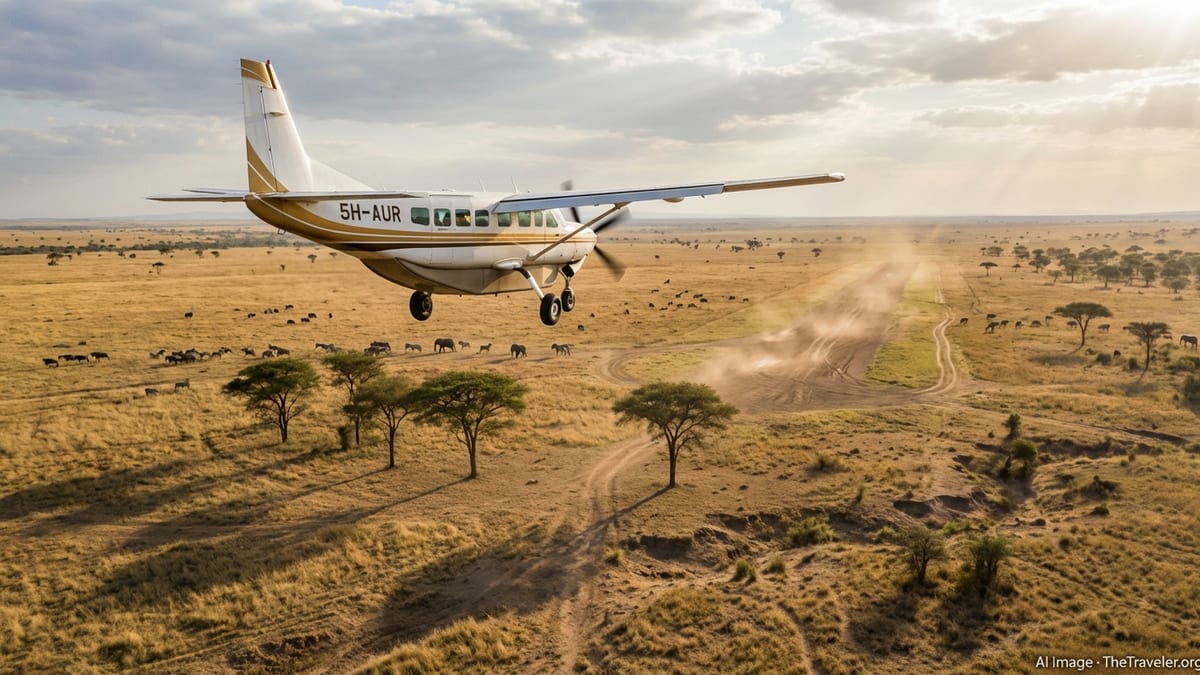
Executive Comfort Arrives in the Bush
The privately owned Tanzanian carrier confirmed this week that 5H-ABA is now in service, configured with an upgraded cabin designed to appeal to premium safari guests and private charter clients. The single-engine turboprop retains the rugged capabilities that have made the Grand Caravan a mainstay of remote African airstrips, but adds a quieter, more spacious interior tailored to smaller groups seeking a business-jet feel on bush routes.
Auric Air officials describe the layout as an executive-style arrangement that prioritizes wider seats, generous legroom, and improved cabin finishes over maximum seat density. The focus is on a more refined in-flight experience on typically short but often bumpy sectors linking mainland hubs to national parks and coastal islands. That shift aligns with a broader trend in African tourism, where operators are upgrading hardware and service levels to match the expectations of affluent long-haul travelers.
The Grand Caravan platform remains central to Auric Air’s strategy, offering the performance, short takeoff and landing capability, and reliability required for East Africa’s often challenging airstrips. By investing in a premium interior rather than a different aircraft type, the airline is aiming to raise comfort standards without compromising operational flexibility in the bush.
Linking Tanzania’s Iconic Parks and Islands
The newly delivered 5H-ABA is being deployed across Auric Air’s dense mesh of routes that knit together Tanzania’s most sought-after safari parks and beach destinations. The carrier’s network already connects tourism gateways such as Dar es Salaam, Arusha, Mwanza, and Zanzibar with wildlife reserves including Serengeti, Ruaha, Selous or Nyerere National Park, and other bush strips scattered across the country.
With executive seating and charter availability, the aircraft is expected to be particularly attractive on routes serving high-end camps and lodges that market seamless “fly-in” safaris. Tour operators can package scenic hops directly into the Serengeti or Ruaha from coastal resorts or international arrival points, allowing guests to bypass long road transfers while traveling in significantly upgraded comfort.
Island destinations are also set to benefit. Auric Air has long sold the combination of bush and beach, moving visitors between inland reserves and the Indian Ocean archipelagos off Tanzania’s coast. The Grand Caravan’s ability to operate from short, sometimes unpaved runways makes it well suited to smaller island airstrips, while the new cabin specification brings it closer to the level of comfort travelers experience on their long-haul flights into the region.
Rising Demand for High-End African Air Safaris
The arrival of 5H-ABA comes as Tanzania and its neighbors see growing interest in curated, high-spend safari itineraries, where time, privacy, and comfort are as prized as wildlife sightings. Safari specialists report that guests are increasingly willing to pay for private or semi-private air segments that reduce transit time and add exclusivity to the journey, particularly for multi-generational families and small groups.
Auric Air has been steadily positioning itself to capture that demand. Recent fleet additions, including Grand Caravan EX variants and Pilatus PC-12 aircraft aimed at premium and charter markets, signal a deliberate move up the value chain. The new executive-configured Grand Caravan fits into that pattern, giving the airline a versatile platform that can serve both scheduled safari shuttles and bespoke charter missions across East Africa.
Industry analysts say Africa’s regional airlines are responding to a post-pandemic shift in travel behavior, with more visitors choosing fewer destinations but spending more per trip. In this context, the ability to offer point-to-point connections between remote lodges and coastal hideaways, in cabins that feel more private and upscale, is becoming a key differentiator for carriers operating in safari airspace.
Strengthening East Africa’s Safari Air Bridge
The investment in 5H-ABA also dovetails with broader efforts to tighten air links between key wildlife regions across borders. Auric Air has recently been part of initiatives to create smoother air corridors between Tanzania’s Serengeti and Kenya’s Masai Mara, along with improved connections through Lake Victoria and secondary hubs in the region. The Grand Caravan type, including the new aircraft, is central to those efforts because of its flexibility and relatively low operating costs on thin, high-yield routes.
As partnerships and interline-style arrangements take shape, an executive-outfitted Caravan gives Auric Air a competitive edge in attracting high-end clients who want to combine multiple parks, countries, and island stays in a single itinerary. The airline can position 5H-ABA on seasonal flows, such as the periods when the Great Migration moves across the Serengeti, matching premium capacity with peaks in demand from specialist tour operators and luxury travel agencies.
For Tanzania’s tourism industry, the enhanced aircraft is another signal that the country is intent on maintaining its reputation as a top-tier safari destination that can compete on both wilderness and service quality. By pairing modern, comfort-focused aircraft with access to some of Africa’s most celebrated landscapes, carriers like Auric Air are helping to redefine what high-end travel in the bush looks like for the next wave of international visitors.