

More news on this day
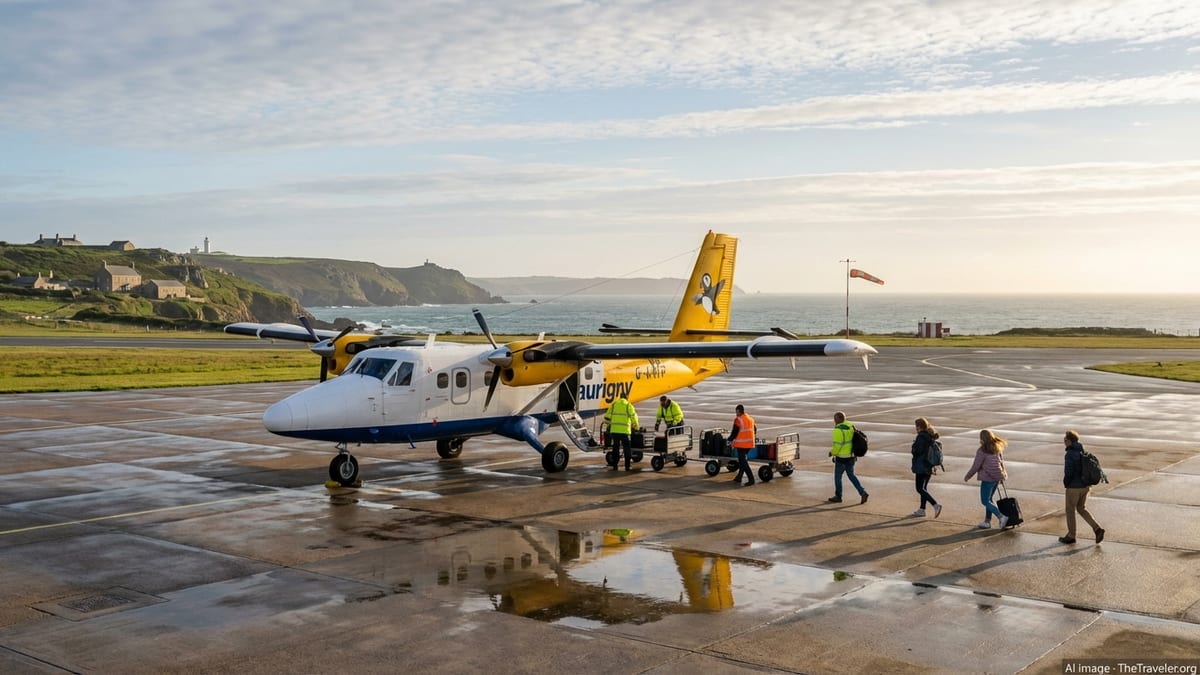
Aurigny Air Services has begun phasing out its Dornier 228 fleet on lifeline routes to Alderney, bringing in Twin Otter aircraft from Isles of Scilly operator Skybus in a move officials say will strengthen Channel Islands connectivity and unlock new tourism opportunities across the UK.
A Strategic Fleet Shift for a Lifeline Route
The transition marks the end of a significant chapter for the Guernsey-owned carrier, whose Dornier 228 aircraft have long been the backbone of services between Alderney, Guernsey and Southampton. From early January 2026, Aurigny plans to withdraw the remaining Dornier 228 NG aircraft from service, with Twin Otters progressively taking over operations following their first scheduled flights on 1 November 2025.
The Twin Otters are being introduced under a long-term partnership with Isles of Scilly Steamship Group’s airline Skybus, which is supplying aircraft, maintenance support and training as part of an extended public service obligation contract. Two DHC-6-300 series Twin Otters are due to operate in Aurigny colours for Alderney services, supported by an additional Skybus aircraft to cover maintenance and provide extra resilience.
Aurigny’s management has framed the move as a win for both islanders and visitors, arguing that a more robust and flexible operation on Alderney’s short runway can support not just scheduled passenger traffic but also vital medical evacuations, mail and freight. The arrangement also allows Aurigny to simplify its own in-house fleet around ATR 72-600 turboprops, reducing maintenance costs while retaining island-appropriate capacity on the most restricted routes.
From Alderney’s Runway to the Wider UK Network
A key driver behind the decision is the physical constraint of Alderney’s runway, which limits the types of aircraft able to serve the island. While Aurigny previously explored operating a single fleet of larger ATR aircraft across its network, rising cost estimates for runway repairs and extension works forced a rethink. Smaller, rugged Twin Otters, seating around 18 to 20 passengers, proved a more practical option for the short field operations required on Alderney.
By damp-leasing Twin Otters from Skybus, Aurigny can maintain lifeline services without committing to a second small-aircraft maintenance programme of its own. Instead, the airline will concentrate engineering resources on its ATR 72-600s, which operate higher-capacity routes to London Gatwick and UK regional destinations. The result is a network concept where Alderney’s niche requirements are met by specialist island aircraft, feeding into a broader UK and European network built around ATRs.
This model has wider implications for connectivity. Passengers from Alderney gain more dependable links into Guernsey, where they can connect to Gatwick, Southampton, Bristol, East Midlands and seasonal destinations such as Grenoble and Paris under Aurigny’s winter schedules for 2025 and early 2026. Better reliability on the Alderney legs should, in turn, make multi-sector journeys to the UK mainland more attractive to both residents and inbound visitors.
Partnership with Skybus Strengthens Island Connectivity
The new partnership builds on years of cooperation between Aurigny and Skybus, which previously provided Twin Otter standby cover when Dornier aircraft went out of service for maintenance. Under the fresh agreement, Skybus is significantly scaling up its role, adding Twin Otters to its fleet specifically to operate on Aurigny’s behalf and ensuring a backup aircraft is always available.
Skybus brings extensive experience flying Twin Otters on similarly demanding short routes between Cornwall and the Isles of Scilly. By leveraging that expertise, the new Alderney operation aims to mirror the levels of resilience, quick turnarounds and all-weather capability that island communities in southwest England have long relied upon. The arrangement also extends to crew training and operational standards, with Aurigny pilots retraining onto the Twin Otter type while Skybus oversees ongoing technical support.
For Skybus, the deal provides year-round utilisation for its Twin Otter fleet well beyond the traditional Isles of Scilly summer peak. For Aurigny, it offers an economical way to maintain a highly specialised service without duplicating infrastructure. Officials on both sides say the partnership creates new economies of scale for island aviation, anchoring essential air links that support jobs, healthcare and everyday mobility in remote communities.
Tourism Potential for Alderney and the Wider UK
Tourism leaders in the Channel Islands and UK regional destinations are watching the transition closely, seeing opportunities to grow visitor numbers as reliability improves. Alderney, which markets itself on its quiet beaches, rugged coastal walks and Second World War heritage, has long been constrained by limited and sometimes disrupted air services. More dependable flights operated by modernised Twin Otters could encourage short-break visitors from London and the south of England to factor the island into their travel plans.
Improved resilience on Alderney’s lifeline routes also strengthens Guernsey’s position as a hub for niche leisure itineraries, including multi-island holidays combining Guernsey, Sark, Herm and Alderney. Travel agents and tour operators can market such trips more confidently when the smallest and most weather-sensitive sector in the chain is backed by additional aircraft and a robust maintenance regime.
Beyond the Channel Islands, the Aurigny and Skybus partnership feeds into a broader pattern of UK regional connectivity. As Skybus expands its own operations, including taking on the Newquay to London Gatwick public service obligation route with support from partner airlines, more British travellers are being offered combined air links that connect coastal and island destinations. In this ecosystem, dependable Twin Otter services to Alderney become one of several niche routes that help distribute visitors beyond the UK’s largest hubs into smaller communities.
Economic and Community Impacts in the Bailiwick
The fleet change carries important economic consequences for the Bailiwick of Guernsey. Aurigny is wholly owned by the States of Guernsey and operates under a public service mandate rather than a pure commercial remit. Decisions on aircraft type and route structure are therefore weighed not only against ticket revenue but also against the long-term viability of island communities and the scale of ongoing public subsidy.
Policymakers have argued that outsourcing the smallest aircraft type to a specialist operator helps reduce Aurigny’s operating costs while preserving connectivity. With the airline focusing on ATR 72-600s for most services, maintenance, training and spares can be consolidated around a single in-house fleet, while the Twin Otters are supported by Skybus’s existing infrastructure. That should ease pressure on the public purse and help Aurigny move closer to its goal of breaking even on a month-by-month basis.
For Alderney residents, the most visible effect will be on day-to-day travel. A dedicated Twin Otter in Aurigny livery is set to be based in the Bailiwick, with a second aircraft available as standby, giving more headroom when scheduled aircraft go in for heavy checks or suffer technical issues. Local leaders have welcomed the prospect of fewer cancellations and more predictable services, pointing out that reliable flights are critical not only for tourism but also for medical appointments, education and maintaining family ties with the UK.
Passenger Experience and Operational Reliability
Aurigny and Skybus have emphasised that the Twin Otter introduction is not just a like-for-like swap of aircraft types, but an opportunity to reset the passenger experience on Alderney routes. The dedicated Aurigny Twin Otter has undergone a comprehensive refurbishment, including overhauled engines, modern avionics and an upgraded cabin interior. While still a small utility aircraft, it is designed to feel cleaner, quieter and more comfortable than older-generation island planes many passengers are familiar with.
Operationally, the new arrangement is intended to reduce the incidence of last-minute disruptions that have sometimes frustrated travellers on the Dornier services. With Skybus responsible for providing replacement aircraft whenever the primary Twin Otter is in maintenance, Aurigny gains a buffer that its previous two-aircraft Dornier operation sometimes lacked. For passengers, that should translate into more on-time departures and fewer occasions when trips must be rebooked or replaced with maritime services at short notice.
In the initial transition period, Aurigny has cautioned that there may still be teething issues as crews and ground staff adapt to different operating procedures. The airline has invited passengers to provide feedback through post-flight surveys, saying early input will help it refine schedules, turnarounds and customer communication before the Dornier fleet is fully retired.
Environmental and Fleet Efficiency Considerations
The move to Twin Otters and a simplified ATR fleet also carries environmental implications. While small turboprops are not new technology, they offer fuel-efficient performance on short sectors, and airlines have been under growing pressure to optimise their operations in response to both regulatory expectations and public scrutiny over aviation emissions.
Aurigny has previously highlighted the fuel efficiency of ATR turboprops at the relatively low altitudes and modest cruise speeds flown on most Channel Islands routes. By concentrating its core fleet around that type and outsourcing the smallest aircraft category to a partner, the airline aims to minimise duplication in training and maintenance that can add to both cost and environmental footprint. The refurbished Twin Otter, fitted with updated avionics and overhauled engines, is expected to deliver reliable performance within the constraints of Alderney’s infrastructure.
Industry analysts note that while individual flights to and from Alderney will always generate emissions per passenger higher than larger trunk routes, maintaining direct air services can still be more sustainable overall than forcing travellers to rely on longer surface journeys involving ferries and road or rail connections. In that sense, a robust, right-sized aircraft solution may help balance environmental concerns with the social necessity of keeping remote islands connected.
Implications for UK Regional Air Strategy
Aurigny’s decision to retire the Dornier 228 and partner with Skybus on Twin Otter operations fits within a wider reconfiguration of regional aviation in the British Isles. In recent years, several small carriers have collapsed or restructured, prompting local authorities and central government to rethink how lifeline routes are supported, often through public service obligation contracts similar to those underpinning Alderney’s air links.
The Aurigny and Skybus arrangement illustrates one model in which neighbouring island operators pool resources to keep thin routes viable. With Skybus also now involved in the Newquay to Gatwick contract and looking to leverage its Twin Otter expertise with other partners, there is growing interest in whether similar collaborations could sustain connections for other remote communities, from Scottish islands to peripheral coastal towns.
For travellers, the practical effect may be subtle but significant. As small aircraft such as Twin Otters and larger turboprops like ATR 72s are deployed more strategically across interconnected regional networks, the hope is that journeys between the UK mainland and its outlying islands become more seamless. With Aurigny’s Dornier retirement now underway and the first Twin Otter services already flying in Channel Islands skies, the coming year will provide an early test of how this model performs in practice for both residents and the visitor economy.