

More news on this day
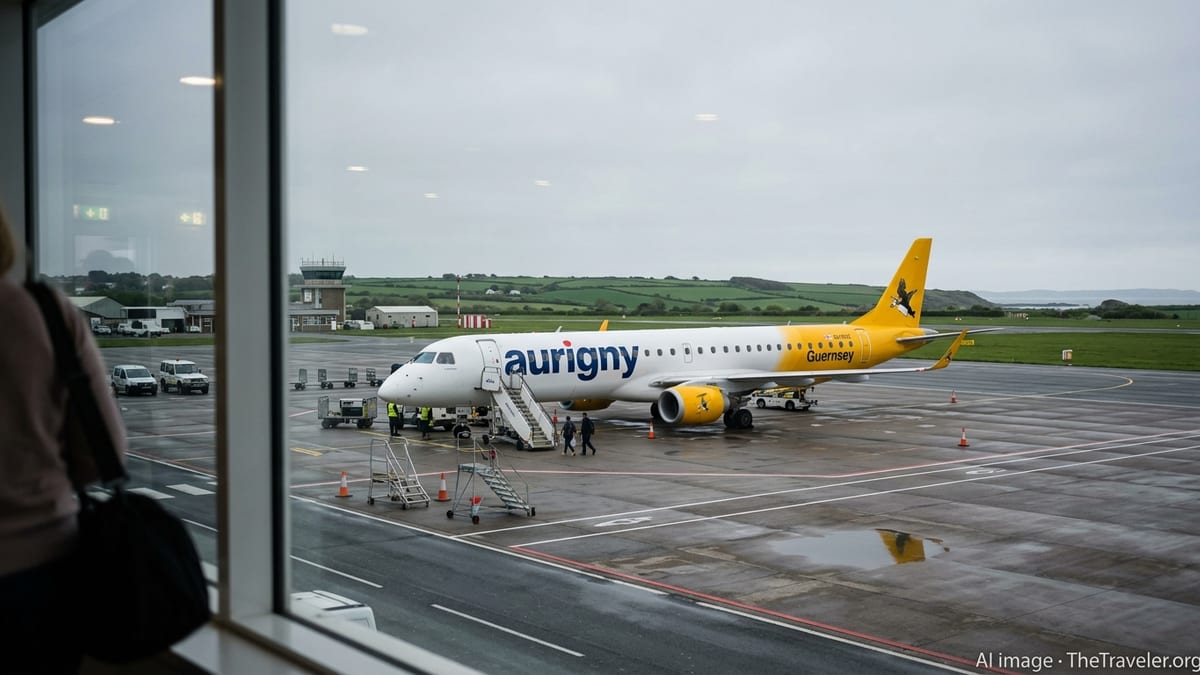
Guernsey’s flag carrier Aurigny is trimming parts of its spring flight schedule after a recent drop in demand linked to the war involving Iran, adding a fresh layer of pressure to an airline already navigating fleet changes, disruption and rising costs.
Get the latest news straight to your inbox!
Spring Capacity Pulled Back Amid Weaker Bookings
Publicly available timetable data and local media coverage indicate that Aurigny has reduced planned frequencies on selected routes in its spring schedule, with some lightly booked rotations removed and others consolidated. The adjustments affect travel in the shoulder period between late March and early summer, when demand has softened in the wake of wider disruption to global aviation caused by the Iran conflict.
The cutbacks appear targeted rather than wholesale, with core lifeline links between Guernsey, Jersey and key UK hubs maintained. According to published coverage, the airline is continuing to prioritise connectivity for island residents and essential travel, while scaling back flights that were showing weaker advance sales.
The changes come as airlines worldwide reassess capacity plans in response to volatile fuel prices, rerouted long haul traffic and generally weaker sentiment around discretionary travel following the escalation of hostilities involving Iran. Industry reports suggest that the conflict has unsettled some leisure and business travellers, particularly those reliant on complex connections through Middle Eastern hubs.
For Guernsey, the impact is being felt not in direct services to the region, but in the knock-on effects on confidence, connecting itineraries and operating costs that filter through to a small regional carrier such as Aurigny.
War-Driven Fuel Spikes and Travel Disruption Ripple Outward
Global coverage of the Iran war has highlighted sharp increases in oil prices and concerns over potential disruptions in key shipping and air corridors. Aviation analysts note that higher fuel bills, combined with longer routings as major airlines avoid airspace near the conflict, are exerting pressure on airline balance sheets from long haul network carriers to regional operators.
While Aurigny does not fly anywhere near the Middle East, it is exposed to the same fuel market dynamics as larger carriers. Rising costs can make marginal services harder to justify, especially in the quieter spring shoulder season when demand is naturally lower than in peak summer.
Travel industry reports also describe a pattern of itinerary changes and cancellations on journeys that rely on connections through Gulf and broader Middle Eastern hubs. For small origin and destination markets such as Guernsey, any dip in confidence among long haul travellers planning complex trips can feed through into softer bookings on the short regional legs that Aurigny operates.
The combined effect is a climate of caution. Capacity that looked viable before the latest escalation involving Iran is now being reassessed, with Aurigny joining a growing list of airlines that are recalibrating schedules and trimming less resilient services.
Operational Adjustments Add to an Already Challenging Year
The latest schedule changes arrive on top of an already demanding period for Guernsey’s state-owned carrier. In recent months, Aurigny has been contending with fleet transition issues, technical events and crewing challenges that have occasionally disrupted operations on its core routes, according to local press reporting.
Previous coverage from Guernsey-based outlets has pointed to periods of disruption linked to aircraft maintenance and training, particularly around the introduction of Twin Otter aircraft on the Alderney operation and the phasing out of older types. The airline’s most recent annual report also highlighted global supply chain pressures and wet lease costs as factors weighing on performance.
More recently, Aurigny has moved to streamline its network by stepping back from some European leisure routes and focusing on lifeline links, UK mainland destinations and an expanded Paris service. Reports indicate that the shift is designed to concentrate resources where demand is most resilient and where the airline’s public service role is most critical.
Within that context, the spring capacity cuts prompted by the Iran-related demand drop fit into a broader pattern of tactical adjustments as the carrier works to stabilise its operations and finances.
Implications for Travellers and Guernsey’s Connectivity
For passengers, the immediate effect of the schedule changes is reduced choice on certain days and routes during the spring period, along with some rebooking activity as flights are consolidated. Public information from recent disruption events suggests that Aurigny typically contacts affected customers directly with alternative options when services are altered.
However, Guernsey’s connectivity remains heavily reliant on Aurigny, particularly following the retrenchment or collapse of other regional carriers in recent years. Local commentary has frequently underlined the strategic importance of reliable air links for the island’s finance industry, tourism sector and access to specialist healthcare and education services in the UK.
Any reduction in capacity, even temporary, can therefore raise questions about resilience, pricing and long term planning. Industry observers note that for small island economies, the challenge is to balance cost control and commercial realities with the need to safeguard critical transport links that support wider economic activity.
Travel agents and tourism operators in the Channel Islands are expected to watch booking trends closely over the coming weeks to gauge whether the demand dip associated with the Iran conflict is short lived or signals a more prolonged period of caution among travellers.
Strategic Choices Ahead for the Flag Carrier
The spring schedule cuts underscore the fine margins facing a publicly owned regional airline at a time of geopolitical instability and rising costs. Aurigny is already under pressure to improve reliability, rebuild confidence after past disruptions and demonstrate progress toward a more sustainable financial footing.
Publicly available financial statements show that the airline has wrestled with losses tied to aircraft availability challenges, wet leasing and operational disruptions, even as passenger numbers have hit new highs. That mix of strong demand in peak periods and fragile economics in the shoulders leaves little room for error when external shocks such as the Iran war ripple through the global system.
Aviation analysts suggest that, for carriers like Aurigny, near term priorities are likely to include tightly managing capacity, accelerating fleet and crew stabilisation and maintaining strong on time performance on core lifeline routes. Strategic decisions over future aircraft types, network breadth and partnerships will continue to shape how resilient Guernsey’s air links can be in the face of future shocks.
For now, the cutback in spring services illustrates how a conflict thousands of kilometres away can influence travel options in a small island community, reinforcing the degree to which even short regional hops are bound into a highly interconnected global aviation ecosystem.