

More news on this day
More than 52,000 Australians criss-crossed Europe by train in 2025, and with Eurail launching a 15 per cent discount on passes alongside a wave of new night trains in 2026, industry watchers say an “Aussie rail boom” across the continent is only just leaving the station.
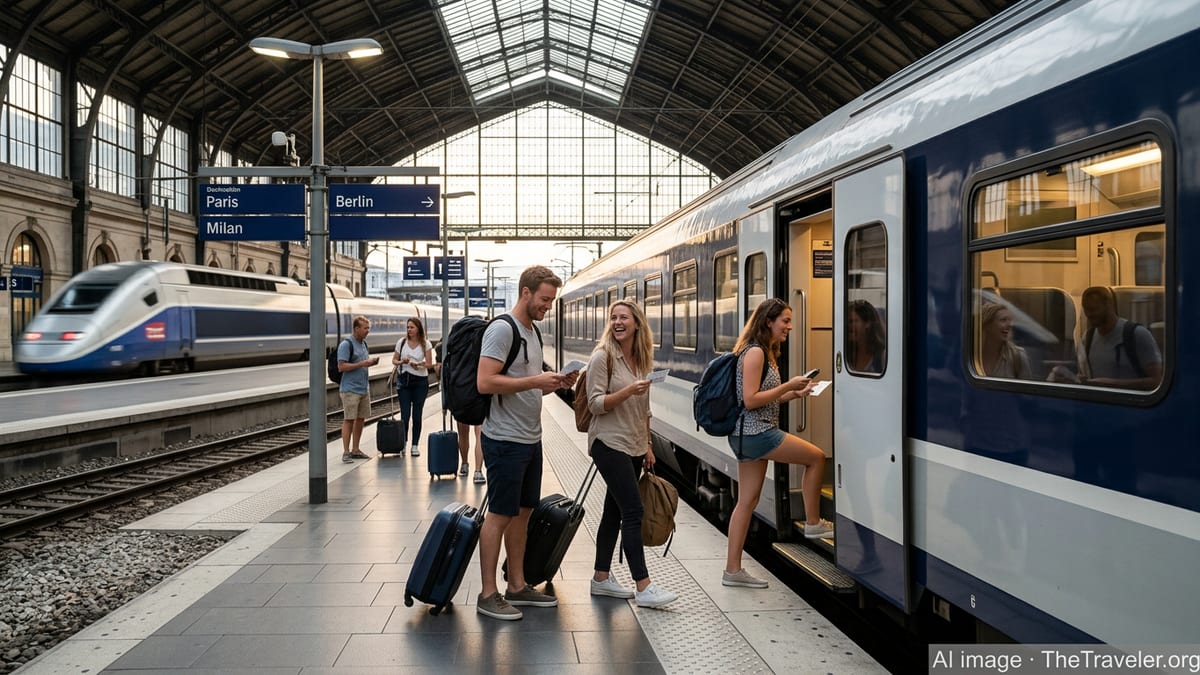
Australia Emerges as a Powerhouse Rail Market
Eurail’s latest figures confirm that Australia is now one of the company’s most important long-haul markets, second only to the United States in global rankings. The rail pass provider reported that over 52,000 Australians used Eurail passes to explore Europe’s cities, coastlines and countryside in 2025, cementing a rapid rebound from the pandemic years and underscoring a decisive shift away from purely short-haul hops by air.
The growth builds on earlier records: in 2023, more than 66,000 Eurail and Interrail passes were sold in Australia, reflecting a strong appetite for flexible, multi-country itineraries among both younger travellers and older repeat visitors. Continued demand through 2024 has set the stage for 2025’s 52,000-strong rail cohort to be seen as a base, not a peak, as the market resets in favour of lower-carbon, slow-travel experiences.
Tourism analysts in Australia say the numbers also mirror broader sentiment at home, where surveys show Europe remains a top long-haul aspiration and where interest in train travel has climbed alongside concerns about climate impacts. Travel agents report that Australians are increasingly asking to replace at least some intra-European flights with rail legs, particularly on routes where new high-speed and cross-border services have cut journey times.
Age profiles are diversifying too. While backpackers and working holidaymakers continue to form a core Eurail audience, there has been marked growth among travellers in their 30s, 40s and 50s, often travelling as couples or families who see train journeys as part of the holiday rather than simply a way of getting from A to B.
Eurail’s 15% Off Promotion Targets Shoulder Seasons
To capture that momentum, Eurail has confirmed a fresh 15 per cent discount on its Global and One Country Passes for selected travel periods extending into 2026. The promotion, which follows a similar campaign that ran from late November to mid-December 2025, applies across most age categories and pass formats, excluding only premium Plus products, and is being heavily marketed in Australia through tour operators and online agencies.
Industry partners say the timing is calculated to pull more Australians into Europe’s shoulder seasons, particularly the northern spring and autumn of 2026, when trains are less crowded and accommodation is easier to secure. With exchange rates and airfares still a concern for many long-haul travellers, the upfront saving on a rail pass is being promoted as a way to unlock more destinations without inflating daily budgets.
Retailers in Australia report brisk early interest, particularly from travellers planning multi-week itineraries taking in classic rail countries such as Italy, France, Germany and Switzerland, combined with emerging hotspots in Central and Eastern Europe. The ability to book now and lock in discounted passes for trips later in 2026 is seen as especially attractive to families and working professionals needing to coordinate leave and school holidays months in advance.
Travel consultants also note that Eurail’s own tools have improved, with updated self-service seat reservation platforms and clearer information on night train options. For Australians planning complex journeys with limited on-the-ground time, that combination of discounted access and smoother planning is expected to tip more itineraries in favour of rail.
New Night Trains Redraw Europe’s After-Dark Map
Beyond pricing, the allure of sleeping while the continent rolls past the window is a major drawcard for Australians heading back to Europe in 2026. A new generation of night trains is reshaping key routes, giving travellers more options to replace short-haul flights with overnight sleepers that double as transport and accommodation.
Belgian-Dutch cooperative European Sleeper is at the forefront of that revival. The operator is preparing to launch a thrice-weekly overnight service between Paris and Berlin from 26 March 2026, restoring a flagship route that many feared lost when an earlier night train was withdrawn. Running via Brussels and Aachen, the train will offer seats, couchettes and classic sleeping compartments, putting two of Europe’s most-visited capitals back on the overnight rail map.
From September 2026, European Sleeper is also due to open a new route linking Brussels and Cologne with Zurich and Milan, connecting Benelux, western Germany, the Swiss Alps and northern Italy in a single night. While earlier plans to extend the service to Amsterdam have been pushed into 2027, the reshaped itinerary still creates a powerful corridor for Australians keen to combine the Low Countries, Rhine Valley and Lake Como on one pass.
These launches join a wider expansion of night services across the continent, from upgraded Nightjet routes in central Europe to new or extended sleepers in Scandinavia and the Baltics. For long-haul visitors facing high accommodation costs in major European cities, the ability to travel while they sleep is rapidly becoming one of rail’s strongest selling points.
Aussie Travellers Pivot to Low-Carbon, High-Experience Rail
For Australians on multi-stop European journeys, night trains and discounted passes intersect with a broader change in travel priorities. Rail advocates say many customers now arrive with an explicit desire to cut internal flights, either for environmental reasons or to avoid airport stress and baggage rules, and are pleasantly surprised by how competitive journey times have become on key routes.
Popular itineraries for 2026 bookings already include Paris to Berlin by night train with a daytime continuation to Prague, Brussels to Milan via Zurich with onward connections to the Italian lakes, and classic north-south routes such as Amsterdam or Hamburg to Switzerland and Italy, all stitched together using Eurail passes. Agents report that rather than trying to “do all of Europe,” Australians are increasingly building rail-centric loops through two or three regions, allowing more time in each stop.
The experience on board is another factor. New rolling stock on European night trains introduces modern cabins, better sound insulation and more reliable Wi-Fi, while traditional features such as restaurant cars and shared couchettes continue to appeal to budget and social travellers. For many Australians, particularly those coming from cities with limited long-distance passenger rail, the novelty of a comfortable overnight journey is a highlight in itself.
Destination marketing bodies in Europe have been quick to seize on the trend, partnering with rail operators to promote rail-inclusive city breaks and alpine escapes aimed squarely at long-haul markets like Australia. Combined with Eurail’s 15 per cent sale and a growing web of night train routes, those efforts are expected to push Australian rail passenger numbers beyond 2025’s 52,000 benchmark and deepen the country’s status as a rail-loving nation abroad.