

More news on this day
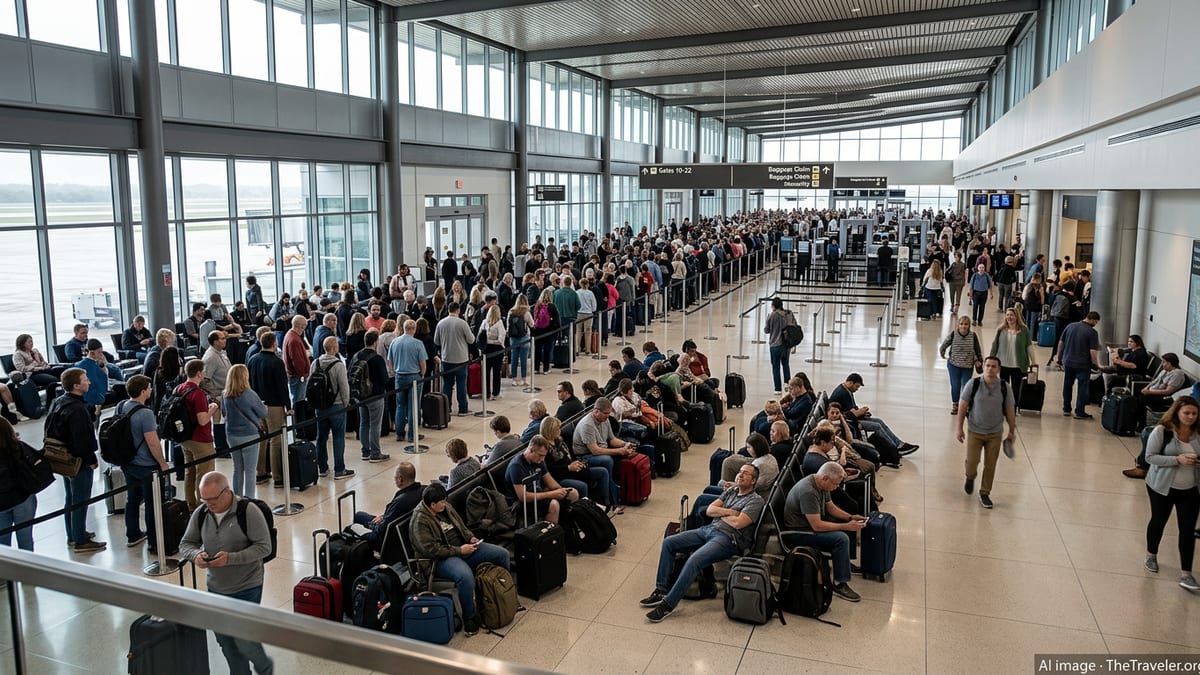
Thousands of travelers passing through Austin-Bergstrom International Airport this week are confronting an uneasy combination of mass flight cancellations, rolling delays and long security lines as severe storms across the United States intersect with peak spring break demand and a partial federal government shutdown.
Get the latest news straight to your inbox!
Storm System Ripples Through National Flight Network
The current wave of disruption at Austin-Bergstrom is closely tied to a powerful March storm system sweeping across large portions of the United States. Publicly available aviation data shows that the weather has triggered thousands of delays and cancellations nationwide in recent days, particularly at major hubs in the Midwest and along the East Coast. As those hubs struggle to recover, secondary airports such as Austin are feeling the knock-on effects.
Reports indicate that flights into and out of Austin have been regularly delayed, with some departures scrubbed entirely as aircraft and crews are stranded elsewhere in the country. Travelers connecting through large airports affected by blizzard conditions, thunderstorms or high winds are especially vulnerable to last-minute changes, often learning of cancellations only after arriving at the gate.
The storms are hitting during an already busy period for U.S. aviation, with spring break traffic filling planes and tightening the margin for recovery when weather disrupts schedules. When aircraft and crew rotations are thrown off in one part of the country, the resulting domino effect can leave passengers at Austin-Bergstrom with limited rebooking options for hours or even days.
Security Lines Strain Under Shutdown and Spring Break Crowds
On the ground in Austin, the weather-related turmoil is compounded by staffing pressures linked to a partial federal government shutdown. Transportation security screeners nationwide are working under strained conditions, and publicly available information shows that checkpoint efficiency has been affected at multiple airports just as passenger volumes surge for spring break and major events.
Local accounts from recent days describe early-morning crowds snaking through the terminal, with travelers arriving well before dawn to make 6 a.m. to 8 a.m. departures. While wait times can ease by late morning and midday, unpredictable queues at the busiest hours are adding another layer of uncertainty for those already anxious about whether their flights will operate.
Airport guidance in Austin has generally urged passengers to arrive earlier than usual, especially for morning departures. For many travelers, that has meant building in several extra hours at the terminal, only to then confront rolling delay notifications or, in some cases, outright cancellations once they are already past security.
How Many Flights and Travelers Are Affected
Nationally, tracking services show that hundreds to thousands of flights per day have been canceled or delayed during the height of the March storm system, and Austin is part of that broader pattern. While exact figures for Austin-Bergstrom fluctuate by hour, publicly available flight boards in recent days have shown clusters of canceled departures and arrivals, particularly on routes that pass through weather-affected hubs.
The practical impact is that many aircraft that would ordinarily serve Austin are out of position, either stuck at snowbound airports or delayed by thunderstorms and airspace constraints elsewhere. As a result, some journeys that might normally involve a brief layover are turning into overnight stays, with travelers scrambling to secure hotel rooms or alternate routings after seats on later flights quickly sell out.
Given Austin-Bergstrom’s role as a fast-growing regional airport and a gateway for major events, even a moderate percentage of canceled flights can translate into thousands of stranded or significantly delayed passengers over a short period. The combination of full planes, limited spare seats and constrained staff availability makes it difficult for airlines to recover quickly once schedules are severely disrupted.
What Stranded Travelers Are Experiencing on the Ground
For those caught in the middle of this disruption, the experience has been a patchwork of crowded concourses, repeated schedule changes and uncertainty at the gate. Recent first-hand accounts shared publicly by passengers in Austin describe days that begin with predawn security lines and end with late-night cancellations, after hours spent watching departure times slip in 15- or 30-minute increments.
Some travelers report rushing through checkpoints only to learn that their flight has extended delays due to crew time limits or late-arriving inbound aircraft. Others describe spending much of the day in the terminal before being told that their flight will not depart at all, forcing them to search for hotel rooms at short notice or attempt to rebook for the following day.
At the same time, not every passenger is facing extreme waits. Accounts from Tuesday morning indicate that some security lines moved more smoothly than earlier in the week, suggesting that conditions at Austin-Bergstrom can vary significantly by time of day and by the evolving status of the national flight network. For travelers departing soon, that means preparing for the possibility of both long lines and sudden schedule changes, even if the airport appears calm on arrival.
Key Tips for Passengers Flying Through Austin Now
With conditions shifting quickly, travelers heading to or from Austin-Bergstrom in the coming days are being advised by publicly available airline and airport guidance to monitor their flights closely and build in extra time. Checking flight status repeatedly in the 24 hours before departure can provide early clues about developing delays, particularly on routes that pass through cities affected by the latest storm system.
Many carriers have issued flexible travel options when large-scale weather or operational disruptions occur, allowing passengers to change flights without standard penalties within a defined window. Those policies are typically highlighted on airline travel alerts pages and may offer a way to reroute or adjust plans before reaching the airport.
Ground transport and parking are also under pressure during peak periods. Reports from the Austin area indicate that economy lots can fill before sunrise on busy days, prompting some travelers to turn to ride-hailing services or alternative drop-off arrangements. Planning ahead for how to reach the airport can help minimize additional stress if security lines or flight timings shift unexpectedly.
For now, conditions at Austin-Bergstrom remain fluid, influenced by severe weather elsewhere in the country, the ongoing federal shutdown, and the heavy demand of spring travel. Passengers flying through the airport this week should be prepared for a less predictable experience than usual and factor that uncertainty into their itineraries.