

More news on this day
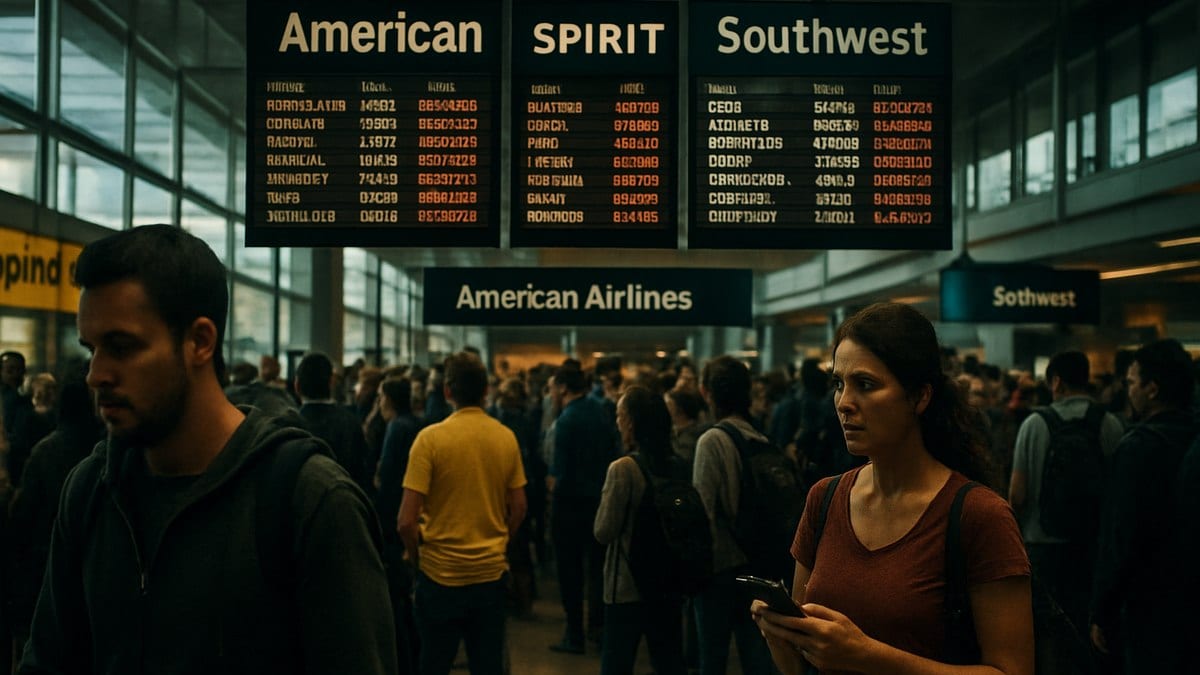
Passengers at Austin Bergstrom International Airport faced a day of mounting disruption as seven flights operated by American Airlines, Spirit Airlines and Southwest Airlines were grounded, triggering a chain reaction of delays across major hubs including Dallas, Newark, Amsterdam and Atlanta.
Get the latest news straight to your inbox!
Grounded Flights Snarl Operations At Austin
According to recent operational reports, seven departures and arrivals involving American Airlines, Spirit Airlines and Southwest Airlines at Austin Bergstrom International Airport were grounded, leaving travelers confronting long waits at gates and check-in counters. The affected services included both domestic links and key connecting routes, amplifying the impact beyond central Texas. Aviation-focused outlets indicated that the disruptions emerged suddenly, catching many early-morning and mid-day passengers off guard.
Publicly available tracking data and industry coverage describe a pattern of creeping delays that ultimately resulted in select flights being held on the ground rather than released for departure. While precise causes varied between carriers and routes, the outcome for travelers was similar: missed connections, rapidly changing departure estimates and rebookings onto later services through already congested hubs.
Travel and tourism industry reports highlight that the disruption at Austin did not occur in isolation but coincided with a broader day of strain on the United States air network. On the same day, other major airports were already registering elevated delay and cancellation totals, increasing pressure on airlines to find available aircraft, crews and open slots for rerouted passengers.
Operational bulletins for Austin show that the airport’s role as a growing mid-continent connector has increased its sensitivity to wider network problems. With multiple carriers linking Austin directly to major domestic and transatlantic hubs, even a small cluster of grounded flights can have disproportionate knock-on effects compared with the airport’s size.
Dallas And Atlanta Bear The Brunt Of Knock-On Delays
The strongest ripple effects from the grounded flights at Austin were felt in Dallas and Atlanta, two of the most important connecting hubs in the United States. Aggregated data from aviation analytics services show that Dallas Fort Worth International Airport recorded dozens of delays and a notable share of nationwide cancellations, with American Airlines particularly exposed due to its large presence there.
In parallel, Dallas Love Field and Atlanta Hartsfield Jackson International Airport also experienced congestion on the same day, with Southwest Airlines routes featuring prominently in delay statistics. Flight history tools tracking services such as Southwest flight WN7 between Atlanta and Dallas, and American Airlines services between Dallas and Atlanta, reflected extended block times and schedule changes, underscoring the cascading nature of the disruptions.
Industry observers note that when a hub such as Dallas Fort Worth or Atlanta experiences even modest weather or traffic management constraints, the impact quickly magnifies. Flights arriving slightly behind schedule can lose their planned departure windows, which in turn pushes back outbound rotations and leaves aircraft and crew out of position for subsequent journeys.
For passengers departing Austin and attempting to connect through these hubs, the timing was particularly challenging. With Dallas and Atlanta already facing a busy day, options for retiming connections or rebooking on alternative flights were limited. Some travelers found themselves routed through secondary hubs or facing overnight stays as airlines worked to rebuild their schedules.
International Routes To Newark And Amsterdam Affected
The disruption extended beyond domestic travel. Travel and aviation coverage identified onward services to Newark Liberty International Airport and Amsterdam Schiphol among routes affected by delays connected to the Austin groundings. Austin’s nonstop links to these international gateways are an increasingly important part of central Texas’s connectivity, and interruptions quickly flow through to long haul itineraries.
Public flight listings for Austin confirm a mix of transatlantic and East Coast services operated by major U.S. and European carriers, including routes that rely on timely feed from shorter domestic legs. When those feeder flights are grounded or heavily delayed, passengers risk missing their onward segments to Europe or the northeastern United States, in some cases requiring full rebooking for the following day.
In Amsterdam and Newark, high volumes of connecting traffic mean that even small schedule deviations can create mismatches between arriving and departing banks of flights. On the affected day, this dynamic contributed to growing queues at transfer desks as arriving passengers from Austin related services sought new options to reach their final destinations across Europe or the eastern seaboard.
Airline communications channels encouraged affected travelers to monitor mobile apps and airport information boards closely and to confirm connection times before leaving secure areas or customs halls. For some long haul passengers, this made the difference between securing a last available seat on a later departure or being compelled to arrange overnight accommodation near the airport.
Broader Network Strain Across The United States
The Austin disruption unfolded against a backdrop of wider pressure on the U.S. air travel network. On the same day, national tallies compiled by aviation analysts reported thousands of delays and several hundred cancellations across key hubs including Dallas Fort Worth, Chicago O Hare, Houston George Bush Intercontinental, Los Angeles International and San Francisco International.
According to published coverage, Dallas Fort Worth alone recorded dozens of cancellations and hundreds of delays within a single operating window, ranking among the most affected airports. American Airlines, Delta Air Lines, Spirit Airlines, regional affiliates and other carriers all appeared in delay and cancellation figures, reflecting the interconnected nature of the national system.
Weather systems passing through parts of Texas and the central United States, coupled with routine air traffic management initiatives such as ground stops and flow programs, contributed to the strain. In such conditions, small disruptions at a mid-size field like Austin Bergstrom can push the network closer to a tipping point, especially when they affect aircraft due to operate multiple onward sectors later in the day.
Historical analysis of delay statistics for major carriers shows that American Airlines, Southwest Airlines and Spirit Airlines each contend regularly with congestion-related challenges across their networks. On particularly busy or weather-affected days, this structural vulnerability becomes more visible to travelers in the form of rolling delays and complex rebooking scenarios.
What Travelers Can Expect In The Coming Days
With airlines working to restore normal operations, industry guidance suggests that residual delays and occasional cancellations may persist for a short period following the initial disruption. Aircraft and crews displaced by the Austin groundings and related delays in Dallas, Atlanta, Newark and Amsterdam may take several rotations to return to their scheduled patterns.
Travel experts recommend that passengers flying from or through Austin, Dallas, Atlanta, Newark or Amsterdam in the near term build in additional buffer time for connections and remain flexible about potential reroutes. Checking in as early as possible via airline apps or airport kiosks and monitoring flight status repeatedly on the day of travel can provide earlier warning of schedule changes.
Consumer advocacy organizations continue to remind travelers of differing compensation and care standards across regions and carriers. While U.S. regulations focus primarily on safety and do not mandate automatic compensation for most delays, some airlines have customer service commitments that may include meal vouchers, hotel arrangements or rebooking on alternative flights in specific circumstances.
For Austin Bergstrom International Airport, the episode underscores the growing role it plays within both domestic and international networks. As airlines expand long haul and hub-to-hub links from central Texas, operational resilience at Austin is likely to remain in focus whenever broader turbulence hits the global air travel system.