

More news on this day
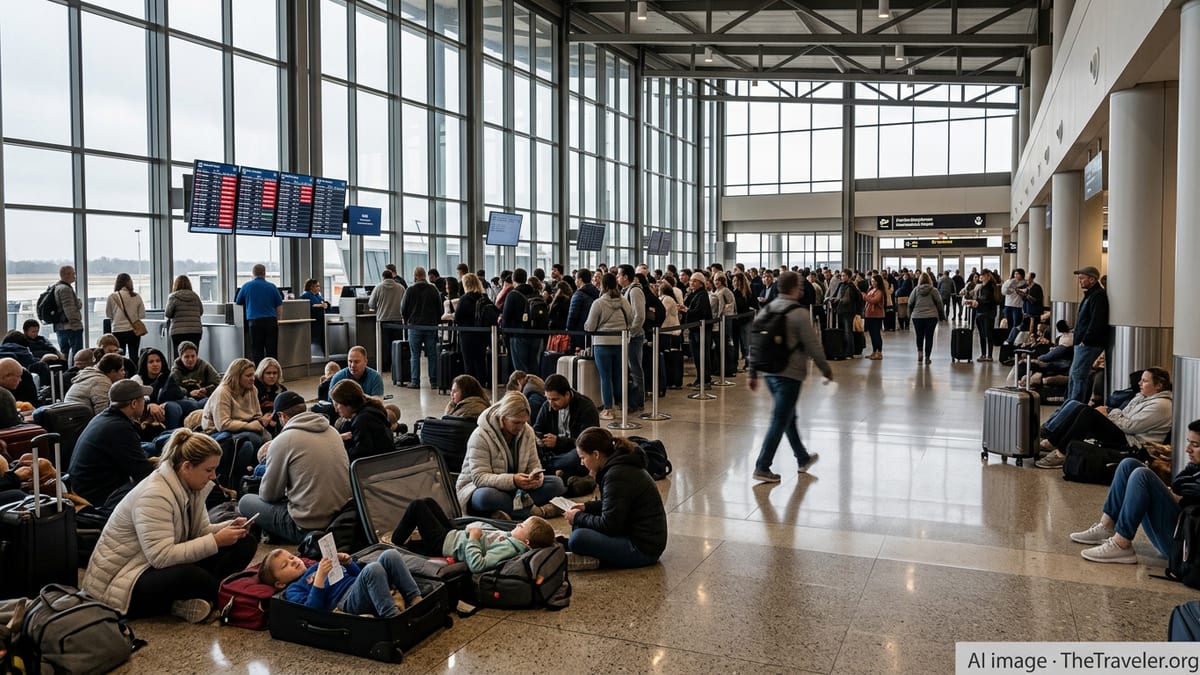
Thousands of travelers passing through Austin-Bergstrom International Airport this week are facing hours-long waits, abrupt flight cancellations and overflowing terminals, as severe weather across the United States, an ongoing federal government shutdown and already stretched aviation staffing converge on one of the country’s busiest spring travel gateways.
Get the latest news straight to your inbox!
Storm Systems And Shutdown Collide At A Busy Spring Hub
The latest disruption at Austin-Bergstrom International Airport comes at the height of Austin’s spring festival and spring break season, a period that airport planners had already flagged as one of the busiest of the year. Publicly available guidance from the city indicates that airport managers expected sustained days with more than 30,000 departing passengers, with peak morning departure banks heavily concentrated between 5 a.m. and 8 a.m.
This seasonal surge is now colliding with a sprawling storm system affecting large parts of the central and eastern United States, where blizzard conditions, severe thunderstorms and strong crosswinds have slowed operations at multiple hubs. National flight-tracking data shows that airlines have canceled and delayed thousands of flights across the country over the past 48 hours, a wave that is rippling through Austin via disrupted aircraft rotations and crew schedules.
Compounding the weather impacts, the partial federal government shutdown that began in mid February continues to affect air travel. Nationwide coverage notes that Transportation Security Administration officers and other federal aviation staff are working without pay, adding strain to checkpoints and control facilities as airports simultaneously manage holiday-level volumes.
Austin-Bergstrom’s role as a connecting point for travelers heading to and from major hubs in Dallas, Houston, Atlanta, Denver and the East Coast means that cancellations outside Texas are quickly felt by local passengers, even when conditions at the Austin airfield itself appear calm or clear.
Reports From The Terminal: Long Queues And Overnight Crowds
Social media posts and local discussion forums from Sunday and Monday describe scenes of exhausted travelers queuing in pre-dawn security lines that snake through the terminal, along with crowded gate areas where departure boards flip from delayed to canceled with little notice. Some passengers report arriving more than two and a half hours before early morning flights and still cutting it close at the boarding door, while others describe missing flights altogether despite following airline guidance.
By late Sunday, users tracking operations at Austin-Bergstrom noted broad cancellations on several major carriers, including evening departures that left travelers competing for limited hotel rooms or opting to sleep on terminal floors and chairs. Monday morning brought a repeat of heavy congestion in the earliest hours, while anecdotal updates later in the day suggested that lines shortened somewhat as airlines worked through the backlog.
The disruption is especially acute for families and student groups returning from or heading to spring break destinations, as well as for visitors leaving Austin after South by Southwest events. For many, canceled flights mean missed connections, lost prepaid lodging at onward destinations and added costs for food and ground transport around the airport while they wait for rebooking options.
While current accounts focus on long waits and confusion, there are also reports of pockets of normalcy during off peak times, with some travelers clearing security in minutes midday. This uneven experience underscores how quickly conditions can change at Austin-Bergstrom as individual airline schedules shift throughout the day.
Why So Many Flights Are Being Canceled At Austin-Bergstrom
The apparent chaos at the terminal is the visible end of a complex set of constraints inside the national air travel system. Aviation briefings on the current storms note that strong winds, low visibility and runway contamination at major hubs from the Midwest to the Northeast are triggering large blocks of cancellations and ground delays, which in turn leave aircraft and flight crews out of position for subsequent legs into and out of Austin.
Industry analyses of recent winter and early spring storms across North America show that airlines often preemptively cancel flights to avoid operating in marginal conditions and to prevent aircraft from becoming trapped at airports with limited de-icing or gate capacity. When systems like the current March storm complex sit over key corridors for several days, the resulting disruption can cascade across multiple regions and linger even after local weather improves.
Separately, Austin-Bergstrom has been navigating sustained growth in passenger numbers and construction that affects road access and parking. City documents highlight ongoing upgrades to terminal and airfield infrastructure, as well as recent permanent changes to access ramps on Presidential Boulevard. These projects are intended to expand long term capacity, but in the short term they can create chokepoints as higher volumes of cars, rideshares and shuttles converge on modified roadway layouts.
Staffing constraints in air traffic control and security also play a role. Public discussion among aviation workers and local observers over recent months has pointed to Austin’s heavy traffic relative to available controller staffing. During systemwide disruptions, these underlying pressures can limit flexibility to handle surges, forcing additional spacing between flights and making it harder to recover quickly from a wave of cancellations.
What Stranded Travelers Need To Know Right Now
For travelers caught in the current disruptions at Austin-Bergstrom, published airline and airport guidance emphasizes starting with digital tools. Official apps and websites typically provide the fastest notification of cancellations and same day rebooking options, often allowing passengers to shift to later flights or alternate routes without visiting a physical counter. Many carriers also enable customers to join standby lists or select hotel and meal vouchers where policies permit.
Airport travel advisories for this spring season encourage passengers with early morning departures to arrive considerably earlier than they might during quieter periods, particularly on days bracketing major festival events. While some recent travelers have described three hour early arrivals as excessive during off peak times, the current pattern of heavy cancellations and unpredictable queues means that extra buffer remains advisable for the first wave of departures.
Travelers with connecting itineraries through weather affected regions are being urged, through public travel alerts and news coverage, to consider rebooking to later days or more direct routings where possible. Those flying to international destinations with fixed tour or cruise departures may benefit from contacting their travel providers as soon as a cancellation appears, as downstream operators sometimes offer flexibility when airline disruptions are widespread.
For anyone already stranded at the airport overnight, general consumer guidance suggests keeping boarding passes, receipts for meals and accommodation and any written notifications of cancellations, as these documents can be important for later reimbursement requests to airlines or travel insurers. It is also advisable to monitor news outlets for updates on the broader storm pattern and government shutdown negotiations, since meaningful improvements in either area could ease pressure on the system and allow carriers to restore more normal schedules.
How Long The Disruptions At Austin Could Last
Weather forecasters tracking the current March storm complex indicate that it is a multi day event affecting a wide swath of the country, meaning national flight schedules may remain fragile for several days even as conditions begin to improve in individual cities. Experience from earlier winter storms this year suggests that once airlines clear the most affected hubs and realign aircraft and crews, they can usually stabilize operations within a few days, though some routes may see intermittent cancellations longer.
At the same time, the partial government shutdown that is straining airport security and federal aviation staffing has no fixed end date. As long as that political impasse continues, travel volumes associated with spring festivals and school holidays are likely to keep pressure on Austin-Bergstrom’s checkpoints and departure halls, with the potential for renewed bottlenecks if another storm or technical issue arises.
City and airport materials emphasize that construction work at and around Austin-Bergstrom will continue throughout this travel season, as the airport prepares for long term growth and the eventual closure of the South Terminal later this year. That means roadway detours, adjusted parking patterns and gate changes will remain a background factor for travelers plotting their arrival times and navigation through the facility.
For now, the practical outlook for passengers using Austin-Bergstrom is one of heightened uncertainty. Those with flexibility to shift travel by a day or two may find a smoother experience, while travelers tied to fixed schedules should be prepared for extended waits, last minute changes and the possibility of spending significantly more time at the airport than their original itinerary might have suggested.