

More news on this day
Spring holiday travel at Austin-Bergstrom International Airport took a sharp turn on April 5 as seven flights operated by American Airlines, Spirit Airlines and Southwest Airlines were grounded, feeding a broader wave of delays stretching from Dallas and Newark to Amsterdam and Atlanta.
Get the latest news straight to your inbox!
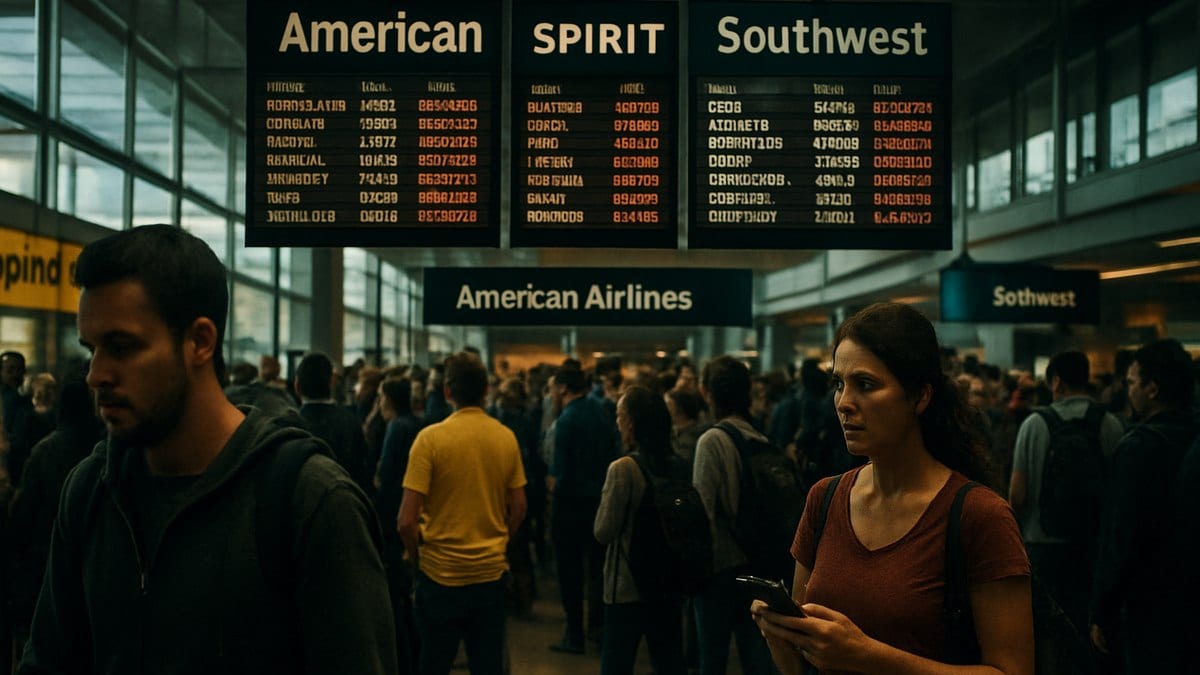
Grounded Departures Snarl Austin’s Busy Holiday Rush
Publicly available data from flight tracking services and specialist travel coverage indicate that Austin-Bergstrom saw a cluster of cancellations and extended delays early Saturday, just as Easter holiday traffic and spring break demand were pushing passenger volumes higher than usual. At least seven flights on American Airlines, Spirit Airlines and Southwest Airlines were grounded, with additional departures facing rolling schedule changes through the day.
The disruptions affected a mix of domestic and international routes, underscoring Austin’s growing role as a connecting point rather than simply an origin and destination airport. Austin-Bergstrom’s nonstop network now links Central Texas to key hubs such as Dallas Fort Worth, Atlanta and Newark, as well as long haul destinations including Amsterdam, so schedule problems at the local level can quickly resonate across wider airline networks.
Reports indicate that affected passengers faced long lines at customer service desks and crowded gate areas as airlines worked within already tight holiday loads to find open seats. With many flights operating near capacity, options for same day rebooking were limited, forcing some travelers to accept multi stop routings or overnight stays to reach their final destinations.
The latest setback arrives as Austin’s airport continues to navigate record traffic and terminal congestion. Local guidance in recent days has urged travelers to arrive earlier than they might have in prior years, reflecting a system that is operating close to its limits even before irregular operations take hold.
Dallas and Newark Hubs Amplify Operational Strain
The disruptions in Austin were compounded by elevated delay and cancellation levels at major connecting hubs, particularly Dallas Fort Worth International Airport and Newark Liberty International Airport. Travel industry reports for April 5 point to hundreds of delays and scores of cancellations across major U.S. airports, with Dallas Fort Worth once again featuring prominently among the most affected.
Dallas Fort Worth serves as a critical superhub for American Airlines and a key spoke for several other carriers, meaning that any operational slowdown there quickly reverberates through domestic and international schedules. Published coverage notes that earlier holiday weekend disruptions at Dallas Fort Worth had already stretched crews and aircraft rotations, leaving less flexibility to absorb additional problems elsewhere in the network.
Newark Liberty, another congested hub, reported dozens of delays and a smaller number of cancellations on Saturday, affecting operations for Spirit Airlines alongside United, Delta and other carriers. Routes linking Newark with major U.S. cities such as Los Angeles, Houston and Dallas were highlighted among the most delay prone, illustrating how localized weather or traffic constraints can ripple into distant markets.
For travelers routed from Austin through either Dallas Fort Worth or Newark, the combination of originating delays and onward connection disruptions increased the risk of misconnects. In many cases, a grounded or significantly delayed departure from Austin meant missed transatlantic or cross country flights later in the day.
Amsterdam and Atlanta Feel Knock On Effects
While the immediate flashpoint was Austin-Bergstrom, the impact reached far beyond Texas. Data compiled by travel industry outlets show that services touching Amsterdam and Atlanta also experienced disruption as airlines adjusted aircraft and crew positions in response to the Austin and Dallas issues.
Amsterdam, served from Austin on long haul operations, is particularly sensitive to upstream irregularities because of the tight connections typical of European hub banks. A late arriving or canceled inbound from the United States can force last minute changes to aircraft routing or require passengers to be rebooked across partner airlines and alliance networks, sometimes pushing itineraries a full day later.
Atlanta, one of the busiest hubs in the world and a critical connection point for the southeastern United States, also reported elevated delay levels tied to broader weather and traffic constraints across the region. When flights between Austin, Dallas and Atlanta are disrupted at the same time, airlines must juggle limited spare aircraft and crews, often prioritizing the densest trunk routes and leaving smaller or newer markets with longer gaps between available departures.
For individual travelers, the result is a web of cascading schedule changes that can appear sudden and arbitrary, even though behind the scenes they reflect complex knock on effects from a handful of grounded flights and constrained hubs.
Weather, Staffing and Tight Schedules Create a Volatile Mix
Although Saturday’s disruption centered on a relatively small number of grounded flights at Austin, it unfolded against a backdrop of broader operational challenges that have characterized the early 2026 travel season. Travel analysis published this week points to unsettled spring weather across Texas and the Southeast, combined with already stretched airline staffing and infrastructure, as key factors behind the surge in delays and cancellations.
Thunderstorms and low ceilings over multiple hub airports reduce runway capacity and trigger traffic management programs that slow the rate of arrivals and departures. Even modest slowdowns at a single major airport can force carriers to hold flights on the ground or extend turnaround times, which in turn creates crew scheduling complications governed by safety related duty limits.
At the same time, national air travel demand has remained robust, with passenger volumes at many large hubs meeting or surpassing pre pandemic levels. Heavily utilized fleets and high seat occupancy leave limited room for schedule recovery when things go wrong. That environment means that a localized operational hiccup at an airport such as Austin-Bergstrom can more quickly evolve into a multi city disruption affecting far flung destinations like Amsterdam.
Recent national coverage on security checkpoint staffing has also highlighted how strained front line operations remain at some airports. While checkpoint conditions at Austin on Saturday were not singled out as a primary cause of the grounded flights, the broader context of staffing adjustments and evolving guidance on arrival times underscores how many different parts of the air travel system are operating under pressure.
What Travelers Can Do as Disruptions Mount
With airlines facing another volatile holiday weekend and Austin’s latest setback adding to the strain, travel experts continue to emphasize preparation and flexibility as the most realistic tools for minimizing disruption. Publicly available guidance from airports and carriers encourages passengers to monitor flight status frequently through airline apps and to sign up for real time alerts that can flag gate changes and departure time shifts.
For those connecting through busy hubs like Dallas Fort Worth, Newark, Atlanta or major European gateways, building in longer connection windows can provide a margin of safety when earlier segments run late. Selecting earlier departures in the day can also reduce exposure to the cumulative effect of delays that tend to build across afternoon and evening bank structures.
When cancellations do occur, travelers are generally advised to explore multiple rebooking channels at once, including self service tools in carrier apps and airport kiosks, rather than relying solely on in person customer service queues. Keeping alternative routings in mind, such as connecting through a different hub or considering nearby airports, may open up options that are not immediately obvious when a disruption is first announced.
For now, the grounded flights at Austin-Bergstrom and the ensuing wave of delays across Dallas, Newark, Amsterdam and Atlanta serve as another reminder that even routine spring trips can be derailed by a combination of high demand, complex hub operations and fast changing weather patterns.