

More news on this day
Travelers moving through Austin-Bergstrom International Airport on April 4 faced a fresh wave of disruption as seven flights operated by American Airlines, Spirit Airlines and Southwest Airlines were grounded, with knock-on delays reported on routes touching Dallas, Newark, Amsterdam, Atlanta and other key hubs.
Get the latest news straight to your inbox!
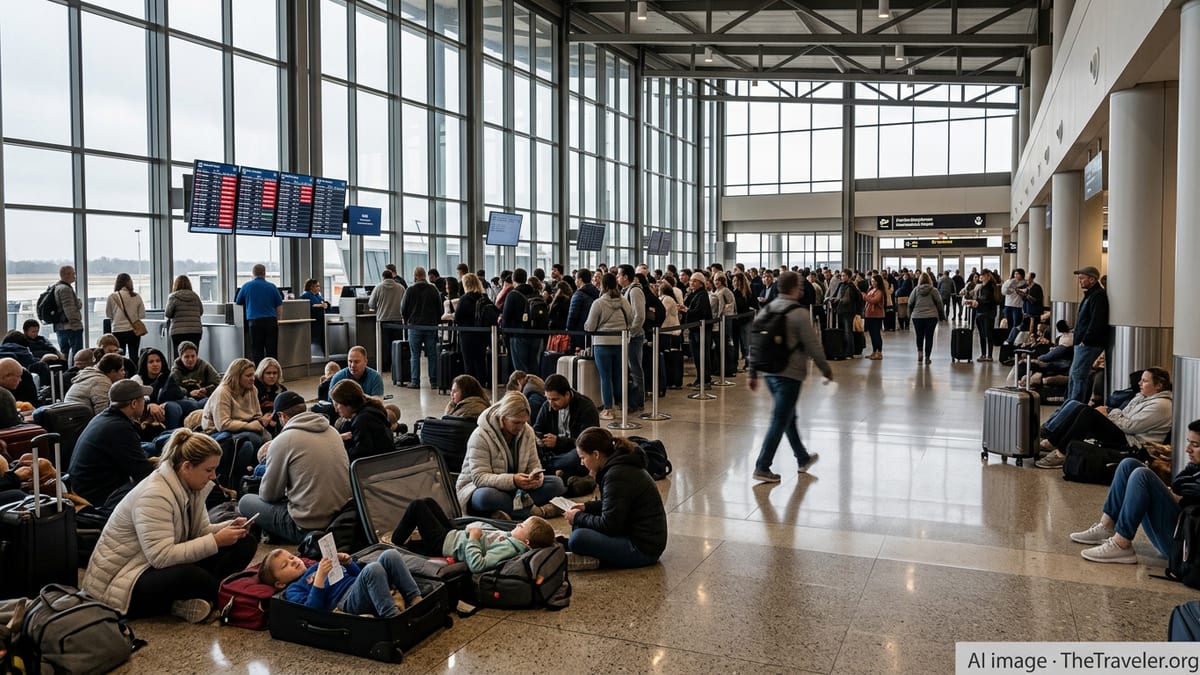
Cluster of Cancellations at Austin-Bergstrom
Publicly available flight-tracking dashboards for Saturday, April 4 indicate that at least seven departures and arrivals tied to American Airlines, Spirit Airlines and Southwest Airlines at Austin-Bergstrom International Airport were canceled outright, with additional services departing significantly behind schedule. The affected flights were concentrated in the morning and early afternoon peak, a period when the airport typically handles heavy domestic bank traffic.
The grounded services included a mix of point-to-point and connecting flights, disrupting itineraries for passengers who had planned onward travel through major hubs such as Dallas-Fort Worth, Atlanta and Newark. Data reviewed from multiple tracking tools shows that some replacement options quickly sold out, forcing travelers to accept next-day departures or lengthy, multi-stop routings through other cities.
The cancellations at Austin occurred against a backdrop of broader national disruption. Industry-focused publications and aviation data providers report elevated delay and cancellation rates across several U.S. airports in early April, with American Airlines, Southwest and Spirit all appearing prominently in disruption tallies.
Airport operational summaries for Austin list American, Southwest and Spirit among the most active carriers at the Barbara Jordan Terminal, underscoring how even a relatively small number of grounded flights can translate into long lines at ticket counters and rebooking desks when disruptions strike during a peak travel window.
Knock-On Effects in Dallas, Newark, Amsterdam and Atlanta
Because many of the affected flights linked Austin to major domestic and international gateways, the localized issues at Austin-Bergstrom had a wider reach. Flight-status boards and route-planning updates show that services connecting through Dallas-area airports, Newark Liberty International Airport, Amsterdam’s Schiphol Airport and Hartsfield-Jackson Atlanta International Airport were among those experiencing secondary delays.
In Dallas, where American Airlines operates its largest hub, aviation trade coverage for early April describes hundreds of delays and scores of cancellations in a single day, affecting travel not only within the United States but also to destinations in Europe and Latin America. The additional pressure from disrupted Austin feeder flights added complexity to an already strained operation as aircraft and crews arrived late or out of position.
Newark and Amsterdam, both important transatlantic gateways, also appeared in routing changes and delay patterns tied to the Austin disruptions. Travelers attempting to reach Europe via one-stop itineraries from Texas reported revised schedules that required longer layovers, rebooked connections or shifts to alternative European gateways when original links could not be protected.
In Atlanta, which serves as a critical connection point for southeastern U.S. and international traffic, schedule bulletins and airport service updates reflect increased congestion on peak-hour departures. Flights that would typically rely on timely feed from Austin and other Texas markets instead departed with altered passenger loads or adjusted departure times as airlines worked to absorb missed connections.
Part of a Wider Pattern of Early-April Disruptions
The Austin setbacks are emerging as part of a broader pattern of volatility in the U.S. air travel system at the start of April 2026. Recent reporting in travel and consumer outlets has highlighted widespread delays at multiple hubs, with Southwest Airlines, American Airlines and other major carriers experiencing elevated disruption levels on April 2 and April 3.
Network-level statistics compiled from flight-tracking services show that, on some days this week, hundreds of flights across the country have been delayed or canceled. In separate incidents away from Austin, individual airports such as Phoenix and Dallas-Fort Worth have each recorded well over 100 combined disruptions in a single day, illustrating how quickly operational challenges in one part of the system can spread.
Analysts cited in industry coverage point to a combination of factors behind the latest wave of irregular operations, including lingering aircraft and crew imbalances from the busy spring break period, tight capacity across airline fleets, and localized weather or airspace constraints. While the specific triggers at Austin on April 4 varied by flight and carrier, the end result for passengers mirrored the national picture: missed connections, lost time and a scramble for scarce alternative options.
The ongoing schedule volatility comes after several years of heightened operational strain for U.S. airlines. Industry observers note that staffing patterns, aircraft delivery delays and maintenance bottlenecks have all reduced the margin for error during peak travel days, making airports such as Austin-Bergstrom more vulnerable when a disruption cluster hits.
Impact on Travelers at Austin and Beyond
For travelers physically present at Austin-Bergstrom on April 4, the grounded flights and rolling delays translated into crowded gate areas, longer waits for customer service and a spike in same-day itinerary changes. Social media posts and online forum discussions from passengers describe early-morning departures that remained at the gate, followed by a series of schedule revisions before final cancellation notices appeared in airline apps.
Passengers connecting through Dallas, Atlanta, Newark and other hubs felt the impact even if they never set foot in Austin. Rebooking data and seat-map snapshots suggest that some travelers were split across multiple replacement flights, while others were offered hotel stays and next-day departures once same-day options filled up.
For international itineraries involving Amsterdam or onward European connections, missed transatlantic departures were particularly disruptive. When a late-arriving Austin feeder flight jeopardized a long-haul connection, some travelers were re-accommodated via different European hubs or rerouted through alternative U.S. gateways with available seats, extending total journey times by many hours.
Consumer advocates quoted in recent aviation analysis note that such rolling disruption events can have knock-on financial implications for travelers, including added costs for meals, ground transportation and last-minute lodging. While some airlines provide meal vouchers or hotel accommodations in certain circumstances, publicly posted policies vary widely by carrier and by cause of delay.
What Flyers Can Do as Spring Travel Ramps Up
With the early-April disruption wave now touching Austin-Bergstrom and several major connecting hubs, travel experts are reiterating a familiar set of precautions for passengers planning trips in the coming days and weeks. Guidance compiled from airline policy dashboards and consumer-travel publications emphasizes the importance of monitoring flight status closely, especially for early-morning departures and tight connections through busy hubs.
Many airlines now allow same-day changes or standby requests directly through mobile apps when disruptions are likely, which can be useful for travelers departing from airports such as Austin that have multiple daily frequencies to key hubs like Dallas and Atlanta. Publicly available recommendations also encourage booking longer connection windows when itineraries rely on single daily flights or international links.
For those already ticketed on American Airlines, Spirit or Southwest, experts suggest reviewing each carrier’s publicly posted customer-service commitments before travel days arrive. These documents outline what passengers may receive in the event of significant delays or cancellations, including options for rebooking, refunds in certain circumstances and any goodwill gestures that might be offered during large-scale disruption events.
Travel-planning resources further advise building flexibility into hotel and ground-transportation arrangements at both departure and arrival points, particularly when traveling through airports that have recently experienced elevated disruption levels. As the events at Austin-Bergstrom on April 4 show, a relatively small cluster of grounded flights can quickly expand into a multi-city challenge for airlines and passengers alike.