

More news on this day
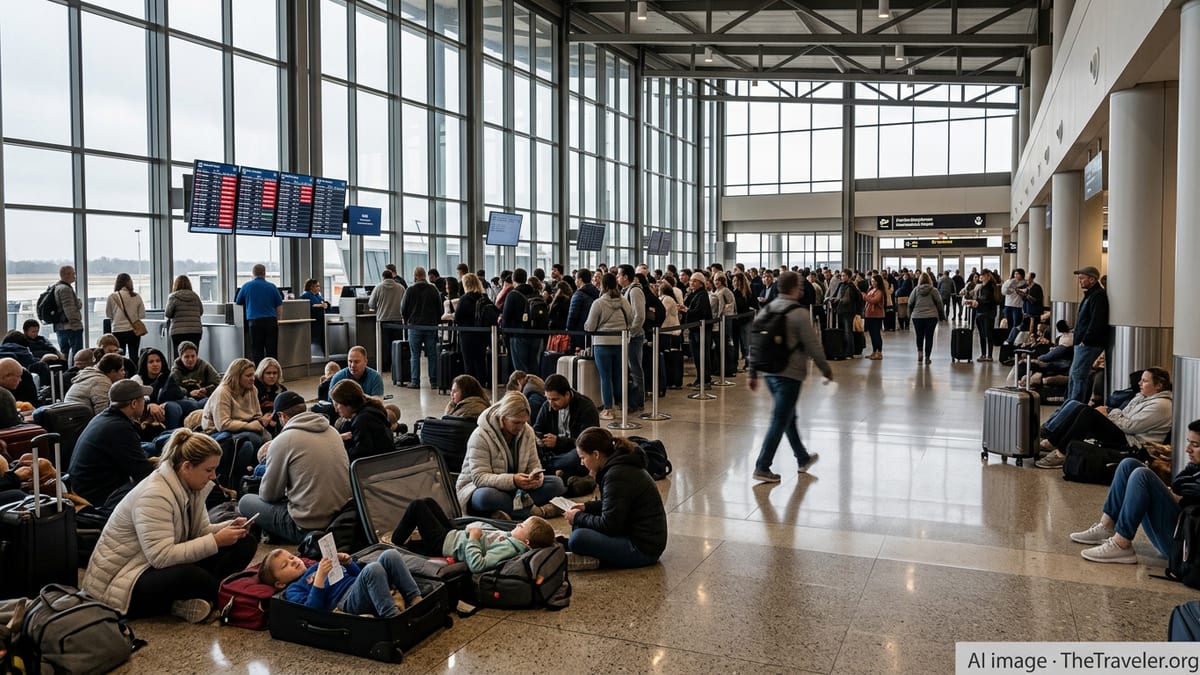
Spring travelers passing through Austin-Bergstrom International Airport on Friday are facing a fresh round of disruptions, with publicly available tracking data indicating more than 70 delayed departures and arrivals and at least a dozen cancellations affecting flights across the United States and on popular international routes.
Get the latest news straight to your inbox!
Morning Slowdowns Build Into Systemwide Disruption
Early flight-status snapshots for April 3 show Austin-Bergstrom’s operation under strain despite largely cooperative local weather, with carriers including United Airlines, Southwest Airlines and JetBlue Airways posting a growing list of delayed services. Flight-tracking boards reviewed midday listed roughly 77 flights operating behind schedule, spanning both departures and arrivals and touching nearly every major timeslot.
Alongside the delays, at least a dozen flights into and out of Austin have been canceled, trimming capacity on short-haul domestic legs as well as on longer transborder itineraries. The cancellations appear scattered across several airlines rather than concentrated with a single carrier, a pattern consistent with broader network stresses rather than a localized technical fault.
Operational data and recent industry coverage suggest that the Austin disruptions are unfolding in the wake of an already taxed national system, with prior storms and staffing challenges at other hubs leaving little slack. Even minor schedule adjustments at one airport can ripple through connected routes, and today’s figures at Austin indicate that many passengers are being rebooked or rerouted to reach their destinations.
Despite the volume of disruption, the Federal Aviation Administration’s national status dashboard has not listed a formal ground stop at Austin, pointing instead to knock-on congestion and airline-specific rescheduling decisions rather than a single controlling restriction on flights.
Key Routes Affected: Dallas, New York, Boston, London and Cancun
The impact of Austin’s rough travel day is being felt across several of the airport’s most heavily used corridors. Published flight information shows delays on northbound services to Dallas-Fort Worth and Dallas Love Field, important connections for both business travelers and those heading to further domestic and international destinations.
Flights toward the Northeast are also seeing extended departure and arrival times. Services linking Austin with New York area airports and Boston Logan International have been flagged for delays, adding extra hours to journeys on routes that were already sensitive to recent weather and congestion episodes in the region.
International and leisure travelers are not spared. Southbound flights from Austin to Cancun and other Mexican resort destinations are operating behind schedule or have been canceled outright in some cases, according to airline and travel-agency status pages reviewed Friday. On the transatlantic side, at least one Austin itinerary connecting onward to London has faced disruption, underscoring how a localized schedule wobble can complicate long-haul plans timed around limited daily frequencies.
The mix of affected destinations indicates that both point-to-point travelers and those relying on Austin as a stepping stone to other hubs are encountering challenges, with some itineraries now involving forced overnight stays or extended layovers while airlines rebuild schedules.
Multiple Airlines Under Pressure, With Limited Spare Capacity
Among the carriers listing the most visible schedule changes at Austin are United, Southwest and JetBlue, three airlines that play different but significant roles in the airport’s route network. Publicly available performance summaries from recent weeks show that each has already been juggling weather disruptions and tight crew and aircraft rotations at other hubs, leaving limited room to absorb fresh delays.
United’s route structure ties many Austin flights into large connecting banks at Houston, Denver and Chicago, which have all experienced bouts of severe weather or congestion during the past several days. According to coverage in national outlets, those hubs are still working through residual delays, making it more difficult to get aircraft and crews into position for on-time departures from Austin.
Southwest, which operates a busy slate of point-to-point flights across Texas and the central United States, has seen its Dallas and Houston operations periodically slowed by thunderstorms and high winds. Travel-industry reporting on recent disruption waves notes that when large numbers of short-haul flights stack up late, crews can quickly reach duty-time limits, forcing additional cancellations even after storms pass.
JetBlue, while a smaller player at Austin than the two big domestic rivals, has been highlighted in federal punctuality statistics for elevated delay and cancellation percentages during recent operational stress events. With many of its aircraft committed to dense schedules in Boston and New York, irregular operations at those airports can cascade into secondary markets like Austin.
Weather, Staffing and Network Strain Create a Fragile Backdrop
Although Austin itself has not been the center of a major storm on Friday, the airport’s rough day is unfolding against a backdrop of turbulent early spring weather across the central and eastern United States. Over the past week, reports from multiple cities have documented thunderstorms, high winds and low ceilings that temporarily constrained arrivals and departures at major hubs, from Chicago and Houston to the Washington region.
Industry analyses published in recent days describe a national system still recovering from those repeated disruptions, with aircraft and crews out of their usual patterns and maintenance windows squeezed. When the network operates in this state, even brief slowdowns or minor scheduling hiccups at one or two airports can lead to disproportionate congestion elsewhere, as flights wait for gates, crew changes or connecting passengers.
Staffing remains an additional pressure point. Trade publications and federal reviews have repeatedly flagged shortages of air traffic controllers and ground staff in key regions, noting that congestion is more likely and more prolonged when facilities are running with lean teams. Travelers at Austin on Friday are experiencing what those trends look like in practice, as modest local demand meets a brittle national system.
Analysts point out that, with Easter and early spring break travel swelling passenger volumes, airlines are operating close to maximum capacity on many routes. That leaves fewer spare aircraft and open seats for recovering from a day like today, especially on popular leisure links such as Cancun and major transatlantic gateways like London.
What Travelers Through Austin Should Expect
For passengers scheduled to travel through Austin-Bergstrom on Friday and into the weekend, expert commentary across travel advisories emphasizes preparation and flexibility. Publicly available guidance from airlines and government agencies recommends checking flight status frequently, as departure times and gate assignments may continue to change while carriers work through the backlog.
Travel commentators also note that same-day rebooking options are likely to be tighter than usual on routes to Dallas, New York, Boston, London and Cancun, given the combination of seasonal demand and reduced effective capacity from delays and cancellations. Some travelers may find it faster to accept alternative routings through secondary hubs or to split itineraries over two days if long-haul connections are at risk.
Those departing from Austin are being advised in local discussions and national travel columns to arrive earlier than they might on a typical day, particularly for morning and late-afternoon banks when congestion tends to peak. Longer security lines, packed gate areas and limited seating near power outlets have been recurring themes in traveler reports from other disrupted airports this week.
While Friday’s figures at Austin-Bergstrom are significant, they also fit a broader 2026 pattern in which weather volatility, staffing challenges and tight airline scheduling have combined to produce frequent pockets of disruption across the network. For now, publicly available information suggests that travelers using Austin as a gateway to the rest of the United States, Mexico and Europe should be prepared for the possibility of extended ground time before they reach their final destinations.