

More news on this day
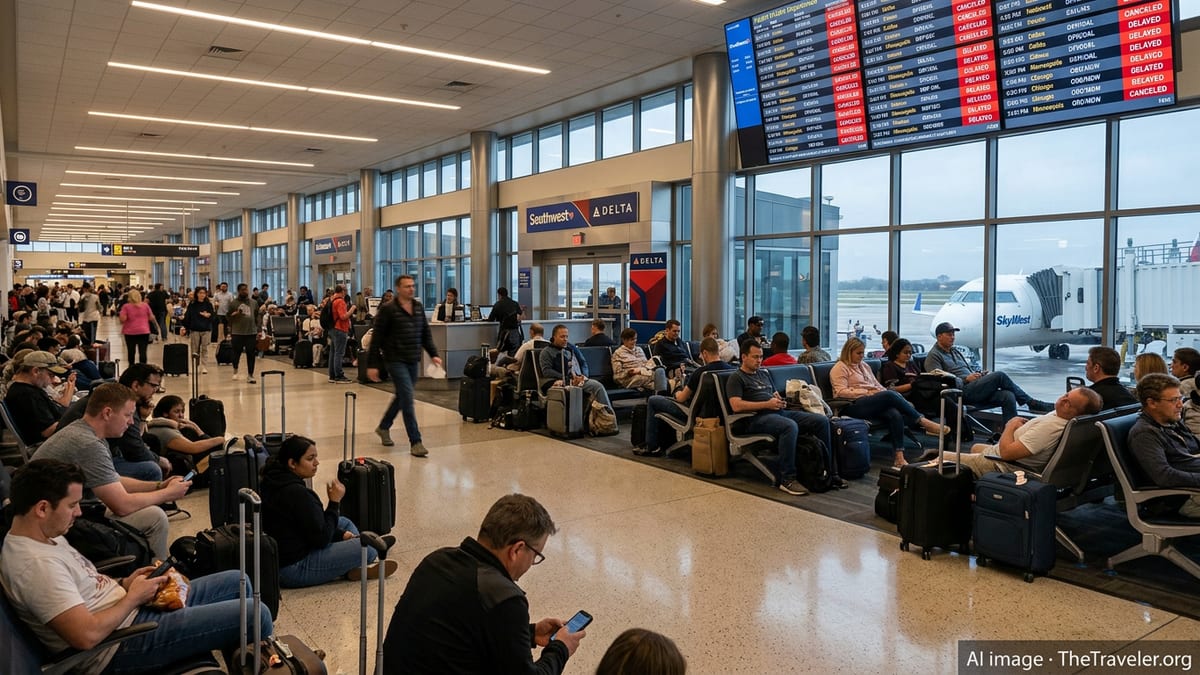
Passengers traveling through Austin–Bergstrom International Airport on March 15 faced mounting disruption as more than a dozen flights were canceled and many more delayed on major routes to Dallas, Minneapolis, Chicago and other cities, affecting operations by Delta Air Lines, Southwest Airlines, SkyWest and additional carriers.
Get the latest news straight to your inbox!
Spring Travel Crunch Collides With Operational Strains
Publicly available tracking data for March 15 show that Austin–Bergstrom International Airport experienced a fresh wave of flight disruptions, with cancellations and delays concentrated on some of its busiest domestic corridors. Services to major hubs including Dallas, Minneapolis and Chicago were among the most affected, complicating travel plans at the height of the spring break and South by Southwest period.
Reports from passenger forums and flight status boards indicate that the disruption was not confined to a single airline. Delta Air Lines, Southwest Airlines and regional operator SkyWest all recorded canceled departures and late-running services into and out of Austin. Additional carriers reported knock-on delays as aircraft and crew were left out of position by the earlier schedule changes.
The timing intensified the impact. Austin is currently in one of its busiest stretches of the year, with a seasonal surge in demand layered on top of an already constrained airfield and terminal operation. Travelers described crowded check in areas, long queues and uncertainty around departure times as airlines worked to reshuffle aircraft and rebook passengers.
While the total number of affected flights was modest compared with nationwide disruption episodes, the concentration on key connecting routes magnified the effect for travelers relying on tight connections to reach other parts of the United States and international destinations.
Weather Around Key Hubs Adds Pressure
Although conditions in Austin remained largely suitable for flying, adverse weather at other major airports appears to have played a significant role in the cancellations and delays. In particular, strong winter weather impacting Minneapolis St. Paul prompted widespread schedule changes by Delta and its regional partners, with many of those aircraft and crews normally flowing through Austin.
Discussion threads from affected passengers describe early morning waves of cancellations on regional services, especially those operated by SkyWest on behalf of major carriers. Those lost rotations limited options for repositioning aircraft back to Texas, contributing to gaps in service on Austin routes to northern hubs, including Minneapolis and Chicago.
Operational data released in previous federal on time performance reports highlights how quickly weather issues at distant hubs can cascade through regional networks. When crews and aircraft are stranded away from their normal bases, subsequent flights even in clear weather locations are vulnerable to extended delays or last minute cancellations.
On March 15, that pattern was visible in Austin as later departures inherited delays that originated hundreds of miles away. Travelers connecting through Dallas and Chicago reported missed onward flights despite departing from Austin under apparently normal local conditions.
Austin’s Growth Exposes Capacity Constraints
The latest disruption comes as Austin–Bergstrom continues to grapple with long running capacity challenges. The airport has seen rapid growth in passenger volumes in recent years, outpacing the expansion of gates, ramp space and security checkpoints. Regular users of the airport have repeatedly pointed to morning congestion, tight gate availability and extended ground holds as structural weak points.
Local commentary describes a pattern in which arriving aircraft are sometimes forced to wait for gates and departing flights queue on the taxiways, especially during peak departure banks for Southwest and the mainline carriers. Contracted ground handling arrangements for some airlines, including Delta and several regional operators, add another layer of complexity when staff and equipment are stretched across multiple flights at once.
Plans for additional gates and a new concourse are under way, with airlines expected to shift into expanded facilities over the next several years. Until that capacity comes online, however, Austin’s operation remains vulnerable to any external shock, from weather in other regions to staffing gaps and minor technical issues that might be absorbed more easily at larger hub airports.
On busy spring travel days, those underlying limitations can mean that even a relatively small number of cancellations leads to significant disruption, as rebooking options are limited and open seats on alternative departures quickly disappear.
Key Routes to Dallas, Minneapolis and Chicago Hit Hardest
The cancellations and delays on March 15 were concentrated on some of Austin’s most important links to the national network. Flights to Dallas, including services to both Love Field and Dallas Fort Worth, saw interruptions across multiple airlines, affecting passengers connecting to a broad range of domestic destinations.
Routes to Minneapolis St. Paul, a major hub for Delta, were among those most directly affected by the winter weather further north. Regional operations feeding into the hub experienced extensive disruption, which in turn reduced the availability of seats and onward connections for Austin based travelers aiming to reach the Upper Midwest, the Great Lakes region and transcontinental services.
Chicago services, both to Chicago Midway and Chicago O Hare, similarly recorded delays as aircraft arrived late from previous segments and crews reached the limits of duty time rules. With these three cities serving as key junctions in U.S. airline networks, disruptions on the Austin legs left some passengers stuck overnight or rebooked on circuitous routings through secondary hubs.
For leisure travelers headed home from central Texas festivals and for business travelers returning from conferences, the interruptions on these particular routes translated into missed meetings, added hotel costs and the need to improvise ground transport when flights could no longer deliver same day arrivals.
What Travelers Through Austin Should Expect Next
In the short term, schedule data suggest that airlines are working to stabilize operations into and out of Austin, with several carriers consolidating lightly booked flights and adjusting departure times to rebuild buffers between rotations. Some of the worst of the disruption tied to the northern weather system is expected to ease as aircraft and crews return to their planned positions.
Travel analysts note, however, that Austin’s structural congestion and the broader labor and capacity pressures across the U.S. airline industry mean that passengers should continue to plan for potential disruption on busy days. Suggestions commonly shared in public advisories include traveling with carry on luggage where possible, booking earlier flights in the day and allowing extra time for connections through congested hubs such as Dallas, Minneapolis and Chicago.
For Austin itself, the episode underscores both the city’s growing importance in the national air travel network and the strain that such rapid growth can place on infrastructure. As carriers add new seasonal and year round routes, each irregular operations day offers another test of how well the current system can adapt.
Until additional gates and expanded terminal facilities are fully in use, travelers relying on Austin–Bergstrom, particularly during major events and peak holiday periods, are likely to face an elevated risk of cancellations and delays whenever weather or operational issues ripple through the wider network.