

More news on this day
Australia has activated sweeping new immigration powers to bar most Iranian tourists from entering the country for six months, a move framed as a national security measure amid an escalating conflict involving Iran and mounting concern that visitors may be unable or unwilling to return home when their visas expire.
Get the latest news straight to your inbox!
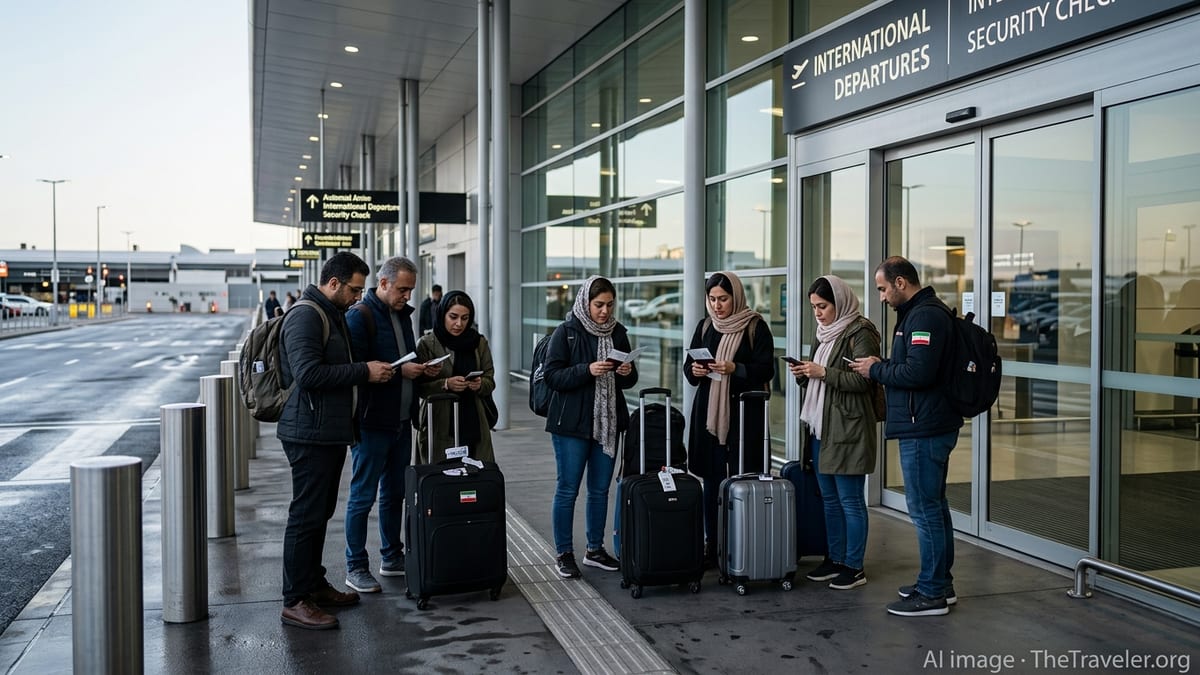
How the New Six-Month Ban on Iranian Tourists Works
The Australian government has used recently introduced “arrival control” powers to suspend entry for most Iranian citizens holding visitor visas, even if those visas were already granted and remain valid. Publicly available information indicates that the determination covers Iranian nationals who are outside Australia and planning to travel on visitor visas in the popular Subclass 600 category.
According to published coverage of the announcement on 25 March 2026, the suspension runs for six months beginning 26 March 2026. During this period, the majority of Iranian passport holders with visitor visas will be prevented from boarding flights to Australia or will be refused entry on arrival, unless they meet narrow exemption criteria. The change does not cancel visas outright but effectively renders them unusable for travel while the determination is in force.
Reports indicate that the pause could affect up to 7,200 Iranian nationals who already hold valid Australian visitor visas. Some may still be allowed to travel under individual assessments, but the default position is that new tourist arrivals from Iran are halted. Permanent visa holders and those with close Australian citizen or permanent resident family members are described in publicly available guidance as largely outside the scope of the restrictions.
The Department of Home Affairs has publicly described the move as being in the “national interest amid rapidly changing global conditions,” highlighting concern that temporary visitors from a country in active conflict may be unable or unlikely to depart Australia when their visas expire.
Legal Powers Behind Australia’s Tougher Travel Stance
The ban on Iranian tourists is the first major test of new laws that came into effect on 14 March 2026, which allow the immigration minister to issue an “arrival control determination” targeting specific cohorts of temporary visa holders. Under these provisions, holding a valid visa is no longer a guarantee of entry if the government decides that broader circumstances justify a temporary pause.
These powers were promoted as a rapid-response tool to deal with fast-moving international crises, such as conflict, regime collapse or mass displacement. Public analysis of the legislation notes that it enables Australia to block whole categories of arrivals for defined periods without the need to individually cancel thousands of visas, a process that can be administratively complex and vulnerable to legal challenge.
In practice, the Iranian case means that airline check-in staff and Australian Border Force officers will be instructed not to allow most Iranian visitor visa holders to travel to, or enter, Australia for the duration of the six-month window. The measure acts as a suspension rather than a permanent bar, although there is provision for extensions if the government judges that risks have not eased.
Migration specialists commenting in open forums have warned that the new powers could have wider implications for other nationalities if global instability increases. For now, publicly accessible information shows that Iran is the first and only country to be subject to a nationwide arrival pause under the updated legislation.
Regional Conflict, Security Designations and Risk of Overstays
The timing of the travel suspension is closely linked to the 2026 Iran war, in which Iran has come under sustained military pressure and regional tensions have surged. Australia has deployed defence assets in support roles in the Gulf and has repeatedly signalled concern about the broader security fallout of the conflict, including the potential for large-scale displacement.
Australia’s stance toward Iran had already hardened before the war escalated. In late 2025, the federal parliament formally designated Iran’s Islamic Revolutionary Guard Corps as a state sponsor of terrorism under newly created provisions of the Criminal Code. Human rights sanctions on senior Iranian officials and entities were expanded in early 2026 in response to violent crackdowns inside Iran, with the government citing serious abuses.
Against this backdrop, the Department of Home Affairs has stressed, in publicly released statements, that conflict in Iran increases the likelihood that some temporary visa holders could seek to remain in Australia beyond their permitted stay, whether by overstaying visas or pursuing protection claims. Officials have also pointed to practical obstacles, such as disrupted air links or a refusal by Iranian authorities to accept involuntary returns, which could leave visitors effectively stranded.
Recent commentary from migration advocates and community groups highlights fears that Iranian nationals who speak out against their government while abroad may face harsh reprisals if forced to return, including the possibility of detention or prosecution. These concerns add a humanitarian dimension to what the Australian government has framed primarily as a border management and national security decision.
Who Is Affected – and Who Is Exempt?
Based on publicly available summaries of the determination, the arrival ban applies principally to Iranian citizens holding visitor visas who are currently outside Australia. It does not target Iranian nationals already onshore, nor does it apply to Australian citizens, permanent residents or most holders of permanent humanitarian visas, regardless of their country of origin.
Reports indicate that certain exemptions may be available on a case-by-case basis, particularly for those with immediate family ties to Australians or for individuals with compelling compassionate or critical business reasons to travel. However, the threshold for exemptions has not been set out in detail in public sources, and travellers are being advised to assume that tourism-focused trips will not qualify.
Students, workers and other temporary migrants from Iran who are already in Australia are not directly affected by the arrival pause, though some observers note that further policy tightening in related visa categories cannot be ruled out as the conflict evolves. For now, the focus is squarely on preventing new tourist arrivals from Iran during a period the government considers unusually volatile.
Airlines are expected to play a key role in enforcing the determination by denying boarding at overseas airports to affected passengers. Travel agents and migration advisers are using official advisories and ministerial statements to inform clients of the risks of booking or attempting to re-route travel during the six-month suspension.
What Iranian Travellers and Australian Tourism Operators Need to Know
For prospective Iranian visitors, the most immediate impact is uncertainty. Many who applied months ago, paid fees and secured Australian visitor visas now face the prospect of cancelled or postponed trips, even though their visas technically remain valid in the system. Publicly shared guidance suggests that there is no automatic right to compensation for unused visas or associated travel costs.
Iranians with existing bookings are being urged, in general consumer advice circulating online, to contact airlines and accommodation providers promptly to explore rebooking or refund options. Travel insurers may be reluctant to cover losses where a government’s discretionary immigration decision, rather than a traditional force majeure event, prevents travel, making it important for affected passengers to closely review policy wording.
On the Australian side, tourism operators, language schools and tour companies that cater to the Iranian market are bracing for a sudden drop in arrivals. While Iranians represent a relatively small share of Australia’s overall visitor numbers, they often travel on longer itineraries that combine tourism, family visits and short-term study, delivering above-average per-trip spending in sectors such as accommodation, retail and domestic air travel.
Industry commentators note that the decision fits into a broader pattern of Australia recalibrating its migration program toward what policymakers describe as “orderly” and “manageable” flows. For travellers from other high-risk regions, the Iranian case is being watched closely as a real-time example of how swiftly Australian entry conditions can shift in response to geopolitical shocks.