

More news on this day
Thousands of air passengers across Australia and key international hubs faced major disruption as a wave of cancellations and delays rippled through Sydney, Melbourne, Brisbane, Perth and beyond, with publicly available tracking data indicating 88 flights cancelled and more than 1,230 delayed across multiple carriers.
Get the latest news straight to your inbox!
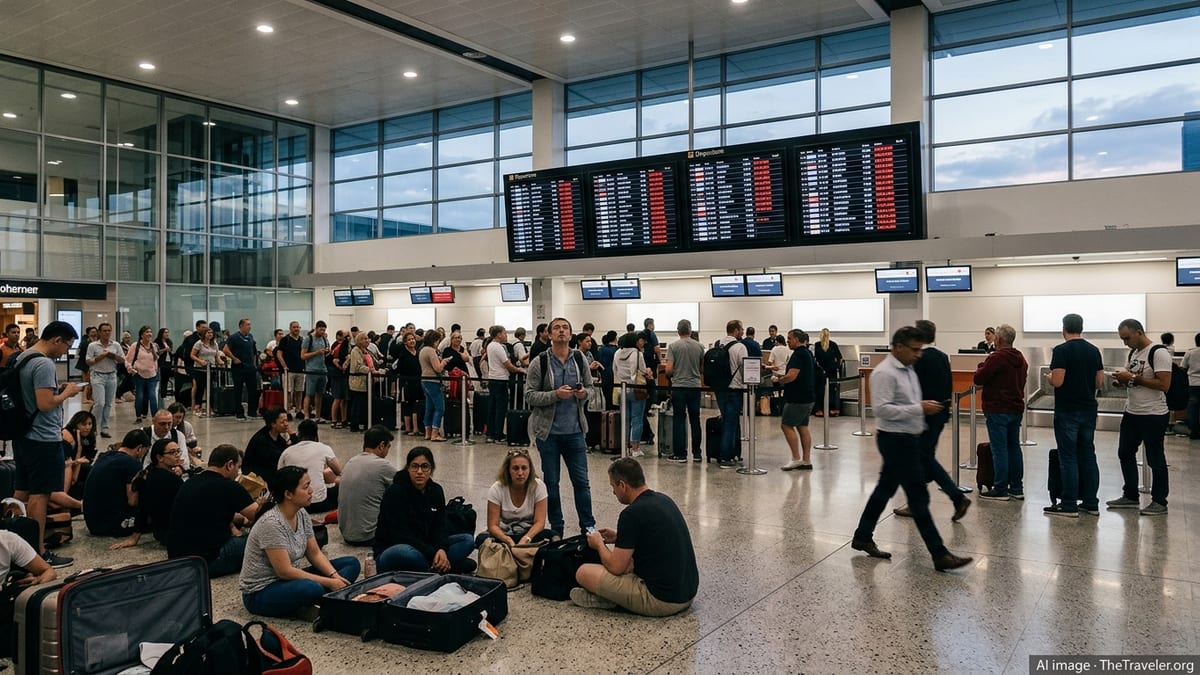
Network Disruption Spreads Across Australia’s Busiest Hubs
Major Australian gateways including Sydney, Melbourne, Brisbane and Perth experienced widespread schedule disruption, with congestion quickly spilling into secondary airports such as Canberra and Williamtown. Live flight-tracking dashboards and airport operations pages showed a sharp spike in late-running services through the morning peak that persisted into the afternoon, affecting both domestic and international departures.
The pattern of disruption appeared most pronounced on trunk routes linking Sydney with Melbourne and Brisbane, where delays compounded as aircraft and crew cycles slipped further behind schedule. Regional links into hubs, including services to and from Canberra and Williamtown, also suffered knock-on effects as airlines attempted to reposition aircraft and consolidate lightly loaded flights.
Airports reported longer queues at check-in, security and rebooking counters as passengers sought alternative connections, while terminal screens in several cities showed clusters of services departing more than an hour behind schedule. Observers noted that ground holds into Sydney in particular, combined with weather-related flow restrictions, contributed to rolling delays across the domestic network.
For travellers with onward international connections, missed links quickly became a significant concern, particularly for those connecting via the Middle East or New Zealand. Many were forced to re-route via alternative hubs or accept overnight stays at intermediate points when same-day options were no longer available.
Qantas, Air New Zealand, Emirates and Others Hit by Cascading Delays
Flag carrier Qantas bore a substantial share of the disruption, with a notable number of late-running services on its core east-coast routes and selected long-haul departures. Publicly available information from aviation monitoring services indicated multiple Qantas flights departing more than 90 minutes behind schedule, tightening turnaround windows at already busy terminals.
Trans-Tasman services involving Air New Zealand also felt the pressure, with departures between Australian east-coast cities and Auckland subject to extended holding or rescheduling. The tightly timed nature of these flights, often feeding long-haul connections to North America and the Pacific, meant even modest delays created complex rebooking challenges for affected passengers.
Gulf carrier Emirates, which operates extensive services linking Australia with Dubai and onward to Europe, Africa and the Americas, encountered additional strain as aircraft arriving late into Australian ports were turned around for overnight departures. Reports from passengers indicated that some Emirates flights were retimed or consolidated, particularly where earlier disruption in Abu Dhabi and other regional hubs had already constrained available aircraft and crew rotations.
Other international operators serving Australian cities, including airlines based in the Middle East and Asia, appeared to adjust schedules dynamically throughout the day, swapping aircraft types and rerouting passengers where possible. However, capacity on many long-haul routes remained tight, limiting the number of same-day alternatives for travellers with urgent connections.
Weather, Congested Airspace and Tight Scheduling Combine
Operational data and airport advisories pointed to a combination of adverse weather conditions, airspace management restrictions and tight airline scheduling as key drivers behind the cascading delays. Strong winds and low cloud at Sydney, Australia’s busiest international gateway, led to periods of single-runway operations and arrival rate reductions, instantly trimming the number of flights that could land each hour.
Once flow restrictions were in place, arrivals into Sydney from Melbourne, Brisbane, Perth and regional airports began accumulating significant holding times, both in the air and on the ground. Aircraft awaiting departure slots were held at gates or on taxiways, slowing the movement of traffic through already congested terminals and limiting the ability of airlines to recover lost time.
These challenges collided with high seasonal demand and tight aircraft utilisation patterns, a trend that has been noted in recent regulatory and industry reporting. With many carriers operating close to capacity on popular routes, even relatively short disruptions can leave little slack in the system to absorb delays without resorting to cancellations and consolidations.
Industry commentators have previously highlighted that persistent staffing pressures in parts of the aviation ecosystem, from ground handling to air traffic management, can magnify the impact of weather and technical issues. On busy travel days, that combination can quickly transform routine disruptions into systemwide congestion spreading across multiple states and international gateways.
Passengers Stranded in Canberra, Abu Dhabi, Williamtown and Beyond
While the highest concentration of cancellations and delays was visible at major capitals, the operational shockwaves were strongly felt in smaller airports and distant hubs. In Canberra and Williamtown, a series of late or cancelled inbound flights from Sydney and Melbourne left travellers facing lengthy waits for the next available seat, particularly on evening services.
Further afield, disruptions flowed through to key international connection points such as Abu Dhabi and other Middle Eastern hubs, where missed inbound connections from Australia forced re-accommodation across already busy onward banks of flights. Travellers reported being placed on later departures, sometimes a full day after their originally planned itineraries, or being rerouted via alternative European and Asian cities to reach final destinations.
Australian leisure travellers heading to Europe and North America during the busy early autumn travel period were particularly exposed, with complex multi-leg journeys vulnerable to a single missed sector. Families and business travellers arriving late into transit hubs often had to navigate unfamiliar airports to secure hotel vouchers, revised boarding passes and updated baggage tags.
At domestic terminals, airport seating areas and food courts became de facto waiting lounges for many passengers as they monitored rolling updates on departure boards. Some travellers chose to abandon same-day travel altogether when it became clear they would not reach their destination before midnight, opting instead to rebook for off-peak days when schedules were expected to stabilise.
Advice for Travellers Navigating Ongoing Disruption
With schedules still under strain and further flow-on effects likely, travel experts recommend that passengers build additional buffer time into connections, particularly when linking domestic Australian flights with long-haul departures. Publicly available guidance from airlines and consumer bodies generally advises allowing several hours between flights on separate tickets, and avoiding tight back-to-back departures where possible.
Checking flight status directly through airline and airport channels shortly before leaving for the airport can help travellers avoid unnecessary waiting, especially when weather or airspace restrictions are in play. Where flights have already been retimed or cancelled, many carriers now offer online self-service rebooking tools, enabling passengers to switch to alternative services without joining long queues at counters.
For those still planning upcoming trips, flexible fare options and travel insurance with clear disruption coverage terms may provide additional protection. Given the recent pattern of congestion affecting multiple Australian hubs and international gateways, a cautious approach to scheduling and routing, including consideration of longer connection windows, may help reduce the risk of becoming stranded mid-journey.
As airlines, airports and air navigation services work to clear backlogs and align schedules, travellers are likely to see continued pockets of disruption in the days ahead. Close monitoring of itineraries, prompt use of digital rebooking options and conservative connection planning remain key tools for minimising the impact of a volatile operating environment.