

More news on this day
Air travellers across Australia and beyond are facing another day of disruption as major hubs in Sydney, Melbourne and Brisbane report 29 flight cancellations and 183 delays, affecting domestic links and long-haul services connecting cities such as Canberra, Los Angeles, Christchurch and Kuala Lumpur.
Get the latest news straight to your inbox!
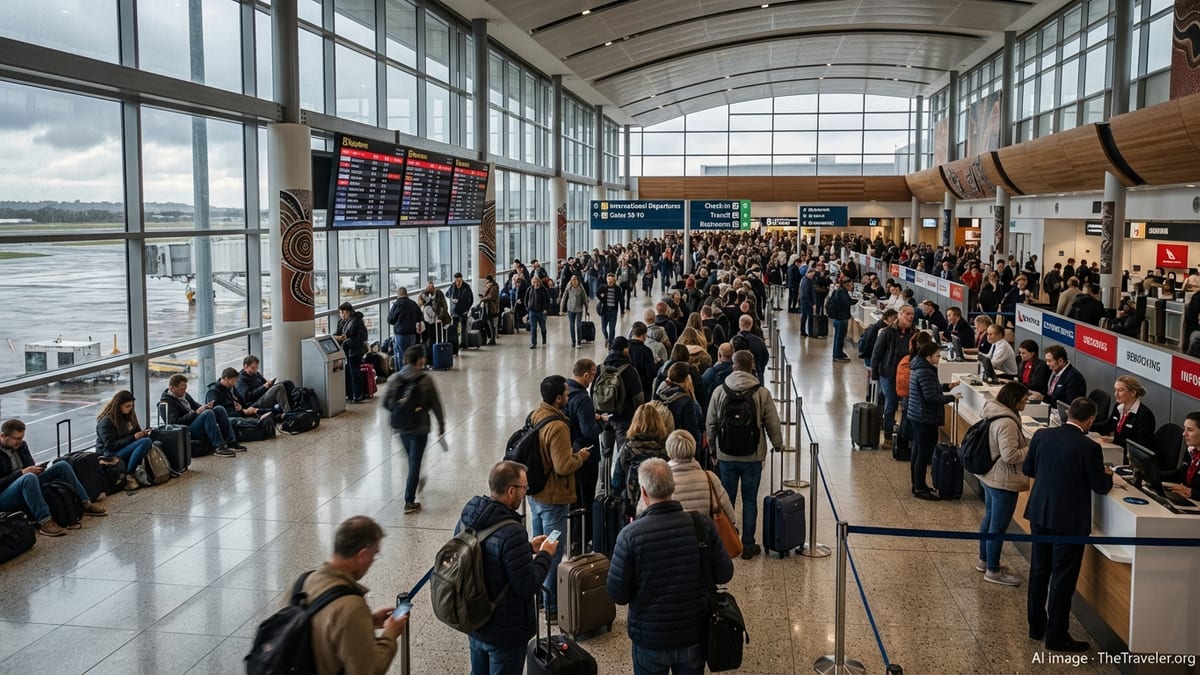
Airports Across Australia Register Fresh Wave of Disruption
Publicly available tracking data shows that a cluster of cancellations and delays has built up across Australia’s busiest east coast gateways, with 29 flights cancelled and 183 delayed over a concentrated operating window. The figures span Sydney, Melbourne, Brisbane and several secondary airports, pointing to a system under sustained pressure rather than isolated operational glitches.
Coverage from aviation and travel outlets indicates that this latest wave of disruption follows a pattern of elevated delay and cancellation levels recorded in recent months at Australian airports. Sydney Kingsford Smith, Melbourne Tullamarine and Brisbane Airport continue to feature prominently in national performance statistics, reflecting the heavy traffic volumes on trunk routes and the knock-on effects when schedules are stretched.
Flight-tracking dashboards highlight that today’s issues are not confined to a single carrier or route. Services operated by full-service and low-cost airlines alike are experiencing late departures and arrivals, with some flights cancelled outright and others pushed back repeatedly as ground operations and air traffic management adjust to congestion.
Major Airlines Affected, From Qantas to International Partners
The disruption is impacting a wide range of airlines, with Qantas again prominent in the lists of affected services alongside several international partners. Reports from travel news outlets note that flights operated by or on behalf of Qantas are among those cancelled or delayed, including services on busy domestic corridors between Sydney, Melbourne, Brisbane and Canberra.
International carriers are also caught in the turbulence. Publicly available data and industry coverage indicate that Cathay Pacific, Air New Zealand and Etihad Airways have all seen schedule pressure on services touching Australian hubs. Long-haul and regional routes linking Australia with hubs such as Hong Kong, Auckland and Abu Dhabi are sensitive to delays on departure from Sydney, Melbourne or Brisbane, which can cascade through wider networks.
These operational strains follow earlier episodes of large-scale disruption reported over recent days, when hundreds of delays and dozens of cancellations were recorded across Australian airports. Analysts observing the sector suggest that even when headline cancellation numbers appear modest, the cumulative impact of rolling delays can be severe for both airlines and passengers.
Ripple Effects to Los Angeles, Christchurch, Kuala Lumpur and Beyond
The immediate disruption within Australia is rippling across international networks, touching destinations as far apart as Los Angeles, Christchurch and Kuala Lumpur. Long-haul routes to North America are especially vulnerable, as delays departing Sydney, Melbourne or Brisbane can force crews and aircraft to operate close to duty limits, occasionally prompting last-minute retiming or consolidation of services.
Connections with New Zealand are also feeling the strain. Flights linking Australian east coast hubs with Christchurch and other New Zealand gateways have featured in recent delay statistics, with travel media noting that regional networks can be quickly thrown off balance when aircraft arriving late from Australia turn around for onward services.
In Southeast Asia, flights to and from Kuala Lumpur and other regional hubs can face similar pressure. When bottlenecks occur at Australian departure points, aircraft rotations tighten and airlines have less flexibility to recover from minor technical issues or weather-related slowdowns, making knock-on delays more likely.
Underlying Pressures: Operational Complexity and Weather Risks
Recent Australian government and industry reports on airline on-time performance highlight several structural factors behind recurring disruption, including congested airspace along the east coast, resource constraints within airlines and service providers, and weather systems that can quickly reduce capacity at key airports. When these elements align on busy travel days, delay levels can climb rapidly.
Analysts point out that routes between Sydney, Melbourne, Brisbane and Canberra rank among the most heavily trafficked in the country, leaving limited slack in schedules. A single ground hold or flow restriction can propagate across multiple rotations for the same aircraft, contributing to the kind of statistics now being reported: dozens of delays and a smaller but significant number of cancellations concentrated into short timeframes.
Industry commentary also notes that recovery from one day of major disruption can take several days, particularly for long-haul fleets. Aircraft that arrive late from overseas may miss maintenance windows or scheduled turns, forcing airlines to reshuffle equipment and crews, which in turn raises the risk of further last-minute changes.
What Travellers Can Expect and How to Respond
For passengers holding tickets on affected routes today, publicly available guidance from airlines and airports stresses the importance of monitoring flight status through official apps and departure boards. With delays accumulating across Sydney, Melbourne and Brisbane, same-day changes remain possible as carriers attempt to recover stretched timetables.
Travel experts advising on Australia’s current disruption episodes recommend allowing additional time for check-in, security and potential gate changes, particularly at peak morning and evening departure waves. Passengers connecting onward to destinations such as Los Angeles, Christchurch or Kuala Lumpur are being urged in public commentary to pay close attention to minimum connection times and consider rebooking if their initial leg shows significant delay risk.
Consumer advocates quoted in recent coverage argue that persistent patterns of delays and cancellations across the domestic network underscore the need for clearer passenger rights and compensation frameworks. While debate on regulatory changes continues, today’s figures on cancellations and delays serve as another reminder that travellers flying in and out of Australia’s major hubs should build flexibility into their plans whenever possible.