

More news on this day
Australia has introduced a temporary entry ban on Iranian nationals holding visitor visas, abruptly halting travel plans for thousands of would-be visitors as the government responds to heightened global instability, a deepening conflict involving Iran, and growing security and migration management concerns.
Get the latest news straight to your inbox!
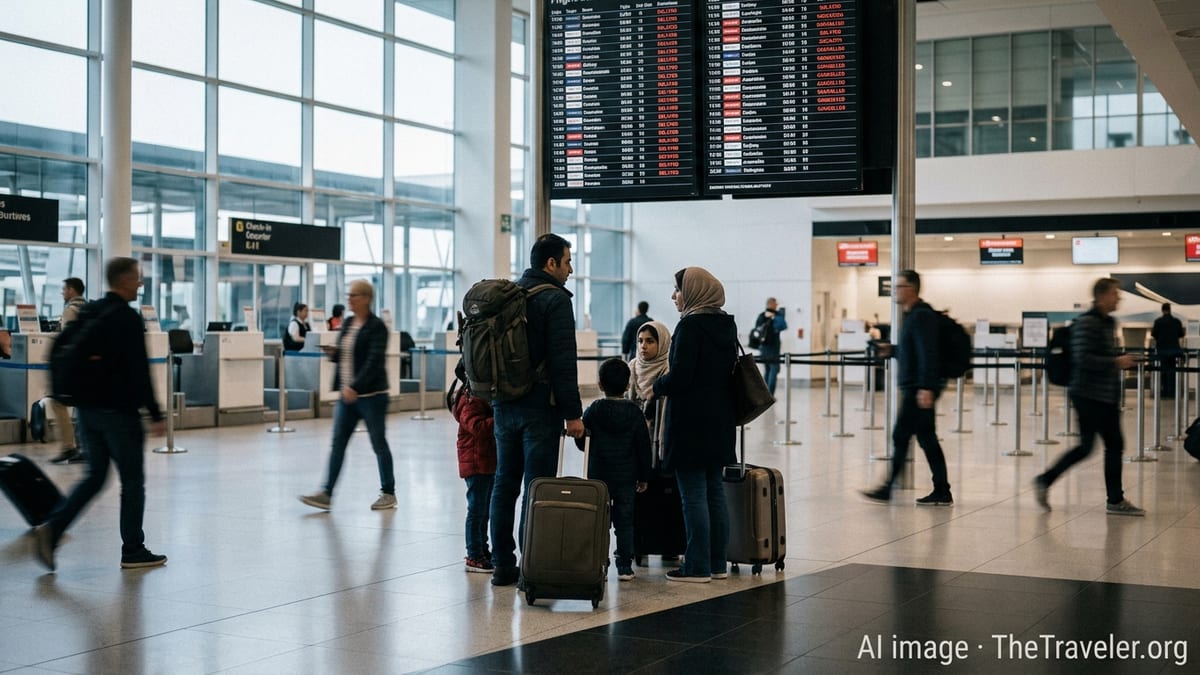
Targeted Arrival Pause on Iranian Visitor Visas
Publicly available information indicates that the Australian government has activated new powers to suspend the entry of specific groups of temporary visa holders, using an "arrival pause" mechanism under recent amendments to the Migration Act. Reports describe the measure as targeting visitor visa subclass 600 holders whose visas are linked to Iranian passports and who are currently outside Australia.
Coverage in Australian and international media suggests the pause is set at six months and applies to tourists and family visitors, not to permanent visa holders or those already inside the country. Commentary from migration specialists notes that the decision does not technically cancel existing visas but instead prevents affected travelers from boarding flights or being admitted at the border during the pause period.
Discussion in the migration law community indicates that the new framework, based on section 84B of the Migration Act, allows the government to temporarily halt the entry of whole categories of non-citizens where it considers this necessary in the national interest. Although the legislation does not name Iran, analysis of public statements and travel industry briefings points to Iranian nationals with visitor visas as the first group directly impacted by this new tool.
Security Climate and Geopolitical Backdrop
The decision comes amid an acute deterioration in regional security involving Iran, with open conflict drawing in the United States, Israel and other actors. International reporting highlights concerns about the potential for spillover violence, cyber operations and proxy activity outside the immediate war zone, prompting a broader reassessment of security risks linked to cross-border movement.
Australian commentary points to a longer trajectory of strained relations with Tehran, including previous sanctions over human rights issues and Iran’s provision of drones to Russia. Recent coverage of humanitarian visa grants to members of Iran’s women’s national football team, issued amid fears for their safety during the current war, underscores how quickly conditions for individual Iranians can change and how Australia is simultaneously tightening some channels while expanding protection pathways for others.
Analysts observing the policy shift argue that the temporary ban on visitor arrivals from Iran reflects a wider pattern among Western governments of recalibrating risk thresholds in response to overlapping security crises. At the same time, rights advocates caution that measures framed around national security can have far-reaching effects on ordinary travelers, including students, tourists and family members with no links to security concerns.
Scale of Impact on Iranian Travelers and Diaspora Families
Figures cited in recent public discussions of the policy suggest that around 7,200 Iranian nationals currently hold valid Australian visitor visas and could be affected by the arrival pause. While not all of these visa holders are expected to attempt travel during the six-month window, the numbers point to a significant cohort of people whose plans for tourism, family visits or short-term stays are now uncertain.
Iranian diaspora communities in Australia, particularly those with elderly parents or close relatives living in Iran, are reported to be among the most directly impacted. Many had arranged long-postponed family reunions following the disruptions of the pandemic and worsening instability in the Middle East, only to find that relatives are suddenly unable to board flights despite holding valid visas issued under existing criteria.
Travel agents and education consultants tracking the changes note that the measure currently focuses on visitor visas rather than student or work visas. However, the discretionary nature of the arrival-control powers has generated concern among prospective travelers from other conflict-affected regions, who fear that similar pauses could be triggered with little advance warning, disrupting study schedules, business plans and major life events.
Legal Mechanism and Human Rights Concerns
The new arrival pause is grounded in recently enacted amendments that enable the minister to suspend the ability of specified classes of temporary visa holders to travel to or enter Australia. Legal analyses circulating in the public domain explain that this approach was designed to avoid explicitly naming nationality groups in primary legislation, in part to sidestep anti-discrimination challenges, while still allowing government to respond quickly to emerging crises.
Human rights organizations and refugee advocacy groups have raised concerns that the framework could enable broad, nationality-focused restrictions in practice, even if the underlying law is framed in neutral terms. Submissions to parliamentary and departmental processes over the past year warned that such powers risk undermining individualised assessment in the visa system, particularly for people fleeing persecution or seeking to join family members in safety.
Specialists in migration law stress that affected travelers may have limited avenues for review, as the pause operates at the level of entry rather than visa grant or cancellation. This distinction means that many Iranians with visitor visas remain technically lawful visa holders on paper, but in practical terms are unable to exercise the travel rights that those visas ordinarily confer until the pause is lifted or an exemption is granted.
Tourism, Aviation and the Broader Travel Outlook
The immediate economic impact of the ban on Australian tourism is expected to be modest in aggregate terms, as Iranian visitor numbers are relatively small compared with arrivals from major markets in Asia and Europe. Nonetheless, for airlines, tour operators and inbound specialists serving niche Middle Eastern and diaspora markets, the sudden suspension represents a sharp and disruptive shock.
Industry observers note that the move adds another layer of unpredictability to an international travel system still recovering from pandemic-era border closures and recent disruptions caused by airspace restrictions over conflict zones. Airlines operating connecting routes between Iran and Australia via third countries must now manage rebookings, refunds and complex passenger communications for travelers who can no longer complete their journeys.
For travelers globally, the Australian decision is seen as part of a wider trend in which governments are quicker to recalibrate visa and entry settings in response to fast-moving geopolitical events. Travel advisers increasingly recommend that passengers from conflict-affected regions, and those holding passports from countries facing sanctions or diplomatic disputes, monitor entry rules up to the day of departure and prepare contingency plans if conditions change.