

More news on this day
Passengers across Australia are facing another day of severe travel disruption as 666 flight delays and 12 cancellations hit services operated by Jetstar, Qantas, Alliance Airlines and other carriers across Melbourne, Sydney, Brisbane, Perth, Cairns and the broader Geelong region, compounding an already difficult summer for domestic and international air travel.
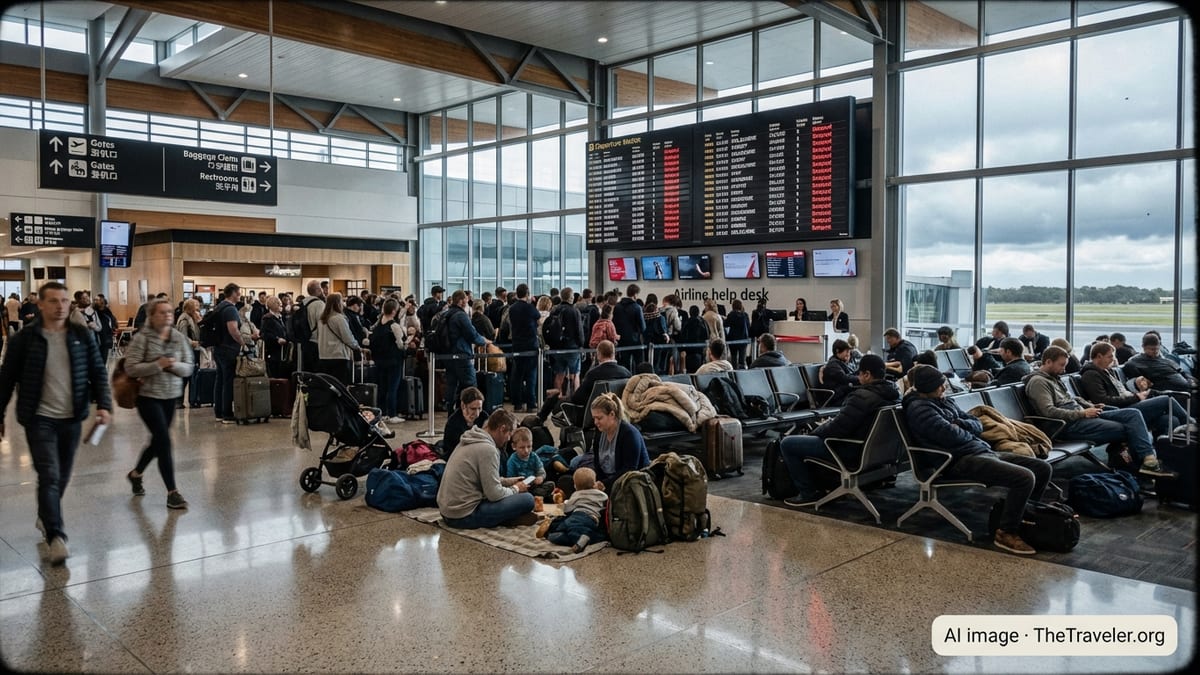
Major Hubs Buckle Under Mounting Delays
The latest figures, compiled on February 24, 2026, point to a fresh wave of schedule disruption concentrated at Australia’s busiest gateways, with Melbourne, Sydney and Brisbane once again reporting the heaviest operational strain. These three airports account for the bulk of the 666 delays logged across the network, with knock-on effects rippling into regional links and international connections.
At Melbourne Tullamarine and Sydney Kingsford Smith, ground operations teams have struggled to recover schedules following a combination of earlier weather disruptions, air traffic flow restrictions and aircraft rotation issues. As aircraft and crew fell out of position, short-haul services bore the brunt, leaving passengers facing rolling departure pushes and extended waits at the gate.
Brisbane has experienced similar pressure, with late-arriving aircraft from southern states affecting outbound services to Cairns, Perth and other key domestic destinations. Airline planners report that once delays begin to stack in the morning peak, it can take the remainder of the day to rebalance aircraft utilisation and crew duty limits, even when no further external shocks occur.
Perth and Cairns, while smaller than the east-coast hubs, have not escaped the disruption. Delays on long-haul and transcontinental services into Western Australia have flowed through to connecting regional flights, while in Far North Queensland, busy leisure routes have been hampered by late inbound aircraft and tighter turnaround times.
Jetstar, Qantas and Alliance Among Most Affected Carriers
Low-cost carrier Jetstar and flag carrier Qantas are among the operators reporting the largest absolute number of delayed services, reflecting their substantial market share on trunk routes linking Melbourne, Sydney, Brisbane and regional centres. High aircraft utilisation and tightly timed schedules have left both groups particularly exposed when weather or airspace constraints reduce operating buffers.
Alliance Airlines, which runs a mix of charter, regional and contracted services, has also reported performance challenges, notably on routes feeding into Brisbane and Perth. With Alliance aircraft often operating multi-sector rotations for mining, corporate and regional contracts, a delay early in the day can cascade across multiple communities and work sites.
Other domestic operators, including QantasLink, Virgin Australia and Regional Express, have likewise faced elevated delay levels, though in many cases with fewer outright cancellations. Airlines have increasingly opted to operate flights with longer delays rather than cancel outright where possible, in an effort to preserve connectivity and avoid stranding passengers in smaller centres overnight.
Despite this strategy, 12 flights have still been cancelled across the affected cities, most of them concentrated in already congested mid-morning and early evening peaks. These cancellations have tended to target frequencies where alternative services are available later the same day, but for travellers with tight international connections, the impact has nonetheless been severe.
Weather and Airspace Constraints Drive Operational Stress
Industry sources indicate that the latest surge in delays is rooted in a familiar blend of severe weather conditions and flow-control measures imposed by air traffic management. Periods of heavy rain, strong winds and low cloud have reduced runway capacity at several major airports, forcing controllers to widen separation distances between arrivals and departures for safety reasons.
Such restrictions quickly create bottlenecks in already busy morning and afternoon banks of flights, particularly along the east coast corridor where traffic density is highest. When capacity is cut, airlines are required to hold aircraft on the ground, leading to late departures that echo through the day’s timetable. Recovery is further slowed when thunderstorms or crosswinds periodically shut down runway configurations, forcing further rescheduling.
Airlines are also still balancing the lingering effects of aircraft maintenance backlogs and fleet transitions. Several carriers, including members of the Qantas Group, have older aircraft cycling out of service and new deliveries arriving later than originally planned, reducing the amount of spare capacity available to cover unexpected disruptions. With fewer standby aircraft on hand, any unplanned technical or weather-related issue is more likely to tip a full schedule into rolling delays.
Operational experts note that while staff shortages are less acute than in previous years, key specialised roles in engineering, air traffic control and ground handling remain under pressure, especially during peak holiday and business periods. This leaves limited flexibility to rapidly scale up operations when weather windows briefly improve.
Knock-on Impacts for Regional Centres Including Geelong
The effects of the disruption have not been confined to major metropolitan airports. The Geelong region, served primarily through Melbourne Tullamarine and the nearby Avalon Airport, has seen commuters and holidaymakers grapple with extended journey times as delayed or cancelled flights force last-minute itinerary changes and missed ground transport connections.
Passengers traveling between Geelong and other parts of Victoria or interstate have reported crowded terminal areas, longer queues at check in and security, and lengthy waits for rebooking assistance. With some services re-timed or consolidated at short notice, travellers relying on tight bus or train connections onward from Melbourne have found themselves arranging unplanned overnight stays or alternative transport at personal expense.
Tourism operators in coastal and regional destinations reachable via Cairns and Perth have also expressed concern about the reliability of air links during what should be a strong travel period. When late inbound flights push back tour departures or cause missed day trips, the economic impacts flow quickly to accommodation providers, attractions and hospitality venues that depend heavily on predictable arrival patterns.
Local airports and tourism bodies are urging travellers heading to regional areas to build additional buffer time into itineraries, particularly when connecting from major hubs that are already operating near capacity. Advisories emphasize checking flight status frequently on the day of travel and considering more flexible, refundable booking options where budgets allow.
Travellers Urged to Plan for Disruptions as Summer Ends
As Australia moves through the final weeks of the southern summer travel season, airlines and airports are advising passengers to prepare for the possibility of continued intermittent disruption, especially on days with adverse weather forecasts. Travellers are being encouraged to arrive at airports earlier than usual, monitor airline apps and airport departure boards closely, and allow additional time for connections.
Consumer advocates recommend that passengers keep records of delay and cancellation notifications, as well as receipts for any additional accommodation or transport costs incurred while stranded. While compensation rules in Australia differ from those in some overseas jurisdictions, clear documentation can support refund or goodwill claims, particularly when disruptions are linked to operational rather than purely weather-related causes.
For airlines, the latest round of delays and cancellations serves as a reminder of the fragility of tightly optimised networks operating in a volatile environment. Carriers are under growing pressure from both regulators and the traveling public to improve on-time performance, enhance communication during disruptions and invest in more resilient scheduling models that can better absorb inevitable weather and airspace shocks.
In the meantime, passengers traveling through Melbourne, Sydney, Brisbane, Perth, Cairns and the broader Geelong catchment are likely to face a measure of uncertainty. With 666 delays and 12 cancellations recorded across the network, the message from both the industry and travel experts is clear: check your flight early and often, and be prepared for plans to change.