

More news on this day
Air travel across Australia is facing fresh disruption, with reports indicating that Qatar Airways, QantasLink, Air New Zealand and several other carriers have collectively cancelled more than a dozen services and delayed hundreds more across Melbourne, Sydney, Brisbane, Adelaide and Perth in recent days.
Get the latest news straight to your inbox!
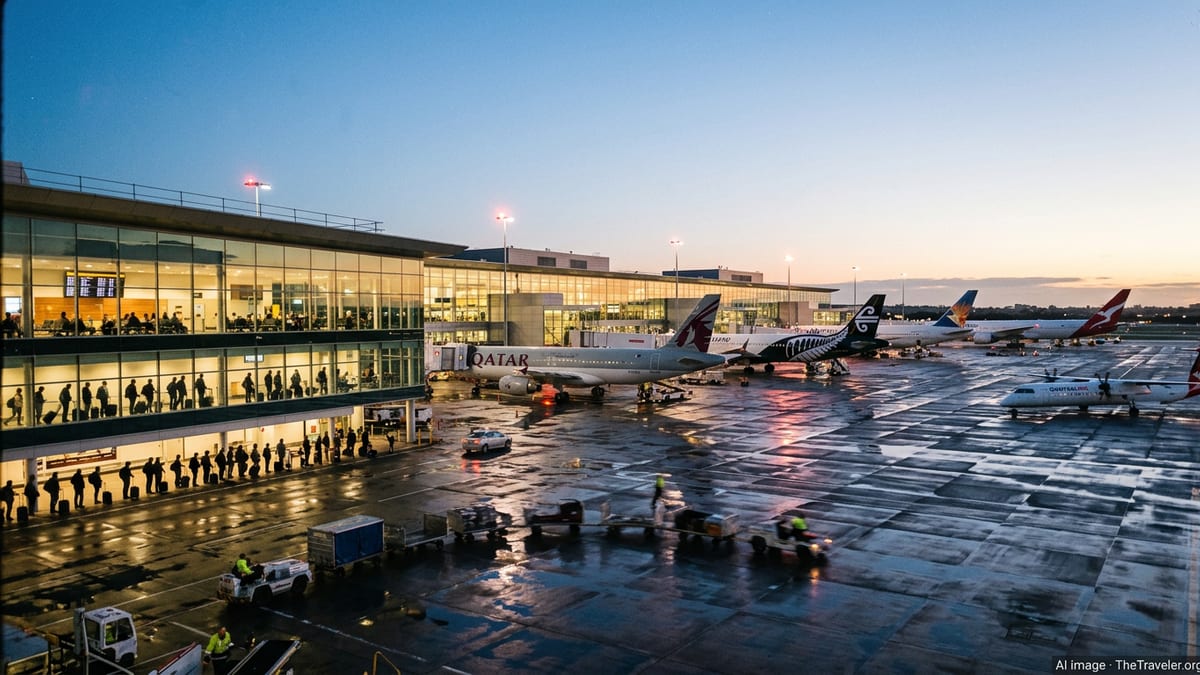
Major Routes See Rolling Wave of Cancellations
Published coverage and live flight-tracking data point to a significant cluster of disrupted services affecting both international and domestic routes, particularly those linking Australia to long-haul destinations in Europe, the Middle East and North America. Long-haul carriers such as Qatar Airways, which operate key connections out of Melbourne, Sydney, Brisbane, Adelaide and Perth, appear prominently in the latest lists of cancelled and heavily delayed departures.
Regional and domestic operations have also been hit. QantasLink, which feeds traffic from smaller Australian cities into the major hubs, has recorded a series of short-haul cancellations and late-running services, compounding the knock-on effects for passengers attempting to make onward international connections. Publicly available performance reports for the domestic market over the past year already show elevated cancellation and delay rates, and the current disruption is adding further strain to an already stretched system.
Additional interference has been reported on trans-Tasman routes, where Air New Zealand links Australian gateways with Auckland, Wellington and Christchurch. Delays on these services are contributing to longer overall journey times for travellers connecting onward to North America, Asia and the Pacific, and are feeding into a broader pattern of schedule instability across the region.
While individual airlines cite a mix of operational pressures, capacity constraints and regional airspace complications in earlier statements about recent disruptions, the net effect for travellers in mid-March has been a sharp and visible spike in last-minute cancellations and extended delays across multiple carriers and cities.
Operational Strains at Key Australian Hubs
The country’s busiest gateways, including Sydney, Melbourne and Brisbane, are shouldering much of the burden. Airport movement logs, curfew-related reports and recent aviation industry data highlight periods of congestion and irregular operations, particularly in peak evening bank times when long-haul services are scheduled to depart.
Adelaide and Perth have also seen notable disruption. Public curfew dispensation reports show that at times airlines operating into and out of Adelaide, including Qatar Airways and Qantas-affiliated carriers, have required special approvals to land or depart outside normal night-time limits after earlier delays cascaded through the system. These requests underline how closely timed evening arrivals and departures can quickly unravel when upstream services run late.
In Perth, which serves as a western gateway for flights to Europe, the Middle East and Africa, late inbound services are feeding directly into missed connections and late-night rebookings. Travellers connecting between domestic and international legs are particularly exposed when weather, air traffic management constraints or ground handling delays disrupt already tight turnarounds.
Compounding the situation, several airlines have been operating with relatively lean spare capacity, leaving limited room to absorb irregular operations. When an aircraft or crew rotation falls out of place at one end of the network, the ripple effects can travel quickly across the country’s interconnected schedule.
Knock-on Impacts for International and Trans-Tasman Travelers
The turbulence is being felt most acutely by international travellers whose journeys involve multiple sectors and tight connection windows. Reports from passenger forums and publicly shared itineraries describe itineraries unraveling after a single delayed domestic sector prevents boarding of a long-haul flight, forcing complete rerouting or overnight stays.
Travelers on itineraries combining Australian domestic sectors with long-haul Qatar Airways services to Doha have described multiple instances of late-notice cancellations and significant schedule changes. Similar stories have emerged around connections from Australian capitals into New Zealand on Air New Zealand and then onward to North America or the Pacific, where even modest departure delays in Australia can translate into missed onward flights in Auckland.
Capacity constraints on alternative routings through Asia and North America are putting further pressure on passengers seeking to avoid disrupted corridors. Published advice from airlines and travel agents indicates that popular reroute options via Singapore, Tokyo, Hong Kong and key US hubs are heavily booked, sometimes leaving limited same-day replacement options for stranded travelers.
As a result, many passengers are accepting complex multi-stop itineraries or extended layovers that add many hours to their journeys, with some choosing to push back their trips entirely until schedules appear more stable.
Data Shows Elevated Disruption on Domestic Feeder Services
Recent domestic on-time performance reports from Australian competition and transport agencies describe an environment where cancellations and delays on key city pairs were already above historical averages before the latest wave of disruption. Routes linking Melbourne, Sydney and Brisbane with secondary cities have at times recorded significant cancellation rates, particularly during periods of adverse weather or major regional events.
In earlier monthly data, airlines such as QantasLink and other domestic operators were shown to experience clustered spikes in cancellations linked to staffing shortages, weather systems and congestion in key Queensland and New South Wales airspace. While the latest full-month statistics for March are not yet available, the pattern of disruption being reported this week appears consistent with those earlier trends, amplified by the added complexity of long-haul connectivity.
Domestic feeder services play a critical role in Australia’s aviation network structure, funnelling passengers from regional centres into the major capitals ahead of evening international departures. When even a small proportion of these short sectors is cancelled or pushed significantly off schedule, the downstream cost in missed intercontinental flights, hotel stays and rebookings rises quickly.
Industry observers note that Australia’s geography makes travellers particularly vulnerable to such disruptions. With few realistic alternatives to flying for long-distance travel between cities, and with only a limited set of long-haul gateways, interruptions on a handful of trunk routes can quickly affect thousands of itineraries.
What Travelers Are Being Advised to Do Now
Publicly available guidance from airlines, airports and government consumer agencies stresses the importance of monitoring bookings closely, especially for travel over the next several weeks. Passengers are being encouraged to check their flight status frequently in the 48 hours before departure and to ensure contact details in airline profiles are up to date for receiving schedule-change notifications.
Travel agents and consumer advocates are also highlighting the value of leaving longer connection windows wherever possible, particularly when combining a domestic leg with a long-haul international sector. In some cases, travelers are opting to arrive in their departure city a day early rather than relying on a same-day regional connection that could be vulnerable to delays.
For those already affected, current practice described in publicly shared experiences suggests that airlines serving Australian routes are generally offering a mix of full refunds, credits or rerouting on alternative carriers when services are cancelled. However, processing times and available replacement options can vary significantly depending on the airline, route and time of travel, leading to frustration for many passengers trying to secure timely solutions.
With the situation still evolving and performance data for March yet to be fully compiled, the disruptions of recent days serve as another reminder of the fragility of tightly timed global air travel. For now, travellers planning journeys through Melbourne, Sydney, Brisbane, Adelaide and Perth are being urged to build in flexibility, allow extra time and be prepared for last-minute changes as airlines work to stabilise their schedules.