

More news on this day
One of Australia’s most recognisable coastal landmarks is about to become more tightly managed, with the Victorian government moving ahead with paid entry and a mandatory booking system for visits to the Twelve Apostles along the Great Ocean Road.
Get the latest news straight to your inbox!
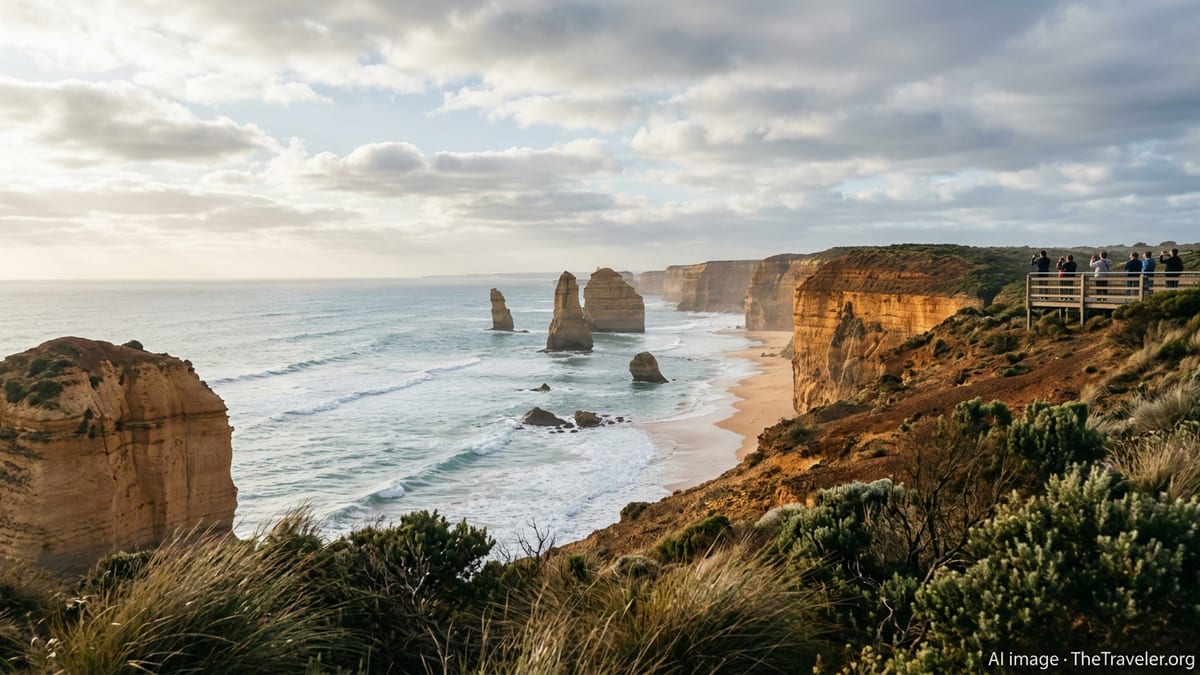
From Free Icon to Ticketed Experience
The Twelve Apostles, a cluster of limestone stacks on Victoria’s south-west coast, has long been a free-to-visit highlight of the Great Ocean Road. That era is ending as authorities prepare to introduce an entry fee linked to the new Twelve Apostles Visitor Experience Centre, alongside a visitor booking system to regulate peak demand.
According to publicly available information, the fee will apply to access through the purpose-built visitor centre, which forms part of a wider precinct redevelopment valued at more than 120 million Australian dollars. The amount visitors will ultimately pay has not yet been set, with reports indicating it will be determined following consultation with local councils, tourism operators and Traditional Owner groups.
The visitor centre is scheduled to open later in 2026, and the paid-entry model is expected to commence in line with or soon after that launch. Early indications suggest the charge will not extend to the broader Great Ocean Road, which will remain free to drive, but it will change how most people experience the primary viewing areas for the Twelve Apostles.
Published coverage notes that residents living in nearby communities and members of the Eastern Maar Indigenous community are expected to be exempt from the fee. The system is therefore being framed as a charge on tourists rather than locals, echoing approaches at other high-profile natural attractions in Australia.
Why a World-Famous View Now Has a Price Tag
Behind the shift to paid entry lies a simple equation: visitor numbers have soared, and the cost of maintaining safe, high-quality access has risen with them. Tourism bodies estimate that more than six million people travel the Great Ocean Road each year, with around two million stopping at the Twelve Apostles. That level of demand has fuelled congestion, parking bottlenecks and pressure on fragile coastal environments.
Publicly available statements from the Victorian government and tourism authorities describe the new fee as a way to ensure those who enjoy the site directly contribute to its upkeep. Revenue is expected to support upgrades to beach access, toilets and paths, as well as maintenance of lookouts, car parks and safety barriers in the Twelve Apostles precinct and surrounding coastal parks.
Reports also highlight that the charge is intended to help fund the ongoing operation of the new visitor centre, which has been designed as a gateway hub with interpretive exhibits and services to disperse crowds more evenly. The redevelopment is positioned as an investment in a “world-class” visitor experience, with the fee portrayed as a mechanism to sustain that standard over time rather than a short-term revenue grab.
At the same time, the introduction of paid entry signals a broader policy trend. Australian destinations with iconic landscapes increasingly use targeted access fees to balance mass tourism with environmental protection, drawing comparisons with models used at places such as Uluru-Kata Tjuta National Park and other heavily visited natural sites worldwide.
New Booking Rules and How Visits Will Change
For tourists, the most immediate change will not just be the cost but the way trips are planned. Published coverage of the reform outlines a new visitor booking system for the Twelve Apostles, designed to manage crowding, guarantee parking during busy periods and improve overall safety.
The system is expected to require visitors to secure a timed booking for access via the visitor centre, particularly in peak seasons such as summer, school holidays and long weekends. In practice, that means spontaneous detours may be harder to pull off, and advance planning will become essential for international visitors and domestic travellers alike.
Traffic management has already become a feature of the precinct during high-demand periods, with measures such as temporary overflow parking and rerouted access roads trialled in recent years. The new booking platform appears set to formalise and extend these strategies, spreading arrivals more evenly through the day and reducing the crush that can occur when multiple tour buses and self-drive visitors converge at once.
While detailed operational rules have yet to be published, early outlines suggest that the booking system will be integrated with the new visitor centre experience. Tourists can expect clearer information on arrival times, parking availability and viewing capacity, but also less flexibility to simply arrive unannounced and secure a space.
Local Reactions and Concerns About Equity
The move towards a paid, pre-booked model has prompted a mixed response in regional communities and among frequent visitors. Some tourism advocates argue that charging visitors is a pragmatic step that reflects international norms and will ultimately improve safety, infrastructure and the quality of the visit.
Other voices in local community groups have expressed concern that a new entry fee could deter price-sensitive travellers or shift visitor patterns in ways that are hard to predict. There are questions about how much revenue will be directed to conservation work on the coastal environment itself, rather than being absorbed by infrastructure and administrative costs.
Equity has emerged as a key theme in commentary around the policy. While exemptions for nearby residents and members of the Eastern Maar community have been widely reported, there are calls for consideration of lower-cost or flexible options for students, families and travellers on tighter budgets. Observers also note the risk that people who wish to avoid the fee could seek informal viewing spots, potentially creating new safety and environmental challenges.
Regional businesses that rely on high visitor volumes are watching closely, as even modest changes in access rules can alter travel patterns along the Great Ocean Road. Some operators view the booking requirement as an opportunity to smooth demand and encourage longer, higher-value stays, while others worry about added complexity for day trips and coach tours.
What International Tourists Need to Know Now
For international travellers planning trips from 2026 onwards, the evolving rules at the Twelve Apostles will be an important factor in itineraries. While the precise fee level is still to be confirmed, it is clear that the main viewing experience will become a ticketed, pre-booked attraction rather than an informal roadside stop.
Travel planners are already advising visitors to monitor official tourism and government channels for updates on fee structures, booking opening dates and any seasonal caps on daily visitor numbers. Those hoping to visit during Australian summer or major holidays are likely to face the greatest competition for preferred time slots, making early reservations advisable once the system goes live.
Tourists are also being encouraged to think of the Twelve Apostles as one highlight in a broader coastal itinerary. The Great Ocean Road remains open and free to drive, and many viewpoints, beaches and inland experiences are unaffected by the new fee. As the paid-entry system beds in, it may encourage travellers to spend longer in the region, explore nearby towns and lesser-known lookouts, and distribute their time more evenly rather than focusing solely on a single photo stop.
For one of Australia’s most photographed coastal vistas, the upcoming changes mark a decisive shift from open-access icon to carefully managed visitor experience. The cliffs, ocean and eroding limestone stacks will remain, but the way people reach and view them is entering a new era shaped by bookings, tickets and a sharper focus on sustainability.