

More news on this day
Australia’s tourism rebound is entering a new phase, as major international airlines ramp up capacity into the country and Sydney prepares to welcome its first AC by Marriott hotel, underscoring growing confidence in sustained demand from high‑value global travellers.
International Arrivals Surge Back Above Pre‑Pandemic Levels
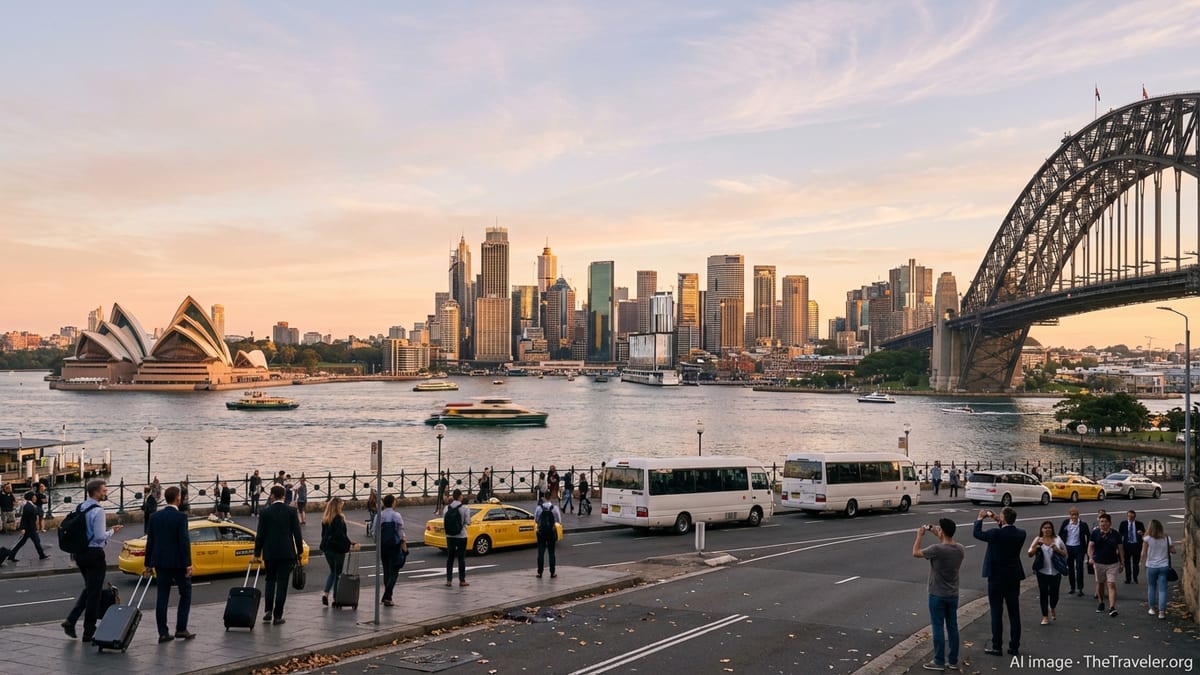
Australia’s visitor economy is accelerating into 2026, with international arrivals now surpassing pre‑pandemic levels and tourism once again emerging as a key growth engine for services exports. Recent figures show that in November 2025, the country welcomed more than 830,000 international visitors in a single month, outpacing November 2019 and 2024 as pent‑up demand, major events and aggressive marketing campaigns converged to lift inbound travel.
Travel patterns have shifted since borders reopened, with regional and shorter‑haul trips playing a larger role than before, but Australia continues to appeal strongly to long‑haul leisure and visiting‑friends‑and‑relatives markets. New Zealand, the United Kingdom and parts of Southeast Asia have been among the fastest‑rebounding source markets, while arrivals from China and broader North Asia are climbing from a lower base as airline capacity rebuilds and visa processing normalises.
In value terms, tourism’s contribution has outstripped the pace of raw visitor growth. Official services trade data indicate that travel exports have been a major driver of Australia’s record services earnings, as international visitors are staying longer and spending more on premium accommodation, dining and experiences. This mix has encouraged both airlines and hotel groups to tilt their investments toward higher‑yield travellers, particularly in gateway cities such as Sydney and Melbourne.
Industry bodies say the recent surge is not a one‑off rebound but part of a broader reset in how Australia competes for global tourism. Marketing campaigns built around iconic landscapes, Indigenous culture and marquee sporting events have been paired with a rapid expansion in air connectivity, positioning the country to capture a larger share of long‑haul demand even as travellers remain value‑conscious.
Airlines Restore and Grow Capacity Into Australia
The sharp return of demand has prompted carriers across the Middle East, Asia and the Pacific to restore and then expand their networks to Australia. Aviation schedule data for the first quarter of 2025 showed more than 7.1 million international departure seats from Australian airports, a figure now sitting above 2019 levels. Capacity growth into Sydney, Melbourne, Brisbane, Perth and Adelaide has been driven by a mix of widebody aircraft returns, up‑gauging on key routes and the launch of new city pairs.
New South Wales has consolidated its role as the country’s primary international gateway. In the 2024–25 financial year, the state accounted for nearly 39 per cent of all international seats into Australia, with more than 10.5 million inbound seats recorded. While that remains just under 2018–19 levels, the trajectory is upward, with some peak months virtually at full recovery. Destination marketing officials note that as more aircraft and crews come back online, they are working closely with carriers to target underserved growth markets in Asia, Europe and North America.
The resurgence is not uniform across all regions. Capacity to Singapore and other Southeast Asian hubs has grown quickly, reflecting strong outbound and inbound demand and the importance of one‑stop connectivity from Europe and India. Services from the United Arab Emirates have also expanded notably, underpinned by network carriers rebuilding Australia into their global long‑haul webs. In contrast, some North Asian markets are returning more cautiously, with airlines adjusting schedules as corporate and group travel regain momentum.
Despite pockets of constraint, the overall increase in international lift has already started to push down average fares compared with the first phases of reopening. Travel agents report that while prices remain higher than pre‑pandemic on some routes, the combination of additional capacity, tactical sales and more competition is making long‑haul trips to Australia feel attainable again for middle‑income travellers in Europe, North America and Asia.
Emirates Leads Long‑Haul Push Into Sydney and Beyond
Among the global network carriers, Emirates has been at the forefront of the capacity rebuild into Australia. The Dubai‑based airline has progressively restored its pre‑pandemic schedule and, in key cases, added beyond that baseline. It has reinstated services to Adelaide and expanded flights into Brisbane and Perth, while maintaining a strong presence in Sydney and Melbourne. The result has been a double‑digit percentage increase in seat capacity between Australia and the United Arab Emirates compared with a year earlier, further solidifying the Gulf as a critical one‑stop gateway between Australia, Europe, Africa and the Middle East.
For Sydney in particular, Emirates’ use of large widebodies, including the Airbus A380, is delivering thousands of additional weekly seats into the market. Aviation analysts say the airline’s strategy reflects confidence that premium demand will remain robust, especially on trunk routes linking Australia with London and key European capitals. The carrier has also benefited from growing flows of visitors from the Middle East and India who combine city stays in Dubai with extended itineraries across Australia.
From a tourism perspective, Emirates’ growth has had a multiplier effect. The airline’s extensive marketing partnerships with tourism boards, its global lounge network and its premium‑heavy cabin configurations have helped position Australia as a destination for affluent travellers seeking multi‑stop long‑haul journeys. Travel trade partners report that Emirates’ schedule and fare structure have made it easier to sell complex itineraries mixing Sydney with stops in New Zealand, the Pacific Islands or Southeast Asia.
Industry observers expect the Gulf carrier to continue fine‑tuning its Australian footprint through 2026, shifting capacity between cities based on seasonal peaks, major events and aircraft availability. With competitor airlines also building back their long‑haul offerings, Emirates’ strong early move into the market has set a high bar for service levels and connectivity, to the benefit of inbound tourism.
Qantas, Singapore Airlines, Cathay Pacific and Air New Zealand Scale Up
Australia’s flag carrier Qantas has likewise been adding international capacity as more Boeing 787s and refurbished Airbus A380s return to service. The airline’s long‑haul network has edged beyond its pre‑COVID international capacity levels, with extra seats published to destinations including New York, Los Angeles, Johannesburg and Bali. For inbound tourism, this means more direct options into Sydney and Melbourne from North America and Asia, as well as better one‑stop connections from Europe via partner hubs.
In parallel, Singapore Airlines has emerged as one of the strongest performers in the Australia market. Capacity between Australia and Singapore rose by nearly 9 per cent year‑on‑year in early 2025, taking departure seats above the one‑million mark in a single quarter. As Singapore cements its status as a global super‑hub, the carrier has leveraged its dense European and Asian network to funnel visitors into Australia, with Sydney a key beneficiary thanks to its high frequency and mix of aircraft types.
Cathay Pacific is rebuilding its Australian network from its Hong Kong base, reconnecting Sydney and other major cities with North Asia and mainland China. While overall arrivals from China remain below 2019 levels, incremental capacity growth is enabling tour operators to restart group programs and business travel in sectors such as finance, education and technology. Travel experts expect Cathay’s role to grow as Hong Kong continues to reopen and as the airline receives new long‑haul aircraft over the coming years.
On the trans‑Tasman front, Air New Zealand has been steadily adding services linking Sydney with Auckland, Wellington and Christchurch, supporting a tourism corridor that is now operating near or above pre‑pandemic volumes. The airline’s frequency and schedule breadth have been crucial in supporting both leisure and corporate travel, as well as cruise tourism that uses Sydney as a key embarkation and disembarkation port. For visitors from North America and Europe who route via Auckland, Air New Zealand’s integration with partner carriers is also boosting Sydney’s appeal as part of multi‑stop itineraries across Australasia.
NSW and Sydney Cement Their Status as Australia’s Gateway
The concentration of capacity into New South Wales has reinforced Sydney’s position as the country’s primary entry point for international visitors. Over the 2024–25 financial year, NSW handled more international seats than any other state, with its 10.5 million inbound seats representing just under 40 per cent of the national total. While this is still slightly below the high‑water mark of 2018–19, the gap is narrowing as airlines reallocate aircraft to profit‑rich long‑haul markets.
This dominance is not limited to Sydney’s main international terminal. Secondary gateways such as Adelaide and Perth are also seeing strong gains, often anchored by the same carriers that serve Sydney. Recent data from Adelaide Airport shows a more than 30 per cent rise in available international seats over a twelve‑month period, as Emirates, Cathay Pacific, Air New Zealand and others restore or introduce non‑stop routes. This broader network of entry points feeds into Sydney by connecting regional travellers and spreading visitor spending beyond the eastern seaboard.
Destination NSW and local tourism bodies have taken advantage of the renewed connectivity by ramping up cooperative marketing with airlines and tour operators. Campaigns tied to major events, from cricket series to cultural festivals, are being pushed aggressively in New Zealand, the United Kingdom and parts of Asia. These initiatives are designed to convert additional airline seats into higher‑yield arrivals, particularly in shoulder seasons when room for growth remains.
At the same time, tourism planners are acutely aware that aviation capacity alone will not guarantee sustainable growth. Efforts are under way to balance record visitor numbers with the need to protect natural assets, support local communities and manage congestion in popular precincts such as Sydney’s harbourfront and coastal walks. Investments in new hotels and upgraded attractions are being framed as part of a broader strategy to disperse visitors across the city and into regional New South Wales.
AC by Marriott Makes Its Sydney Debut
Into this rapidly evolving landscape steps Sydney’s first AC by Marriott, a design‑led, lifestyle‑oriented brand positioned squarely at the intersection of business and leisure travel. The new hotel, set in one of the city’s emerging commercial and cultural districts, marks a significant milestone for Marriott International as it deepens its presence in the Australian upscale segment. With a focus on sleek, European‑inspired interiors and flexible social spaces, the property is pitched at globally mobile guests who value contemporary style and effortless functionality.
The hotel adds a new layer of choice to Sydney’s already diverse accommodation scene, which ranges from luxury icons around Circular Quay to a wave of boutique properties in inner‑city neighbourhoods. AC by Marriott is best known for its understated design language, curated food and beverage offerings and lobby spaces that double as informal work and meeting zones. These features are expected to resonate strongly with international visitors arriving on the surging capacity provided by Emirates, Qantas, Singapore Airlines, Cathay Pacific and Air New Zealand.
With an inventory running to several hundred rooms and suites, along with event spaces aimed at small to mid‑sized meetings, the hotel is likely to appeal both to corporate travellers and to leisure guests seeking a stylish base from which to explore the city. Its arrival also reflects growing investor confidence in Sydney’s hotel market, where occupancy and average daily rates have been supported by a steady stream of major events and the return of business travel.
Marriott executives have signalled that the brand’s entry into Sydney is part of a broader expansion strategy across Australia, particularly in fast‑growing suburban and secondary CBD locations. For developers, the AC by Marriott flag offers a way to tap rising demand from younger, design‑conscious travellers without venturing into the more experimental territory of lifestyle soft brands.
How New Hotel Capacity Aligns With Aviation Growth
The timing of the AC by Marriott opening aligns closely with the upswing in international air capacity into Sydney, underscoring the tight linkage between aviation and accommodation investment. As airlines commit widebody aircraft and high‑frequency schedules to a market, hotel developers gain the confidence needed to back multi‑year projects, knowing that a pipeline of guests is likely to follow. In Sydney’s case, the combined efforts of Emirates, Qantas, Singapore Airlines, Cathay Pacific and Air New Zealand have effectively de‑risked new room supply in key precincts.
For visitors, the net result is a broader spectrum of price points and experiences. Additional mid‑scale and upscale properties help relieve pressure on legacy hotels during peak periods, which in turn can moderate rate spikes that risk pricing out some segments. Travel agents say that as more international carriers return to full strength and new hotels come online, they have greater flexibility in packaging competitive air‑and‑land offers, particularly for long‑haul markets where value perception is critical.
From a policy standpoint, the parallel expansion of air and hotel capacity is central to Australia’s tourism ambitions. Federal and state authorities have set ambitious targets to lift international visitor spending well beyond current records by the end of the decade. Achieving those goals will require not only more seats and more rooms, but also a continued focus on service quality, workforce development and destination management.
Industry analysts caution that risks remain, including potential economic slowdowns in key source markets, shifts in exchange rates and lingering operational challenges in aviation and hospitality. However, the current investment pipeline suggests that airlines and hotel groups believe the long‑term fundamentals of Australia’s tourism appeal are strong, especially in globally recognised cities such as Sydney.
Outlook: A New Phase in Australia’s Visitor Economy
Looking ahead to 2026 and beyond, Australia appears poised to consolidate its tourism boom as capacity additions, infrastructure projects and brand campaigns feed into one another. International airline seats are projected to keep edging higher, even as domestic capacity takes longer to fully normalise. Network airlines are expected to refine their schedules around profitable long‑haul flows, while low‑cost and hybrid carriers probe secondary routes and seasonal services.
Sydney’s first AC by Marriott arrives at a moment when the city is redefining its visitor proposition, blending its traditional draws of harbour views and beaches with a more granular focus on neighbourhood culture, food, design and events. The hotel’s debut, alongside a broad pipeline of new and refurbished properties, reflects a bet that Australia’s visitor mix will continue to skew toward experience‑driven travellers who are willing to spend more for quality stays.
For Emirates, Qantas, Singapore Airlines, Cathay Pacific and Air New Zealand, the opportunity lies in converting Australia’s renewed desirability into sustainable, year‑round demand. That means aligning schedules with festivals and sports calendars, deepening partnerships with tourism boards and ensuring that the end‑to‑end journey, from cabin product to hotel check‑in, meets rising expectations. As they do so, the broader economy stands to benefit from higher export earnings, job creation and stronger links with key trading partners.
While the industry is mindful of external shocks, the current trajectory suggests that Australia’s tourism story is moving from recovery into expansion. With international airlines gearing up for another busy year and Sydney welcoming a new wave of hotel brands, the country’s gateway city is set to play an outsized role in shaping how the world experiences Australia in the decade ahead.