

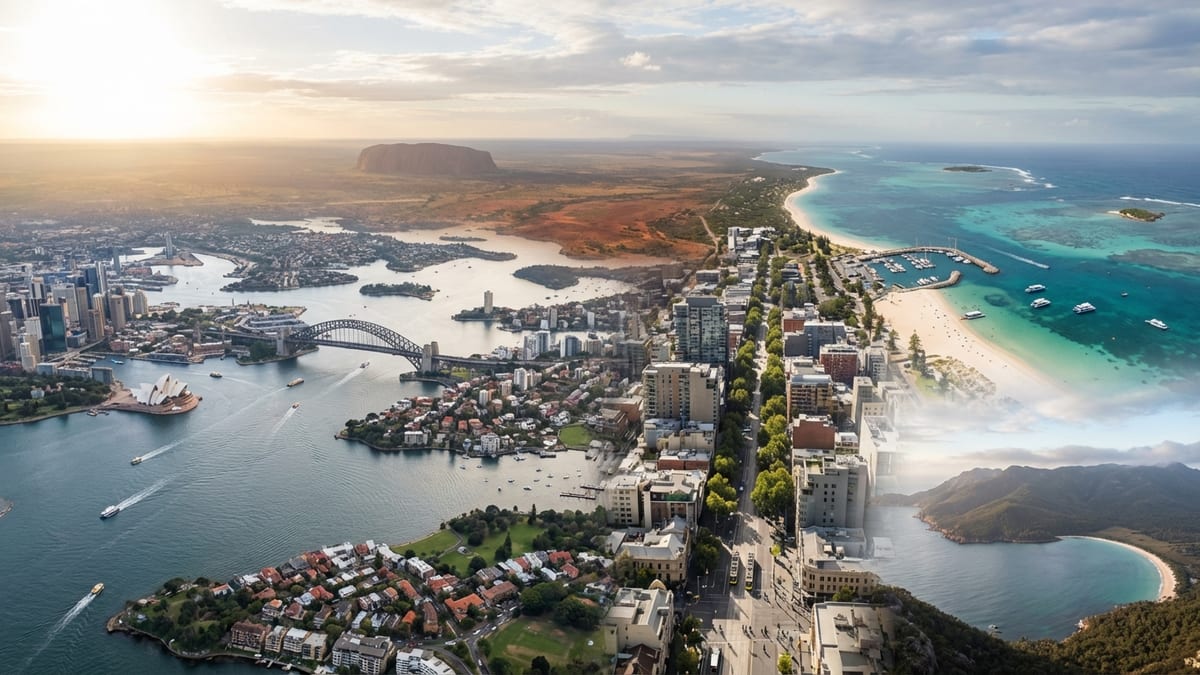
Australia is not just a country but a vast continent of tropical reefs, ochre deserts, sophisticated cities and wild coastline. Planning a trip here means thinking about distance, climate and budget in a way that is different from almost anywhere else. From the laneways of Melbourne and the harbour of Sydney to the Great Barrier Reef, Uluru and Tasmania’s national parks, this guide sets out where to go, what to see and how to plan so you can make the most of a journey that often sits at the top of the travel wish list.
Understanding Australia’s Seasons and When to Go
Australia sits in the Southern Hemisphere, so seasons run opposite to those in North America and Europe. Summer falls from December to February, autumn from March to May, winter from June to August and spring from September to November. On top of that, the tropical north has only two main seasons: a hot, humid wet season from roughly November to April and a warm, sunny dry season from May to October. This has a major impact on where you should go and when, especially if you are heading for the Great Barrier Reef, the Top End or Western Australia’s Kimberley region.
For many visitors, the sweet spots are the shoulder seasons of March to May and September to November, when cities are warm but not too hot, prices are often lower than peak summer and crowds are lighter. Tourism bodies and travel operators consistently highlight these months as ideal for combining city time with coastal drives and wine regions. In the north, the dry season from May to October typically brings blue skies, lower humidity and calmer seas, which makes it the preferred window for reef trips and outback touring.
Winter from June to August can actually be the best time to visit some of Australia’s biggest natural icons. The Red Centre around Uluru tends to be cooler and more comfortable for hiking at this time, though nights can drop below freezing, while jellyfish numbers in tropical Queensland seas are usually lower in winter and water visibility on the Great Barrier Reef often improves. At the same time, southern regions such as Victoria, Tasmania and New South Wales see cooler temperatures and snow in the alpine areas, which makes them attractive for skiing, fireside food and wine escapes and city culture.
Summer remains high season almost everywhere, particularly around the school holidays from mid-December to late January. Beaches near cities are buzzing, festivals and outdoor events are in full swing and daylight hours are long. It is also the priciest time to travel, with higher hotel rates and heavier demand on domestic flights. In recent years, heat waves and bushfire seasons have been growing more intense, so if you plan a summer visit, build flexibility into your itinerary and follow local advice on weather, fire danger and park closures.
Essential Planning: Visas, Entry Rules and Getting Around
Most travellers from the United States and many other countries need a visa or electronic travel authorisation before boarding a flight to Australia. For many nationalities, including Americans, the most common option is an electronic visitor visa that must be arranged online in advance; it is generally quick but cannot be obtained on arrival. Processing times and eligibility can change, so it is sensible to check official government advice several weeks before you travel and not leave the paperwork until the last minute. Your passport should have at least six months’ validity beyond your arrival date, and you may be asked to show proof of onward travel or sufficient funds at the border.
Australia removed its remaining Covid-related travel restrictions some time ago, but biosecurity rules remain strict. On arrival you will complete a declaration card that asks about food, plant material, outdoor equipment and certain medications. Declare anything you are unsure about. Customs officers focus heavily on preventing pests and diseases entering the country, and fines for not declaring items can be substantial. Hiking boots and camping gear should be cleaned of soil and seeds before you fly.
Once inside the country, the main challenge is distance. Driving times between major cities are measured in days rather than hours, and domestic flights will almost certainly feature in a typical itinerary longer than a week. Australia’s domestic aviation market is competitive and routes between key centres such as Sydney, Melbourne, Brisbane, Perth, Adelaide, Cairns and Darwin are well served. Booking a multi-city ticket or adding an internal flight to your international booking can reduce costs, especially in peak season.
Public transport works well inside and between the main cities on the east and southeast coasts. Sydney uses the Opal card system across trains, buses and ferries; Melbourne’s trams and trains run on a smartcard called Myki; Brisbane and much of Southeast Queensland use the Go Card; and Perth relies on the SmartRider system. In many cases you can use contactless bank cards on local networks, which makes short urban stays straightforward. Long-distance rail is slower and more expensive than flying but offers scenic routes such as the Indian Pacific and the Ghan, which double as multi-day rail journeys and touring experiences.
Iconic Cities: Sydney, Melbourne, Brisbane and Beyond
Sydney is often the first stop for international arrivals and remains Australia’s most recognisable city. Its natural setting around a vast harbour fringed by beaches gives it a resort feel alongside its role as a financial and cultural hub. Classic experiences include walking around Circular Quay to see the Sydney Opera House and Harbour Bridge, taking a ferry across the water to Manly, and riding the coastal path from Bondi to Coogee. Neighbourhoods like Newtown, Surry Hills and Paddington show off a more local side, with terrace houses, small bars, galleries and independent restaurants.
Melbourne positions itself as Australia’s cultural and culinary capital. In the city centre, a grid of streets hides laneways filled with cafes, street art, wine bars and tiny boutiques. The city is known for its coffee culture, sports calendar and live music, and for events like the Australian Open and the Melbourne Cup. Many visitors use Melbourne as a base for day trips or short drives to the Great Ocean Road, the Yarra Valley wine region and Phillip Island, where penguin parades take place at dusk. The weather here can be cooler and more changeable than Sydney, particularly in winter.
Further north, Brisbane has grown from a quiet state capital into a lively riverside city with subtropical weather, outdoor dining and easy access to some of Queensland’s best coastline. The South Bank precinct features parklands, galleries and museums, while neighbourhoods like Fortitude Valley, West End and New Farm have a mix of nightlife, dining and creative spaces. Brisbane works well as a gateway to the Gold Coast and the Sunshine Coast, both within easy driving distance and offering surf beaches, hinterland hikes and family attractions.
Other state capitals have their own distinct flavours. Adelaide is compact and known for its festivals, food scene and proximity to wine regions like the Barossa Valley and McLaren Vale. Perth, on the west coast, combines long beaches, a revitalised central city and access to Rottnest Island and the Margaret River region. Canberra, the national capital, offers national museums, galleries and memorials set around a man-made lake, with a growing food and wine scene in nearby rural districts. Each city rewards at least a couple of nights, particularly if you are interested in local culture rather than ticking off only natural icons.
Australia’s Natural Icons: Reef, Rock and Rainforest
The Great Barrier Reef, stretching for more than 2,000 kilometres off Queensland’s coast, is one of the world’s most celebrated natural wonders. Gateway towns such as Cairns, Port Douglas and Airlie Beach offer day trips and liveaboard cruises that combine snorkelling or diving with visits to coral cays and sandy islets. June to October is typically flagged as the prime window for reef travel, as the weather is drier, humidity is lower and marine stingers are less prevalent in many areas. That said, coral bleaching events linked to warmer seas have become more frequent in recent years, so choosing operators committed to reef conservation is increasingly important.
In the heart of the continent, Uluru rises from the desert in a way that is hard to grasp until you are standing at its base. This sandstone monolith and the nearby domes of Kata Tjuta sit inside Uluru-Kata Tjuta National Park in the Northern Territory. The park is jointly managed with traditional owners and is rich in Aboriginal cultural sites and stories. Walking tracks around the base of Uluru and through the valleys of Kata Tjuta are at their most comfortable in the cooler months from May to September, when daytime temperatures are lower and flies are less intense. Sunrise and sunset viewing areas allow you to watch the rock shift through shades of red and purple as the light changes.
To the northeast, Queensland’s Wet Tropics World Heritage area includes ancient rainforests, waterfalls and highland plateaus. The Daintree Rainforest, north of Cairns, is one of the most accessible sections and can be explored via boardwalks, guided night walks and river cruises. It is part of a region where reef and rainforest sit close together, allowing you to snorkel among coral one day and hike beneath fan palms the next. The wet season from November to April brings higher rainfall, lush vegetation and powerful waterfalls, but it can also mean track closures and higher humidity; the dry season is more comfortable but busier.
National parks across the country showcase a similar variety of landscapes, from the sandstone escarpments and crocodile-filled wetlands of Kakadu in the Top End to the granite peaks and white-sand bays of Tasmania’s Freycinet Peninsula. Western Australia’s Kimberley region reveals remote gorges, horizontal waterfalls and ancient rock art, while the Ningaloo Coast offers the chance to snorkel over coral reefs directly from the shore and, in season, to swim with whale sharks. Each of these regions has its own peak period, often tied to road access and wet or dry season patterns, so checking seasonal conditions is vital before locking in plans.
Road Trips, Coastal Drives and the Outback
For many visitors, driving is the best way to experience Australia’s sense of space. The country’s road network is generally good, and outside the largest cities traffic is light. Classic itineraries include the Great Ocean Road in Victoria, a coastal route west of Melbourne that winds between seaside towns, surf beaches and limestone cliffs; the Pacific coastline between Sydney and Brisbane, lined with national parks and beach communities; and the loop from Perth through Margaret River and the southwest forests and coast. These drives can be done in a few days or stretched out over a week or more, depending on how many stops you build in.
The outback exerts a strong pull on first-time visitors. Routes such as the Stuart Highway from Adelaide to Darwin, the Red Centre Way around Alice Springs and the Savannah Way between Queensland and Western Australia cut through some of the country’s most dramatic and remote landscapes. Driving these roads calls for more preparation than a simple coastal hop: fuel stops can be hundreds of kilometres apart, mobile coverage may be patchy and some stretches are unsealed and subject to seasonal flooding. Many travellers opt for small-group tours for deeper outback routes, particularly in the wet season when conditions can change quickly.
In recent years, regional tourism bodies have invested heavily in promoting lesser-known drives that link smaller towns and nature areas. For example, the Great Eastern Drive in Tasmania, the Explorer’s Way linking Adelaide and Darwin, or the network of touring routes around the Fraser Coast and Hervey Bay in Queensland. These corridors combine scenery with food, wine and heritage attractions, and can be a way to balance headline destinations with quieter stops that spread tourism benefits more widely.
If you decide to drive, factor in that Australians drive on the left-hand side of the road, and distances are deceptive. A drive that looks short on a map can take far longer than expected, especially on rural roads at dawn or dusk, when kangaroos are more active and pose a hazard. Avoid driving at night in remote areas, take regular breaks and carry extra water. Rental companies often restrict vehicles from unsealed tracks unless you hire a four-wheel drive, so read your rental agreement carefully before planning off-road adventures.
Culture, Wildlife and Responsible Travel
Australia’s cultural story runs far deeper than its colonial cities. Aboriginal and Torres Strait Islander peoples have cared for this land for tens of thousands of years, and today many tourism experiences are led or co-designed by Indigenous communities. These range from short guided walks near city centres to multi-day journeys in desert or coastal Country that combine storytelling with bush foods, art and traditional knowledge. Joining an Indigenous-led tour is one of the most meaningful ways to understand the landscapes you are visiting and to support local communities directly.
Wildlife is another major drawcard. Kangaroos, wallabies, koalas, wombats and a host of bird species can often be seen in the wild within a short drive of major cities, especially in national parks and reserves. Offshore, whales migrate along the east and west coasts in winter and spring, and certain regions such as Hervey Bay in Queensland are known for particularly reliable whale-watching conditions. Marine encounters with dolphins, seals, turtles and whale sharks are heavily regulated and usually delivered in small groups. Responsible operators follow strict distance and behaviour guidelines to reduce stress on animals.
As climate change intensifies heat waves, fires, floods and coral bleaching, responsible travel in Australia increasingly means paying attention to environmental conditions and choosing lower-impact options where possible. This can involve travelling outside peak heat periods, supporting conservation-focused operators on the reef and in wildlife areas, and respecting park closures or restrictions during high fire danger days. Simple steps such as staying on marked trails, avoiding single-use plastics and leaving no trace at remote campsites help reduce your footprint in sensitive environments.
Australia’s cities and regions also offer a growing number of food, wine and cultural experiences tied to local producers and creative communities. From cellar doors in Margaret River and the Barossa to farmers’ markets in Byron Bay or Hobart, these are places where you can connect with local life rather than seeing destinations only through their headline attractions. Planning a trip that weaves together big-name sights and time spent in smaller communities often results in a more balanced and rewarding journey.
Practical Tips: Budget, Safety and Itinerary Building
Australia is often perceived as an expensive destination, particularly for travellers paying in US dollars or euros. Accommodation and dining in major cities can be costly, and internal flights add to the bill. Balancing your budget usually means mixing hotel stays with simpler options such as serviced apartments, caravan park cabins or small guesthouses in regional areas. Self-catering some meals, especially breakfast and picnics, can also help keep daily spending in check, as can using public transport rather than taxis inside cities.
Safety standards are high by global comparisons, but nature deserves respect. Australia’s sun is intense, so high-factor sunscreen, hats and hydration are essential even in cooler months. On the coast, swim between the red and yellow flags where surf lifesavers patrol, and pay attention to local signage about rips, jellyfish and crocodiles. In tropical northern waters, stinger nets and protective suits are used during certain months, and some beaches are entirely unsafe for swimming because of crocodiles; locals and operators will be clear about where you should and should not go.
When building an itinerary, resist the urge to see everything in one go. Trying to fit Sydney, the Great Barrier Reef, Uluru, Melbourne, Tasmania and Western Australia into a two-week holiday often leads to rushed internal flights and little time to absorb any destination. A more satisfying approach is to link two or three regions that work well together around the season you are visiting. For example, Sydney and the reef in the Australian winter, or Melbourne, the Great Ocean Road and Tasmania in late summer and early autumn. Factor in at least two or three nights per stop, with occasional slower days.
Insurance that covers medical emergencies, evacuation from remote areas and changes due to weather or natural disasters is strongly recommended. Bushfire seasons, severe storms and heat waves have disrupted travel in recent years, including temporary closures of national parks, highways and regional airports. Staying informed through local news and official channels, and building some flexibility into bookings, allows you to adjust plans if conditions change. Overall, though, most trips proceed smoothly, and the country’s strong infrastructure and emergency services mean that problems are usually well managed when they do arise.
The Takeaway
Australia rewards travellers who plan around its seasons, distances and diversity. Whether your priority is city culture, reefs and rainforests, red desert landscapes or cooler coastal and alpine regions, there is a time and place that will suit your interests and budget. The key decisions sit at the start: when to travel, how far you want to move between destinations and how much time you can give each stop. From there, the country’s mix of world-famous sights and quieter corners unfolds naturally.
A well-structured itinerary might blend a few days in a major city with a coastal road trip, a visit to at least one national park and time with Indigenous guides or local producers. Balancing headline experiences like the Sydney Opera House or Great Barrier Reef with slow mornings in neighbourhood cafes, conversations with locals and unplanned detours will give you a more nuanced sense of the place. With thoughtful planning and an open schedule, a trip to Australia can feel less like a whirlwind of flights and more like a coherent journey across one of the world’s most varied landscapes.
FAQ
Q1. How long should I plan for a first trip to Australia?
For a first-time visit that includes two or three regions, many travellers find that 14 to 21 days works well. Less than two weeks usually means you will need to focus on one city and its nearby highlights, while longer stays allow you to add more remote destinations such as Uluru, Tasmania or Western Australia without feeling rushed.
Q2. What is the best month to visit Australia from the United States?
There is no single best month, but many visitors aim for April, May, September or October. These shoulder-season months often combine pleasant weather in most regions with fewer crowds and slightly lower prices than peak summer. If you are targeting a specific experience, such as the Great Barrier Reef or ski season, you may choose different months to match local conditions.
Q3. Do I need a visa to visit Australia as a US citizen?
Yes. US passport holders generally need to apply online for an electronic visitor visa or travel authorisation before departure. Approval is normally quick, but you should not leave the application until the last few days before you fly. Requirements can change, so check official government information close to your travel dates.
Q4. Is it safe to swim in the ocean in Australia?
It is safe to swim at most patrolled beaches if you follow local guidance. Always swim between the red and yellow flags where surf lifesavers are present, and pay attention to warnings about strong currents, jellyfish or crocodiles in certain regions. In tropical areas during stinger season, use nets or protective suits as recommended and follow advice from lifeguards and tour operators.
Q5. How far in advance should I book domestic flights and accommodation?
For peak periods such as Australian school holidays, major festivals and the southern summer from December to February, booking flights and key accommodation three to six months ahead is wise. In shoulder seasons and winter, you can sometimes book closer to travel, but popular areas like the reef, Uluru or major wine regions can still fill quickly.
Q6. Can I see both the Great Barrier Reef and Uluru on one trip?
Yes, many itineraries combine a reef gateway such as Cairns or Port Douglas with a stay near Uluru. These destinations are in different states and require domestic flights, usually via a major hub like Sydney or Melbourne. To avoid fatigue, allow at least three nights in each place and avoid planning back-to-back travel days where possible.
Q7. Is it practical to drive across Australia?
Cross-country drives are possible and popular with long-term travellers, but they require time and preparation. Distances are huge, and conditions in remote areas can be challenging. For most short or medium-length holidays, it is more practical to fly between far-flung regions and then rent a car locally for coastal or regional drives within a smaller area.
Q8. What should I pack for a multi-region trip?
Packing layers is essential. Lightweight, breathable clothing works across much of the country, but if you are visiting the outback in winter or heading to southern states, you will also need a warm jacket, beanie and gloves for chilly nights. Sun protection, comfortable walking shoes, insect repellent and a reusable water bottle are useful almost everywhere.
Q9. Are there any health concerns I should be aware of?
Australia has high health and hygiene standards, and tap water is generally safe to drink. The main concerns for visitors are sun exposure, dehydration and, in some regions, marine stingers or mosquito-borne illnesses. Using sunscreen, drinking plenty of water, wearing protective clothing and following local safety advice will minimise most risks. Comprehensive travel insurance that covers medical care is strongly recommended.
Q10. How can I make my trip more sustainable and respectful?
You can travel more responsibly by visiting in shoulder seasons, choosing operators with clear environmental and community commitments, and supporting Indigenous and locally owned businesses. Stay on marked trails, take rubbish with you, conserve water in dry regions and listen to local guidance about sensitive sites. Taking time to learn about Aboriginal and Torres Strait Islander cultures through tours, galleries and cultural centres adds depth to your experience and helps ensure your visit has a positive impact.