

More news on this day
Australia has widened its travel cautions to include France alongside Turkey, the United Kingdom, China, Egypt, Mexico, Indonesia and other destinations, as new biometric border controls, elevated security threats and regional tensions create a more complex landscape for international travellers.
Get the latest news straight to your inbox!
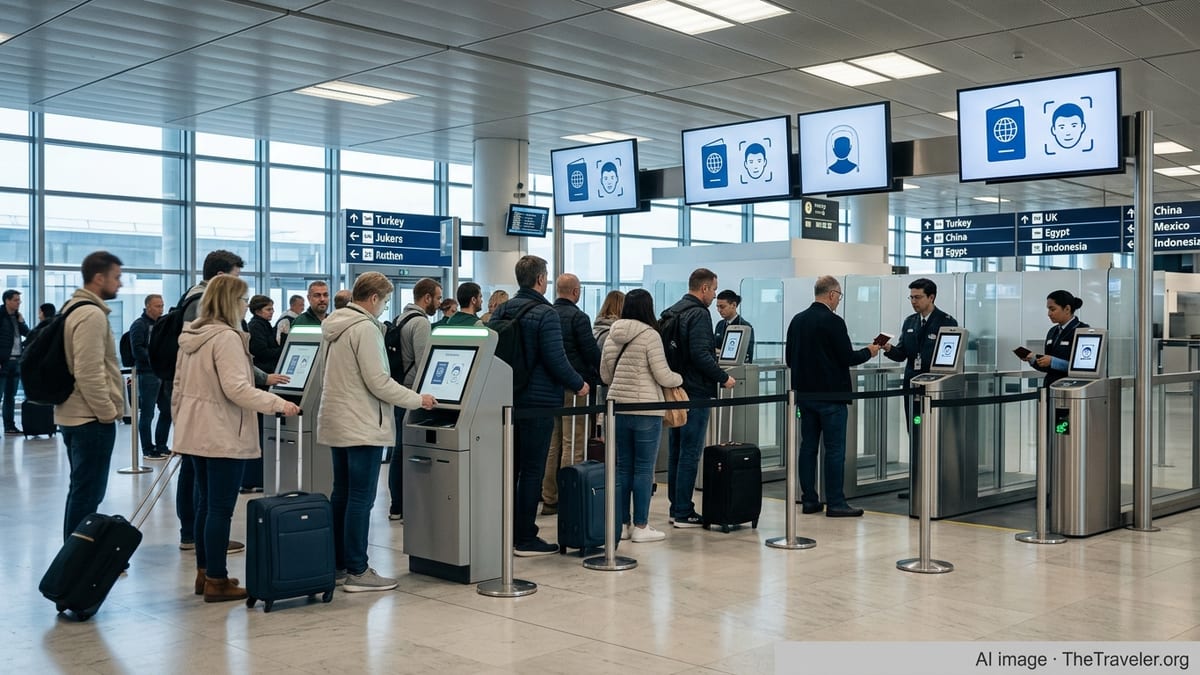
France Added as EU Border Biometrics Reshape Travel
Australia’s official travel advice for France now highlights both heightened terrorism concerns and the impact of the European Union’s new Entry/Exit System, a digital border regime that is steadily reshaping how non-EU citizens enter and leave the Schengen Area. Publicly available information from Australia’s Smartraveller platform notes that travellers are urged to exercise a high degree of caution in France, with particular attention to large events, public transport hubs and crowded urban spaces.
The EU’s Entry/Exit System, which began phased operation in October 2025, records the biometric data and passport details of non-EU nationals when they cross the bloc’s external borders. The system stores facial images, fingerprints and time-stamped entry and exit data, replacing traditional passport stamping in many locations. European institutions describe the project as central to modernising border management, tackling overstays and reinforcing security at external frontiers.
Early analysis from European aviation and airport bodies indicates that the new procedures can increase processing times at busy airports, especially where infrastructure or staffing is still catching up. Reports from hubs such as Paris, Amsterdam and key Spanish and Italian gateways point to longer queues at peak periods as travellers complete first-time biometric enrolment, raising the likelihood of missed connections and extended transit times for visitors from Australia and other non-EU countries.
Australian travel advisories have begun to reference these changes, encouraging passengers bound for France and other Schengen states to allow extra time at departure and arrival points, pay close attention to airline guidance and be prepared for evolving processes at automated kiosks and manned border counters.
Turkey, UK, China, Egypt, Mexico and Indonesia Remain Under Heightened Advice
France’s inclusion comes on top of long-standing cautions for a number of other popular destinations for Australian travellers, including Turkey, the United Kingdom, China, Egypt, Mexico and Indonesia. Publicly available advisories describe a mix of terrorism threats, civil unrest, crime levels and localised conflicts as key factors shaping the risk profile across these countries.
In Turkey, advice continues to highlight the potential for terrorist incidents and sporadic violence, particularly in major cities and border regions near Syria and Iraq. Security operations, checkpoints and sudden restrictions can disrupt internal travel, while demonstrations and political gatherings occasionally turn confrontational, impacting public transport and tourist areas.
For the United Kingdom, guidance reflects a persistent terrorism threat and operational pressures across critical infrastructure, including airports and rail hubs. With UK border posts now interfacing closely with the EU’s new biometric regime for travellers crossing the Channel and other external frontiers, reports indicate that peak-time congestion is a growing concern, especially at ports where French border officers conduct outbound checks before travellers reach the continent.
Advisories for China, Egypt, Mexico and Indonesia point to distinct regional risks, from security operations and localised restrictions on movement to high crime areas and periodic unrest. Travellers are urged to monitor local news, adhere to any posted restrictions and remain alert in locations such as resort zones, nightlife districts and major transport interchanges.
Biometrics and Digital Borders Expand Beyond Europe
Australia’s updated messaging arrives as biometric screening and automated border control technologies expand around the world, altering the experience of crossing frontiers even where overall risk levels have not formally changed. Many countries now use facial recognition, fingerprint scans and e-gate systems at airports and seaports, often storing traveller data for extended periods in national or regional databases.
In Europe, the Entry/Exit System is part of a broader move toward interoperable databases that link visa records, watchlists and travel authorisations. Similar trends can be seen in Asia, the Americas and the Middle East, where governments promote faster, contactless processing while also tightening identity checks and screening for security and immigration compliance.
For travellers, this means that a journey that once involved only manual passport inspection may now require several additional steps, including self-service registration at kiosks, multiple scans at different checkpoints and occasional secondary screening. Public guidance from transport operators and border agencies stresses the importance of having documents ready, understanding eligibility for automated gates and following on-the-ground instructions to avoid bottlenecks.
Australia’s travel advice framework increasingly references these technological shifts, linking them to practical recommendations such as allowing extra time at departure and arrival, carrying printed copies of itineraries and proof of onward travel, and ensuring that names and passport details exactly match bookings and digital applications.
Security Risks, Regional Tensions and Travel Disruptions
The widening list of destinations under higher caution also reflects a more volatile global security climate. Conflicts in Eastern Europe, the Middle East and parts of Africa, along with periodic spikes in geopolitical tensions in the Indo-Pacific, have knock-on effects for flight routings, airspace closures and the security posture at major hubs serving as gateways between regions.
Commercial airlines have adjusted or suspended some routes to avoid conflict zones, while civil aviation authorities impose temporary bans on overflights of certain territories. These measures can lengthen flight times, compress schedules at alternative hubs and increase the risk of missed onward connections, particularly where contingency plans rely on already busy airports.
Reports from security analysts and aviation industry groups show that major events, including international sporting tournaments and high-level political summits, often trigger temporary security cordons, road closures and additional checks that affect traveller mobility. In cities such as Paris, Istanbul, London, Jakarta and Mexico City, short-notice changes to public transport patterns or access to central districts can complicate sightseeing and business trips alike.
Australia’s advisories encourage travellers to factor these variables into planning by building flexibility into itineraries, avoiding tight self-made connections on separate tickets and remaining responsive to schedule changes notified by airlines and tour operators.
What Australian Travellers Should Do Now
Alongside country-specific warnings, Australia’s guidance places growing emphasis on individual preparation. Travellers are urged to carefully review the latest advisories shortly before departure, as risk levels and entry requirements can change with little notice. Registration with the national online travel advice service is recommended so that updates can be received promptly while abroad.
Insurance has become a prominent focus, with public information stressing the importance of comprehensive coverage that includes medical treatment, evacuation, trip disruption and cancellation. In an era of sudden airspace closures, transport strikes and weather extremes, policies that account for delays and enforced itinerary changes are highlighted as essential rather than optional extras.
Digital hygiene is also moving up the agenda. Cybersecurity agencies advise travellers to treat public Wi-Fi networks with caution, enable strong authentication on devices and consider the sensitivity of personal data shared while overseas, especially when interacting with border systems, airline platforms and accommodation providers.
With France now grouped alongside Turkey, the UK, China, Egypt, Mexico, Indonesia and others in Australia’s elevated caution band, the overall picture for international travel is one of continued demand set against a more complex risk and regulatory environment. Travellers who stay informed, build in extra time and remain adaptable are seen as best placed to navigate an era defined by biometric borders, shifting security threats and recurring operational disruptions.