

More news on this day
Australian travellers have been urged to avoid transiting through Dubai International Airport as escalating conflict across the Gulf region disrupts airspace, triggers missile and drone strikes, and prompts a sharp tightening of the country’s official Middle East travel advice.
Get the latest news straight to your inbox!
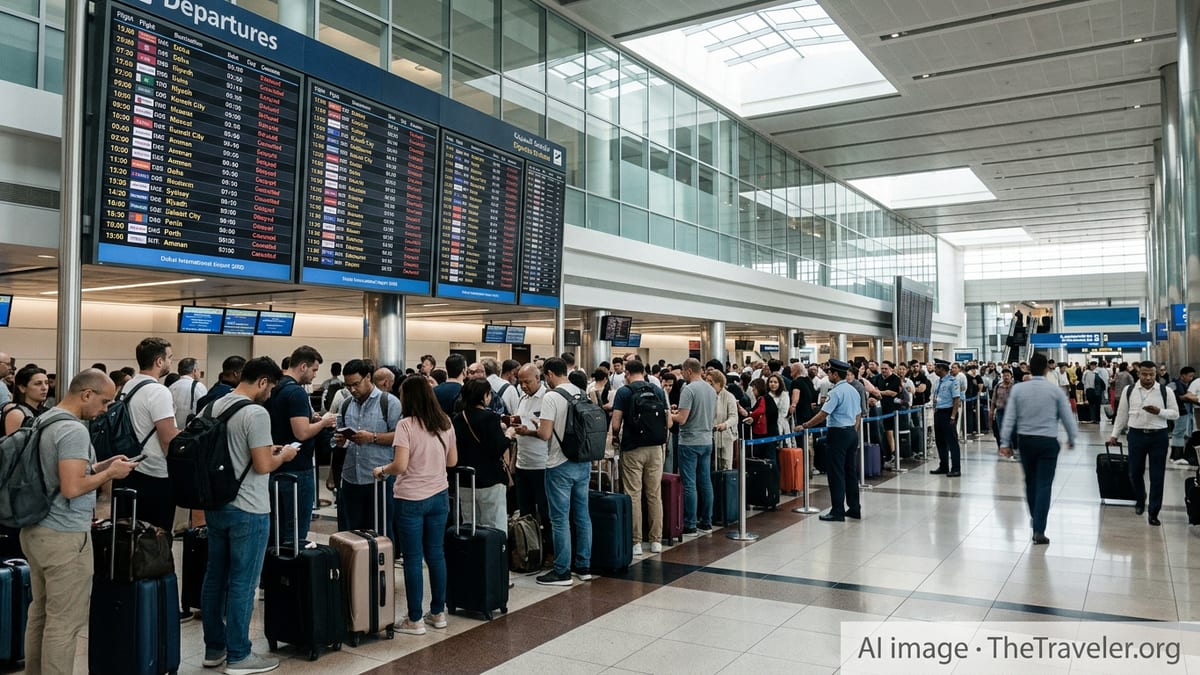
Stronger Warning as Conflict Reaches UAE Hubs
Publicly available Australian government travel advice for the Middle East has been tightened in recent days, with the United Arab Emirates now listed under “do not travel” guidance following a series of Iranian missile and drone attacks across the Gulf. The upgraded alert extends to Dubai and Abu Dhabi and is framed around the risk of further strikes, airspace closures and rapidly changing security conditions.
Coverage of the advisory indicates that Australians are being specifically cautioned against routing itineraries through Dubai International Airport, one of the world’s busiest transit hubs. Reports note that while limited flights are operating, these services remain vulnerable to sudden cancellations or diversions if airspace restrictions are expanded or additional interceptions near the airport occur.
The move reflects a broader regional reassessment by Australian officials as tensions surge following joint United States and Israeli strikes on Iran in late February 2026. Subsequent Iranian attacks have targeted sites in the UAE and other Gulf states, with debris reported near civilian infrastructure and in the vicinity of Dubai’s airport, prompting heightened concern about the safety of transit passengers.
Missile and Drone Strikes Disrupt Dubai Operations
International reporting over the past fortnight highlights multiple Iranian missile and drone barrages directed at the UAE, including incidents in and around Dubai. Accounts from global media and security consultancies describe air defence systems intercepting incoming projectiles, with falling debris damaging buildings in the city and affecting areas near key transport nodes.
Several industry advisories document intermittent closure of UAE airspace under emergency security measures, along with temporary suspensions of flights into and out of Dubai. At various points, Emirates and other Gulf carriers have curtailed or paused operations before gradually restoring restricted schedules, often focused on repatriation and essential travel rather than normal commercial demand.
Although Dubai International Airport has partially reopened, analysts point out that its role as a central hub between Europe, Asia and Australasia leaves transit passengers exposed to cascading disruption if further attacks occur. The combination of physical risk from stray debris, the potential for renewed strikes and air traffic control restrictions has underpinned calls for Australians to re‑route journeys away from the Gulf, even where transit does not involve entering the UAE.
Airlines, Insurers and Universities Adjust to New Risk Levels
The Australian warning against Dubai transit is being echoed by a range of institutional responses at home and abroad. University travel-safety bulletins in Australia reference Smartraveller advice and advise staff and students to avoid itineraries that rely on Dubai, Abu Dhabi or Doha, citing suspended operations, airspace closures and elevated regional security risk.
Corporate travel managers and freight forwarders are circulating similar notices, outlining the redirection of both passenger and cargo routes away from Gulf hubs. Shipping and logistics briefings describe airlines reconfiguring networks via alternative waypoints and, in some cases, shifting freight around the Middle East entirely, adding significant time and cost to journeys.
Travel insurers have also begun issuing clarifications about cover for trips involving destinations or transit points under “do not travel” warnings. Several Australian-focused policy updates stress that travellers who proceed against official advisories may find themselves without cover for disruption or emergency assistance, reinforcing the practical consequences of choosing Dubai as a connection point while the current warning remains in place.
What the Advice Means for Australian Travellers
The strengthened messaging has immediate implications for Australians with existing tickets routed through Dubai. Industry updates show widespread cancellations, schedule changes and rebookings as airlines attempt to move passengers onto alternative connections through safer hubs in Asia or Europe. Travellers are being encouraged by publicly available guidance to monitor airline notifications closely and seek rerouting where possible before departure from Australia.
Those already overseas face a more complicated landscape. With seat availability constrained and some carriers prioritising repatriation, passengers may need to accept circuitous routes or longer layovers to avoid the UAE. Travel agents and airline call centres are reportedly handling high volumes of change requests as customers attempt to align their plans with the evolving Australian advice and regional restrictions.
For prospective holidaymakers and business travellers, the current assessment effectively removes Dubai as a viable transit option for the near term. Aviation and security analysts quoted across multiple outlets emphasise that the situation remains fluid, with further escalations or partial de‑escalations possible. Until a sustained improvement in regional security and airspace stability is evident, itineraries that bypass the Gulf are expected to remain the default recommendation.
Broader Impact on Global Flight Routes and Tourism
The Australian warning against Dubai transit is part of a broader realignment of global flight paths as the Gulf war disrupts traditional east‑west corridors. Data from aviation trackers and industry reports indicate that many airlines have shifted services away from Middle Eastern airspace, lengthening journeys between Europe and Asia and increasing reliance on secondary hubs.
Tourism bodies and travel media note that destinations once heavily fed by one‑stop connections through Dubai are now seeing reduced capacity from the Australian market. Alternative routes via Southeast Asia, East Asia or non‑Gulf Middle Eastern gateways with lower assessed risk are absorbing some of the displaced demand, but schedules remain volatile and subject to last‑minute change.
Observers suggest that the longer the conflict and associated airspace restrictions persist, the more lasting the impact could be on Dubai’s status as a default global transit point. For now, Australian travellers are being urged, through official advisories and industry communication, to treat the region as an active conflict zone and plan itineraries accordingly, with particular emphasis on avoiding nonessential transit through Dubai International Airport.