

More news on this day
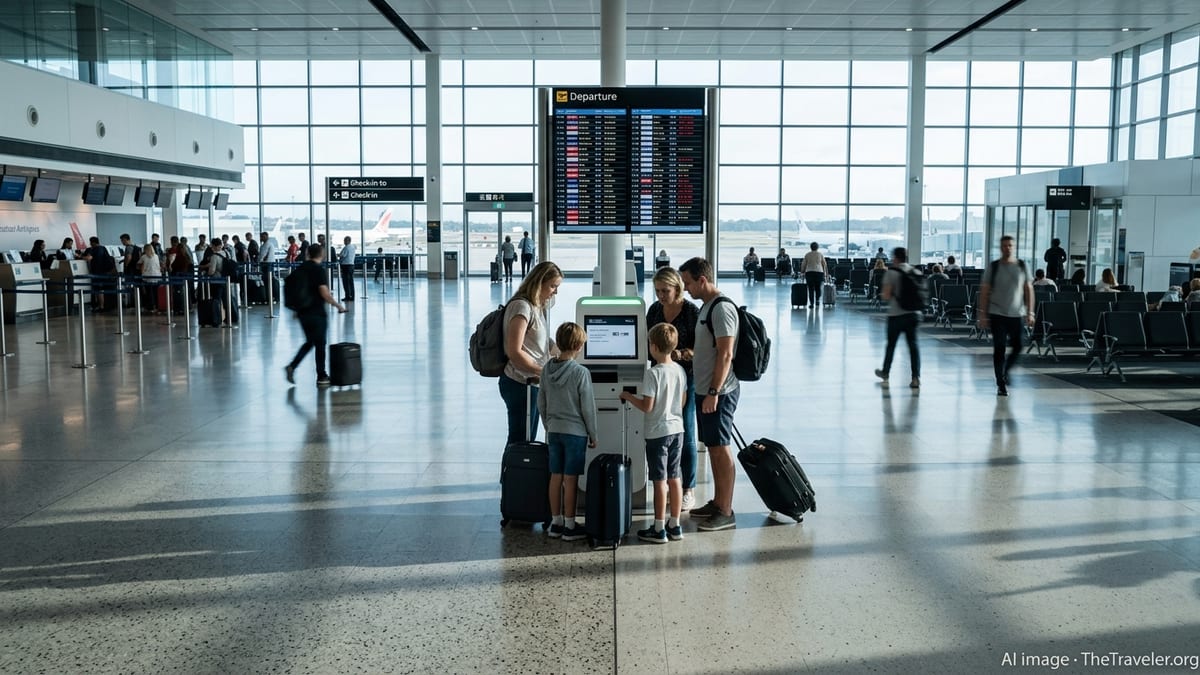
An Australian family has reportedly spent around $10,000 to reroute a long-haul journey in order to avoid transiting through Dubai, underscoring how Australia’s newly heightened safety warnings for the United Arab Emirates are driving costly last-minute changes to travel plans.
Get the latest news straight to your inbox!
Heightened Warnings Turn Transit Hubs Into No-Go Zones
Publicly available travel advisories show that Australia has recently elevated its guidance for the United Arab Emirates to its highest warning level, advising travellers not to visit the country amid an unstable regional security environment and recent missile and drone attacks. The move has transformed what was, until weeks ago, one of the world’s busiest and most routine transit hubs into a flashpoint for anxiety among travellers heading between Australia and Europe, Africa or parts of Asia.
Reports indicate that flights to, from and via Dubai have been curtailed or heavily disrupted following strikes on the UAE and subsequent airspace restrictions. Some airlines have temporarily suspended normal services to the emirate, while others are operating only limited schedules with frequent timetable changes. For Australian travellers, this has removed much of the predictability that once defined connections through Gulf hubs.
Consumer guidance from travel experts suggests that while airlines remain responsible for providing refunds or rerouting when flights are cancelled, they retain broad discretion over the routes and dates they offer. This has left some passengers caught between safety concerns about transiting the UAE and the financial reality that alternatives are either scarce or substantially more expensive at short notice.
It is within this context that the Australian family’s decision to spend approximately $10,000 to bypass Dubai has gained attention, reflecting broader unease about flying through the region even when limited services are still available.
A Costly Detour to Avoid Dubai
According to recent media and traveller accounts, the family, who had originally booked an itinerary that included a Dubai stopover, requested to be rerouted away from the UAE after Australia’s updated guidance and sustained reports of missile and drone activity. When the airline-proposed options continued to rely on transit through Dubai, they turned instead to alternative carriers and routings via Asia and Europe that did not enter UAE airspace.
Publicly shared booking details indicate that the replacement tickets, purchased at short notice during a period of constrained capacity, totalled around $10,000 for the family. The new route increased overall travel time but allowed them to comply with their personal interpretation of safety advice and avoid a country now listed under a “do not travel” warning by Australian authorities.
The decision illustrates how official advisories, though not legally binding for private travellers, can have powerful practical effects. For some, especially families travelling with children or vulnerable passengers, the perceived risk of being stranded in a conflict-affected hub or caught up in further airspace closures outweighs the significant extra cost of rerouting.
Travel industry analysts note that such choices are being repeated in smaller ways across the market, with some Australians delaying trips, shifting to routes via Southeast Asia, or paying premiums for limited seats on carriers that do not rely on Gulf stopovers.
Ripple Effects on Airlines, Fares and Route Networks
The UAE’s role as a global connector means that any prolonged disruption has far-reaching consequences. Published aviation analyses show that airlines using Dubai and other Gulf hubs have been forced to cancel departures, reroute long-haul services over alternative corridors and, in some cases, temporarily suspend specific city pairs altogether. The knock-on effect has been reduced seat availability across popular Australia–Europe and Australia–Africa routes.
As capacity contracts, fares on remaining options have risen. Travellers report that tickets which would normally be purchased months in advance at relatively stable prices are now being rebooked in compressed timeframes at steep mark-ups. For families or larger groups, the cumulative impact can quickly climb into the thousands of dollars, as seen in the reported $10,000 outlay to avoid Dubai.
Some carriers have announced fee-free rebooking or credit options for passengers directly affected by cancellations. However, consumer advocates point out that these policies often do not cover travellers who proactively avoid a country based on evolving risk assessments while their original flights remain scheduled, leaving many to shoulder the cost of voluntary rerouting on their own.
Industry observers suggest that if security conditions in the Gulf remain volatile, airlines may need to reassess the balance between operating truncated services via Dubai and investing more heavily in non-Gulf routings that satisfy both safety and passenger confidence concerns.
Safety, Perception and Legal Grey Areas
The Australian government’s updated advisory for the UAE cites the threat of further attacks, potential disruptions to essential services and the prospect of additional airspace closures. Independent security briefings echo these concerns, highlighting that even successful interception of missiles or drones can prompt precautionary suspensions of flights, diversions and rapidly changing airport operations.
For individual travellers, however, much of the decision-making hinges on perception. Surveys and anecdotal reports show that some Australians still regard Dubai as relatively orderly and secure on the ground, while others are more focused on the risk of being stranded or on broader human rights considerations, including treatment of women and the strict legal environment for visitors.
Insurance adds another layer of complexity. Policy documents commonly exclude cover for losses related to war or conflict, particularly when a government has issued a “do not travel” advisory for a destination. This can mean that travellers who choose to pass through Dubai despite the warning may find themselves without coverage for some disruptions, while those who cancel or reroute pre-emptively may not qualify for compensation if their original flight continues to operate.
Legal specialists in consumer and aviation law note that while airline obligations around cancellations and significant schedule changes are reasonably clear, there is far less clarity when safety concerns drive a voluntary decision to avoid a transit point that is still open and functioning, leaving many passengers in a financial and regulatory grey zone.
What Australian Travellers Are Doing Now
Reports from travel agencies, online forums and airline updates suggest that Australians are adopting a patchwork of strategies in response to the shifting situation. Some are pressing ahead with existing bookings via Dubai while closely monitoring airline notices and government advisories in the hope that conditions stabilise before departure.
Others are pivoting to routings through Singapore, Kuala Lumpur, Bangkok or other Asian gateways, even when this means longer travel times and higher prices. In certain cases, travellers are breaking long-haul journeys into multiple separate tickets to stitch together routes that avoid both the UAE and neighbouring high-risk airspace corridors.
Tour operators and corporate travel managers are also reviewing itineraries. Several have publicly indicated that they are assessing all bookings that transit the Middle East in the short term, offering alternates where possible, and advising clients about the implications of Australia’s elevated warnings for insurance and employer duty-of-care policies.
For now, the experience of the Australian family who chose to spend $10,000 to bypass Dubai has become a symbol of the hard choices facing many long-haul travellers. It highlights how quickly a dependable transit hub can turn into a point of contention, and how safety considerations, official advisories and the realities of limited flight capacity are combining to reshape the way Australians move across the world.