

More news on this day
Australia’s hotel sector is emerging from the pandemic years with renewed strength, as 2025 shapes up as a record period for room rates and revenue supported by a broad rebound in tourism demand.
Get the latest news straight to your inbox!
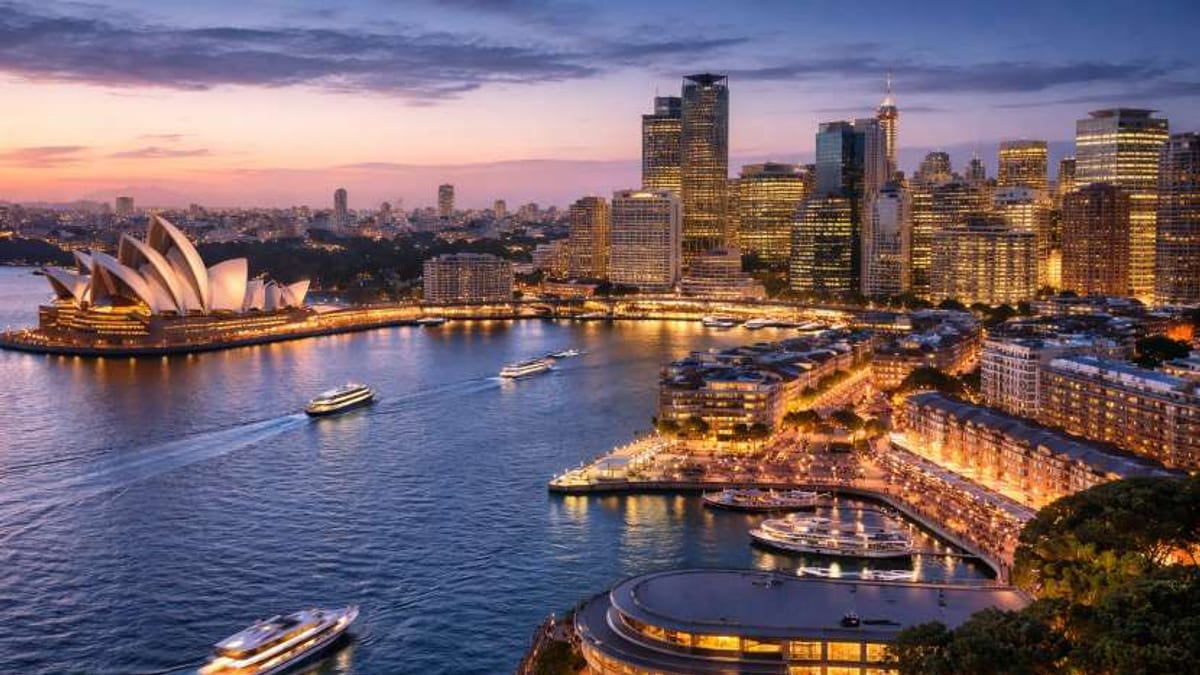
Image by International Hotels News, Hotel Industry & Hospitality News
Record Room Revenue and Rising Occupancy
Industry data providers and recent market commentary point to 2025 as a high-water mark for Australian hotel performance, with revenue per available room reaching or surpassing previous peaks in several major cities. Building on strong gains in 2023 and 2024, average daily rates have continued to climb while occupancy has edged higher, delivering solid top-line growth for operators.
Analysis of sector reports highlights that hotel revenue metrics in key gateway markets such as Sydney, Melbourne and Brisbane are now sitting well above pre-pandemic levels. Forward-looking research drawing on Australian Bureau of Statistics and Tourism Research Australia data suggests that rising visitor numbers through 2025 are translating directly into higher yields for accommodation providers, particularly in urban and coastal leisure markets.
Independent market summaries of the Australian hotel industry show that national occupancy has staged a steady recovery from the lows of 2020 to the high 60s and low 70s in recent years, creating a platform for 2025 to move into record territory. The uplift is being driven by a mix of corporate travel, conferences, domestic holidays and a growing stream of international visitors returning to Australia’s major destinations.
While final full-year figures are still being compiled, early performance snapshots for the first half of 2025 indicate that hotels are operating with stronger pricing power than at any point in the past decade. Many operators are prioritising yield over volume, using sophisticated revenue management tools to capitalise on peak demand periods linked to major events, school holidays and cruise arrivals.
Tourism Rebound Fuels Demand
The hotel surge is closely tied to a broad-based recovery in Australia’s visitor economy. Tourism Research Australia’s latest international tourism results show that overseas arrivals continued to climb into 2025, with rolling year-end data pointing to a near-complete recovery towards pre-pandemic volumes. Forecasts released through national and international tourism policy reports have long anticipated that total international arrivals would surpass 10 million around 2025, and current trends indicate the sector is tracking close to that trajectory.
Commercial analysis of 2024 and early 2025 travel data notes that international visitor spending has already exceeded pre-COVID levels, even as absolute arrival numbers continue to rebuild. In January 2025, for example, economists tracking Australian Bureau of Statistics figures reported double-digit year-on-year growth in international arrivals, with projections for around nine to ten million international visitors over the year if momentum is maintained. This tilt towards higher-spending segments is especially beneficial for full-service and upscale hotels.
Domestic tourism remains another critical pillar of demand. Recent tourism trend reports highlight more than one hundred million domestic overnight trips annually, only marginally below pre-pandemic benchmarks and still growing. Many Australians who rediscovered local destinations during border closures have continued to travel within the country, supporting regional hotels and resorts as well as city stays linked to events, retail and dining.
Combined, these domestic and international flows have lifted tourism’s contribution to the national economy, with OECD tourism monitoring showing the sector’s share of GDP climbing again after the pandemic slump. That macroeconomic backdrop provides confidence for hotel investors, lenders and operators planning refurbishments and new openings in the second half of the decade.
City Hotspots and Event-Driven Highs
Some of the strongest evidence of a record year for hotels is emerging at the city level. Market reports on Brisbane, for instance, show that the city’s hotels set fresh benchmarks in January 2025, with average daily rate and revenue per available room reaching record levels. Occupancy pushed into the high 60 percent range, supported by a full calendar of concerts, sporting fixtures and summer leisure travel.
Other capitals have experienced similar surges tied to aviation recovery and major events. Adelaide Airport reported a record 1.14 million international passengers in 2025, boosted by new long-haul services, reinstated connections and rising leisure and visiting-friends-and-relatives traffic. These additional routes are feeding directly into hotel demand across the city, with more international travellers using Adelaide as a base for regional touring.
Across Sydney and Melbourne, hotel performance is being underpinned by a mix of corporate travel, large-scale conferences, arts festivals and marquee sporting events. Research circulated by global property consultancies argues that increased international airline capacity into Australia’s two largest gateways is a key driver of higher room nights, particularly in central business districts and airport hotel precincts.
Regional and lifestyle destinations are also benefiting from a strong events pipeline. Food and wine festivals, cultural celebrations and outdoor music events are attracting travellers from interstate and overseas, contributing to elevated occupancy on traditionally quieter midweek and shoulder periods. This diversification of demand is helping many hotels smooth revenue across the year rather than relying solely on summer peaks.
Shifts in Traveler Behavior and Hotel Strategy
The record performance is not only a story of more visitors, but also of changing traveler behavior. Reports examining Australia’s visitor economy note that travellers are increasingly prioritising experience-rich stays, longer trips and higher quality accommodation. International guests returning after several years away are tending to spend more per day, while domestic travellers are trading up to four and five-star properties for special occasions and short breaks.
Hotels are responding by investing in soft refurbishments, upgraded technology and expanded food-and-beverage concepts designed to capture a larger share of guest spending on-site. Many operators are also leveraging loyalty programs and dynamic pricing strategies to maximise yield during high-demand periods associated with school holidays, long weekends and headline events.
Sustainability has emerged as another influential trend. Sector-wide statistics show a growing proportion of Australian hotels obtaining some form of green tourism certification, reflecting both regulatory expectations and guest preferences for lower-impact stays. Properties are showcasing energy-efficient design, waste reduction programs and local sourcing initiatives, which can also translate into operating cost savings and brand differentiation.
At the same time, labour and cost pressures are reshaping service models. Publicly available commentary from industry analysts details how many hotels are adopting more flexible staffing patterns, expanded self-service options and digitised check-in systems to manage wage inflation and skills shortages while maintaining guest satisfaction scores.
Investment Momentum and Future Outlook
The strength of 2025 trading conditions is feeding into renewed investor appetite for Australian hotel assets. Recent transaction and pipeline commentary from global real estate firms shows heightened interest from both domestic and offshore investors, who view the market’s combination of reliable domestic travel, rising international demand and constrained new supply in key CBD locations as attractive.
Forward-looking forecasts compiled by export finance and tourism agencies point to continued growth in tourism exports beyond 2025, supported by population growth in key source markets, expanded air connectivity and Australia’s positioning as a safe, nature-rich long-haul destination. Many analysts expect hotel revenue to remain robust as long as capacity additions in both aviation and accommodation are managed carefully.
Nonetheless, the record year for hotels sits alongside some clear challenges. Industry research notes that international arrivals from certain markets, particularly China, remain below 2019 levels, and that high travel costs and global economic uncertainty could temper future growth. Regional areas that are more reliant on a narrow range of source markets or seasonal demand may also experience greater volatility than the capital city hubs.
Even with these headwinds, the 2025 performance of Australian hotels marks a significant milestone in the sector’s recovery and repositioning. With tourism demand diversified across domestic and international segments, and a pipeline of infrastructure and events leading into the later 2020s, hotels across the country appear well placed to build on this record year.