

More news on this day
An Australian traveler passing through Los Angeles International Airport has been charged in the United States after allegedly assaulting a Transportation Security Administration officer during a confrontation over misplaced luggage, according to early media reports and court filings.
Get the latest news straight to your inbox!
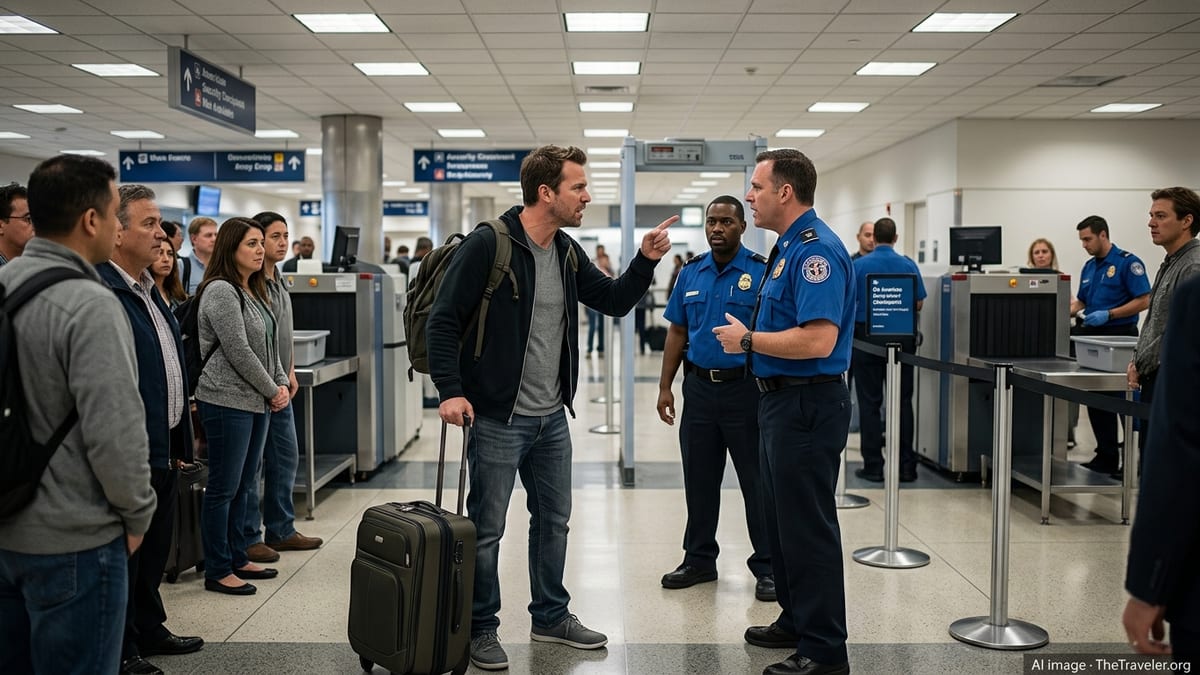
Altercation Reported at LAX Security Checkpoint
Published accounts describe the incident unfolding at a security checkpoint in one of Los Angeles International Airport’s busy terminals, where the Australian national was preparing to transit through the United States. Initial reports indicate that the traveler became distressed after being unable to locate checked baggage and believed the luggage had been mishandled or misplaced during the journey.
Publicly available information suggests the dispute escalated from a verbal argument into a physical altercation involving a TSA officer stationed at the checkpoint. The confrontation reportedly drew the attention of nearby travelers and airport personnel as tempers flared in an already congested screening area.
Witness descriptions summarized in local coverage point to a chaotic scene in which instructions were repeated and attempts were made to de-escalate the situation before the alleged assault occurred. The incident briefly disrupted screening operations as security staff moved to separate the parties and restore order to the checkpoint.
Airport operations at LAX, which handles tens of millions of passengers each year, are designed to absorb short-term disruptions. In this case, screening lines were reportedly rerouted and delays remained localized to the immediate area around the incident.
Alleged Assault and Resulting Charges
According to information drawn from court records and news reports, the traveler is accused of physically striking a TSA officer after repeated disputes over the missing luggage. The officer, a federal security screener, was reportedly performing routine duties at the time of the confrontation when the passenger allegedly pushed through a restricted area and made physical contact.
The officer is reported to have sustained minor injuries, prompting an on-site medical evaluation and documentation of the encounter. While the injuries were not described as life threatening, the incident nonetheless triggered a criminal investigation due to the status of the officer as a federal employee performing security functions.
Federal law provides for serious penalties when passengers interfere with or assault aviation security personnel. Based on public filings, the Australian traveler now faces charges that may include assault on a federal officer and interference with security screening, offenses that can carry substantial fines and potential prison time if a conviction is obtained.
Reports indicate that the traveler was detained at the airport shortly after the altercation and later transferred into federal custody for processing. The individual’s identity and full list of charges are expected to be detailed more clearly in subsequent court appearances and official charging documents.
Legal Context for Assaults on TSA Officers
Available legal and policy materials show that assaults involving TSA officers are treated with particular gravity in the United States. TSA personnel are considered part of the nation’s aviation security framework, and interference with their work is commonly handled under federal statutes that also apply to other protected officers engaged in official duties.
In recent years, congressional hearings, government reports, and industry briefings have noted a pattern of confrontations at airports, including verbal abuse and occasional physical attacks on security and airline staff. These analyses stress that incidents at checkpoints and gate areas can compromise both staff safety and the orderly flow of passengers through critical security bottlenecks.
Criminal complaints in comparable cases often outline a sequence in which disagreement over baggage, screening procedures, or prohibited items escalates into contact such as pushing, slapping, or attempting to bypass security barriers. Even when injuries are minor, defendants may still face felony-level charges because the alleged victim is a federal officer.
Defense outcomes in such cases can vary, ranging from negotiated plea agreements and probation to custodial sentences, depending on factors such as the severity of the assault, the defendant’s prior record, and evidence of intoxication or other aggravating circumstances. The Australian traveler’s case is likely to follow a similar path through the federal court system in Los Angeles.
Passenger Rights, Responsibilities, and Luggage Missteps
The episode has again drawn attention to the stresses of modern air travel, especially when luggage goes missing or is delayed during international connections. Airline and airport guidance commonly emphasizes that checked baggage is the responsibility of the carrier, while TSA officers focus on security screening rather than baggage tracking or delivery.
Publicly available travel advisories encourage passengers to distinguish between airline customer-service functions and the duties of security staff. When bags are lost, delayed, or misrouted, travelers are generally advised to seek assistance at airline baggage counters or via customer-service channels, rather than engaging directly and aggressively with checkpoint personnel whose primary task is security.
Travel experts and consumer advocates often recommend practical steps to reduce the risk and frustration associated with misplaced luggage. These include using distinctive tags, photographing baggage and claim checks, placing itineraries and contact details inside bags, and tracking luggage through airline mobile applications where available. Such measures do not eliminate the risk of misplacement but can simplify the process of locating and reclaiming missing items.
For international travelers in particular, incidents that escalate into confrontations with airport staff can lead not only to criminal charges but also to immigration consequences, including cancellation of visas or future travel restrictions. Public information about similar cases indicates that foreign nationals convicted of serious offenses in the United States may face additional hurdles when seeking to reenter the country.
Broader Concerns About Airport Conduct and Safety
Beyond the legal case itself, the reported altercation at LAX highlights broader concerns about unruly behavior in airports and on aircraft. Aviation safety briefings and industry surveys have noted that tensions around delays, security rules, and baggage issues can contribute to a rise in confrontations involving both passengers and frontline staff.
Airport operators and airlines have increasingly focused on staff training, signage, and public messaging intended to keep interactions calm and clear. Many major hubs, including those in the United States and Australia, have introduced or expanded campaigns reminding passengers of behavioral expectations and the potential consequences of aggressive conduct.
Publicly available information on comparable incidents underscores that most travelers pass through security checkpoints without serious issues. However, when conflicts do erupt, the involvement of law enforcement and the potential for criminal charges can be swift, particularly in sensitive areas such as TSA screening lanes and secured concourses.
As the case of the Australian traveler proceeds through the courts in Los Angeles, additional details are likely to emerge regarding the chain of events leading up to the alleged assault and the precise role that the misplaced luggage played in escalating the confrontation. For now, the incident serves as another reminder of the high stakes surrounding behavior in airport security zones and the strict legal protections afforded to the staff who work there.