

More news on this day
Australia’s largest airports have launched a $1.5 billion spending surge on new runways, terminal extensions and transport links, fuelling warnings from airlines and regulators that the infrastructure race could soon be reflected in higher airfares for travellers.
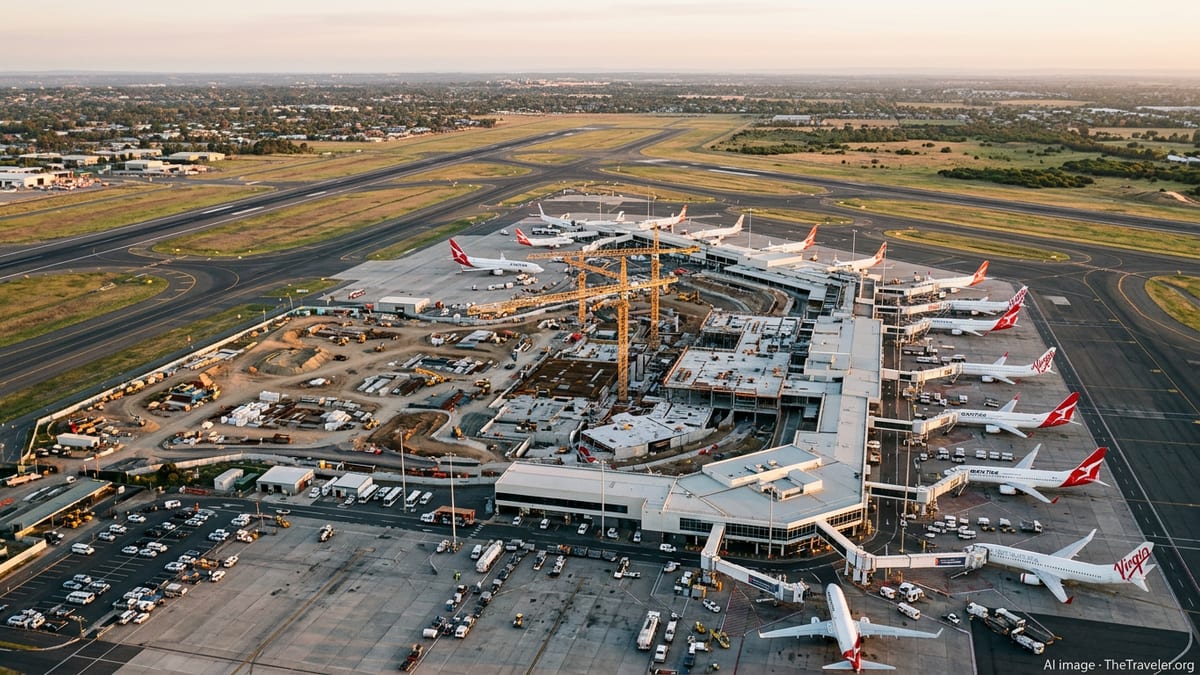
A Record Wave of Airport Investment
Australia’s four biggest gateways Brisbane, Melbourne, Perth and Sydney collectively invested about $1.5 billion in aeronautical infrastructure in the 2024 to 2025 financial year, according to the latest monitoring report from the national competition regulator. That figure represents a jump of more than 40 per cent on the previous year and marks a decisive shift away from the post pandemic lull in capital works.
Runways, terminal expansions and access projects dominate the current pipeline. Brisbane Airport has embarked on a multi billion dollar transformation program that includes new domestic and international facilities ahead of the 2032 Olympic and Paralympic Games. Perth is pressing ahead with a long planned parallel runway and terminal consolidation, while Sydney and Melbourne are deep into planning and construction for additional capacity to cope with surging demand.
The regulator has welcomed the renewed investment as a sign that airports are preparing for strong long term growth in passenger numbers. But it has also been explicit that these costs will need to be recovered from the airlines that use the facilities and, ultimately, from the passengers who pay the fares. The question now is not whether the investment will flow through to ticket prices, but how quickly and by how much.
How Big Projects Filter Into What You Pay
Airports typically recoup the cost of major projects through higher aeronautical charges levied on airlines for every arriving and departing passenger, as well as through landing fees and aircraft parking charges. Airlines generally pass these costs through in the form of higher base fares or additional surcharges built into the ticket price.
Australia’s regulatory framework gives major airports significant freedom to set their own charges, subject to monitoring rather than direct price control. That approach is designed to give operators confidence to commit to long lived assets such as runways and terminals. It also means that once a spending program is locked in, airports are under pressure from shareholders to ensure the return on that capital remains intact, even if traffic growth slows.
Airlines argue that the current wave of projects goes beyond what is strictly necessary for safety and efficiency and risks putting unnecessary upward pressure on airfares. Industry bodies representing carriers have repeatedly warned that higher airport charges, coupled with steep fuel and labour costs, leave limited room to absorb additional fees without pushing ticket prices higher, particularly on domestic and short haul international routes where competition is already tight.
Regulators counter that well targeted capacity expansions can, over time, help ease fare pressure by allowing more flights and more competition on busy corridors. But they also stress that investment has to be efficient, staged and clearly justified. Spending missteps, they warn, could leave travellers paying more for facilities they neither need nor use.
Melbourne, Brisbane and Perth Lead a New Building Boom
The latest investment surge is centred on the east and west coast hubs that handle the bulk of Australia’s traffic. In Melbourne, the airport has just unveiled plans for a multibillion dollar expansion that will add new international gates and enlarged departure areas, on top of an already approved parallel runway. Together, those projects are designed to support a sharp rise in long haul services to North America, Asia and the Middle East over the next decade.
Brisbane is in the early stages of a multi year redevelopment that will reshape its domestic and international terminals and expand airfield capacity well beyond current levels. The works are intended to position the airport as a central gateway for the 2032 Games, with planners targeting a near doubling of annual passengers by the mid 2040s.
Perth Airport is pursuing its own multibillion dollar plan to bring all major airlines into a single precinct, add a new runway and build a major hotel and commercial hub on site. The project is pitched as a way to cement Perth’s role as Australia’s western gateway to Europe, Africa and the Middle East, but it also represents one of the largest private infrastructure programs underway in Western Australia.
Each of these airports insists that the upgrades are essential to avoid congestion, delays and constraints on new services. Yet all acknowledge that once the assets are in place, higher charges will be embedded in their pricing structures for decades.
Will New Capacity Hold Fares Down or Push Them Up?
Whether travellers ultimately pay more or less will depend on how the new infrastructure interacts with airline competition. More gates and runways theoretically mean more flights and more carriers, which should put downward pressure on prices. That dynamic is already being discussed in Sydney, where a new international airport in the city’s west is preparing to open with a strong focus on low cost and leisure airlines.
If low cost carriers seize the opportunity to base aircraft at new or expanded terminals, they could intensify rivalry on key domestic and regional routes. That in turn could offset some of the impact of higher airport charges by spreading costs across more passengers and driving airlines to keep base fares sharp.
But there is no guarantee that extra capacity will translate immediately into a flood of new services. Airlines remain cautious after the shocks of the pandemic era and are carefully pacing fleet growth. If capacity lags behind the pace of airport investment, the higher per passenger charges needed to service those assets could dominate, with limited competitive relief for consumers in the short term.
Regional travellers face a particular risk. Smaller airports that rely heavily on a handful of routes often have less bargaining power with airlines and fewer options to grow volumes quickly. Where new security, runway or terminal requirements are added on top of existing fixed costs, the result can be especially steep increases in per seat charges and, by extension, fares.
How Travellers Can Prepare for a More Expensive Sky
For passengers, the immediate message is to expect continued volatility in pricing as airports, airlines and regulators negotiate how the current infrastructure push will be paid for. Even if base fares remain competitive on trunk routes, taxes, charges and fees baked into the final ticket price are likely to rise in coming years as projects move from the drawing board to the balance sheet.
Travel planners and frequent flyers can take some practical steps to stay ahead of the curve. Watching for new entrants and additional services on specific routes is increasingly important, as added airline competition tends to cap fare increases even when underlying costs are rising. Booking earlier for peak holiday periods, when capacity is tightest and surcharges bite hardest, also becomes more critical.
For those in regional and remote areas, where choice is limited, the policy debate around how airport upgrades are funded will be particularly significant. Industry groups are urging the federal government to channel more of the revenue it collects from international passenger charges back into modernising border and processing facilities, reducing the need for airports to recover every dollar from airlines and passengers.
As Australia’s airports race to build the infrastructure they say is needed for the next generation of travellers, the balance between investment and affordability will stay firmly in the spotlight. For now, the only certainty for passengers is that what happens on the tarmac and behind the terminal hoardings will be increasingly visible in the price they pay to fly.