

More news on this day
Australia’s six month suspension on most Iranian visitor visas is beginning to ripple through international airline networks, altering booking patterns on routes served by Singapore Airlines, Qantas, Air India, Emirates, Malaysia Airlines and Virgin Australia while leaving travel options for UK, New Zealand and Indian tourists largely unchanged.
Get the latest news straight to your inbox!
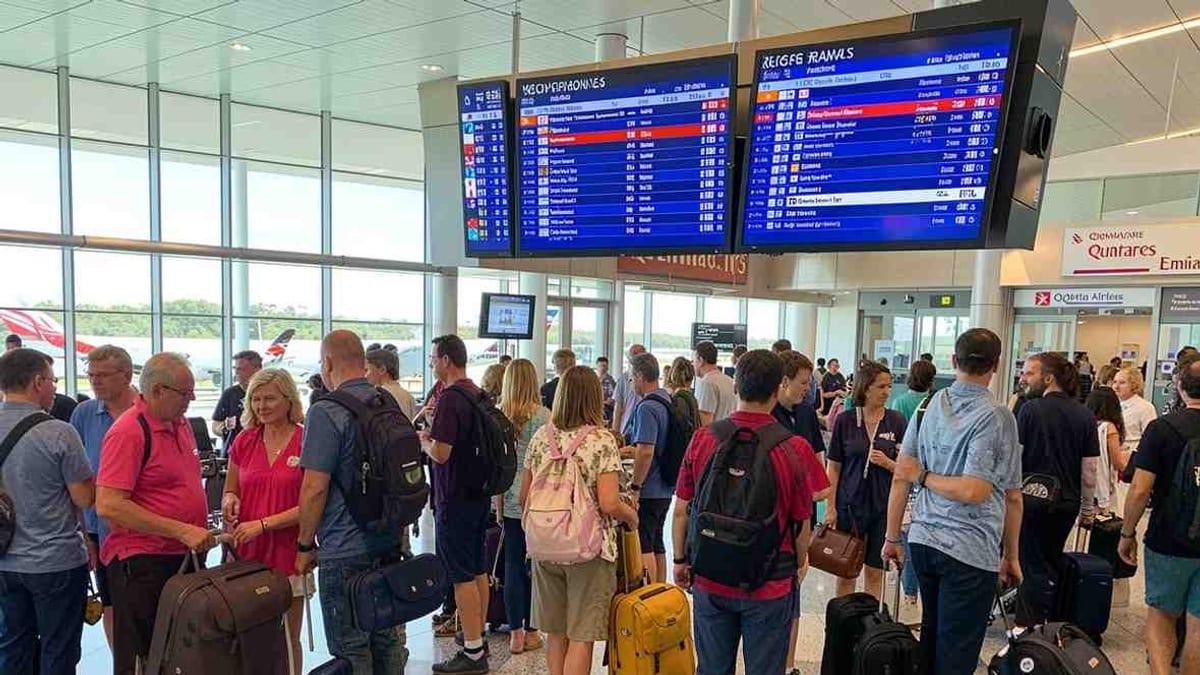
Image by Travel and Tour World – Tourism, Airline, Destination, MICE, Gobal Travel Market, Hotel news that you will find only over here.
New powers let Australia halt entry despite valid visas
Publicly available information shows that the Australian government has activated new immigration powers that allow it to temporarily bar entry to broad classes of visa holders. Under recent legislative changes, authorities can suspend the arrival of specific cohorts even if travelers already hold valid visas, a mechanism that has now been applied to most Iranian nationals with visitor visas.
Reports indicate that the current measure runs for six months and targets predominantly Subclass 600 visitor visa holders from Iran. Online guidance and community briefings describe it as a suspension of entry rather than a formal cancellation of individual visas, meaning many Iranians still technically possess valid visas that cannot be used to enter Australia during the period of the ban.
The move follows months of deteriorating relations between Canberra and Tehran amid a wider regional conflict. Public records on Australia Iran relations highlight a series of diplomatic escalations and security concerns, contributing to a political climate in which tighter migration controls on Iranian nationals have become more likely.
Travel forums and migration advisers note that the policy is being implemented at the airline check in stage, with carriers instructed to deny boarding to affected Iranian passport holders bound for Australia, even where their visas remain current in the system.
Airlines adjust bookings and routings for Iranian passport holders
The practical impact is being felt first at airport counters and airline call centres. International carriers operating to Australia such as Singapore Airlines, Emirates, Malaysia Airlines, Qantas, Air India and Virgin Australia must now verify not only that passengers hold valid visas but also that their visa class is not subject to a fresh arrival suspension.
Travel discussion boards suggest that some Iranians holding Australian visitor visas have already been refused boarding on itineraries involving transit points such as Singapore or Kuala Lumpur when the final destination was an Australian city. In these cases, air tickets remain valid but cannot be used until or unless the suspension is lifted, leading to a spike in refund and rebooking requests.
For Gulf and Asian airlines in particular, Iranian nationals have often connected through hubs like Dubai, Doha, Kuala Lumpur or Singapore on their way to Australia. As the Australian restrictions take hold, publicly available schedules show these carriers continuing to operate their Australia services but with a narrower pool of eligible passengers from Iran, potentially diluting demand on some city pairs that previously attracted strong Iranian leisure and family traffic.
Australian based carriers are also responding. Industry timetables list Qantas and Virgin Australia as partners in a web of codeshare services across Asia and the Middle East. While there is no blanket change to their published networks, the new rules effectively prevent them and their partner airlines from transporting most Iranian tourists into Australia, even when the journey is sold as part of a multi airline itinerary.
Why UK, New Zealand and Indian tourists are treated differently
Despite intense headlines about a new travel ban, the Australian action is highly targeted. Publicly available immigration and travel advisories indicate that the current suspension applies to most Iranian visitor visa holders rather than to visitors from countries such as the United Kingdom, New Zealand or India.
UK and New Zealand citizens, who already benefit from relatively straightforward electronic visitor processes, continue to be able to travel to Australia for tourism under existing schemes. While they may face routine security screening and are urged to monitor evolving regional tensions, there is no comparable blanket pause on their visitor visas.
Indian nationals remain subject to normal visa requirements, which typically involve obtaining a visitor visa before travel. Recent regional developments have seen Iran tighten its own visa free access for Indian travelers, but in the opposite direction Australia has not imposed a country wide entry suspension on Indian tourists. Industry analyses suggest that Australia continues to view India as a growth tourism market, reinforcing a clear policy distinction between Iranian visitors and other South Asian travelers.
For airlines like Air India, this means that scheduled flights between India and Australia can carry Indian tourists broadly as before, even as the same carriers or their partners must now decline boarding to many Iranian nationals whose travel plans once relied on similar routes.
Transit, codeshares and the limits of the ban
A key question for many travelers is whether merely passing through an Australian airport or an intermediary hub can trigger problems under the new rules. Travel industry guidance indicates that the current Australian measures focus on arrival into Australia rather than airside transit through third countries. In other words, the main constraint for Iranian nationals is entering Australia itself, not flying with global carriers on routes that bypass Australian territory.
Singapore Airlines and Malaysia Airlines, for example, continue to list Iran among the many countries they serve or connect via one stop itineraries. An Iranian traveler transiting Singapore on the way to a non Australian destination is generally subject to Singapore’s own entry or transit rules, not Australia’s. The ban becomes relevant only where the final ticketed point is in Australia, at which point check in agents are obliged to enforce the Australian arrival suspension.
On the Australian side, government operating summaries show that airlines such as Virgin Australia and Qantas are heavily embedded in codeshare partnerships across Asia, Europe and North America. Under the current settings, an itinerary sold by a partner airline that terminates in Australia still falls under Australian border controls at the final leg, regardless of who issued the ticket. This limits attempts to bypass the restrictions by booking through third country carriers or alliance partners.
Experts in commercial aviation note that, while the disruption is significant for the affected group of passengers, the overall impact on global schedules is more contained than during large scale airspace closures. The constraint is targeted at a specific nationality and visa class rather than entire routes, allowing airlines to maintain most timetables while absorbing some loss of demand and additional administrative checks.
What travelers should watch in the months ahead
For Iranian nationals with Australian visitor visas, the most immediate concern is timing. Public information about the measure describes it as a six month suspension, but also stresses that travel rules can change at short notice as the broader Iran conflict evolves. Travelers are being advised in open sources to avoid making non refundable bookings to Australia until clearer guidance emerges about whether the suspension will lapse, be extended or be replaced by more granular screening.
Prospective visitors from the UK, New Zealand and India are primarily being urged to focus on general safety and routing considerations rather than visa access. Government travel advisories for the Middle East highlight evolving risks to flights that cross Iranian or Gulf airspace, spurring many tourists and airlines to favor routings via Southeast Asia or other alternative corridors, even as their underlying right to enter Australia remains intact.
Airlines serving Australia are expected to continue fine tuning capacity, pricing and connection options as the situation develops. If demand from Iranian markets remains suppressed while bookings from other countries stay strong, carriers may adjust sales focus and fare structures on key routes rather than scale back services outright.
For now, the sharpest effects of Australia’s Iranian visa block are being felt at the intersection of individual travel plans and carrier obligations. While most global tourists, including those from the UK, New Zealand and India, can still reach Australia with familiar documentation, Iranian nationals face a new and uncertain landscape in which even a valid visa no longer guarantees a seat on the plane.