

More news on this day
Austria is positioning itself as a powerful new bridge between Europe and Cambodia, with Vienna emerging as a key connecting hub and Cambodia’s expanding airport network poised to unlock faster, smoother routes for European travelers seeking Southeast Asia’s temples, coastlines, and emerging city breaks.
Get the latest news straight to your inbox!
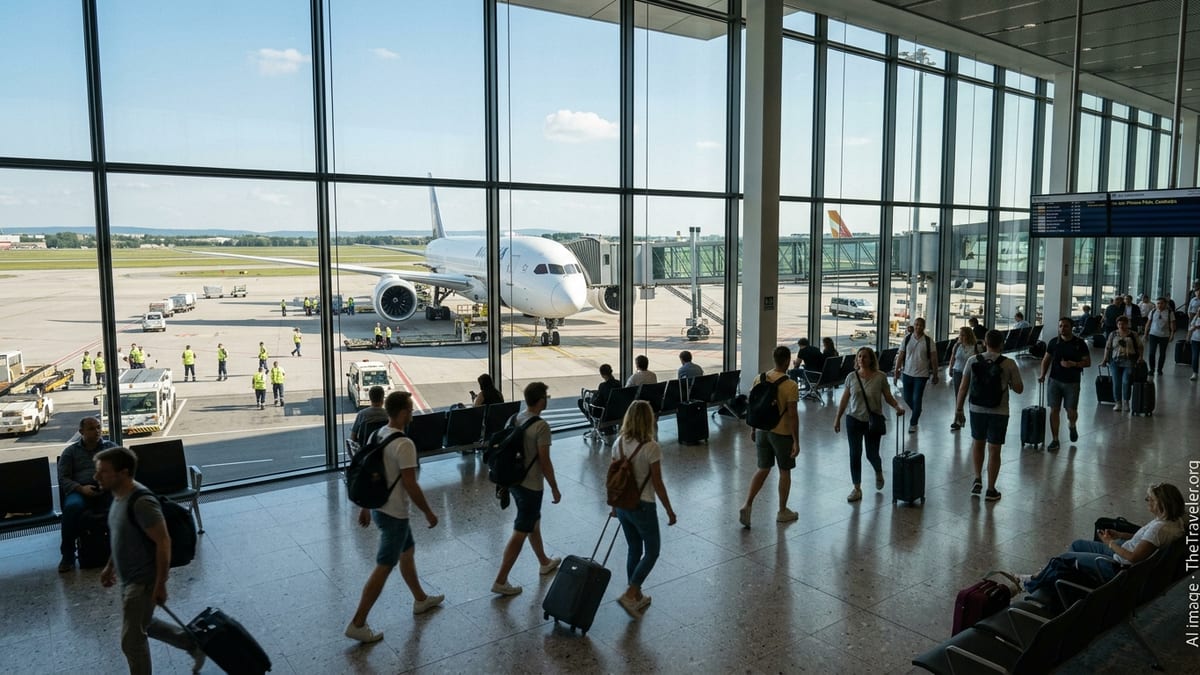
Vienna Steps Forward as a Strategic Gateway to Cambodia
Publicly available airline data and route announcements indicate that Vienna is consolidating its role as a Central European hub for long-haul travel, including to Southeast Asia. Austrian Airlines continues to grow its North American and intra-European network from Vienna, while partner carriers and low-cost operators expand links from Asia into the Austrian capital. This hub structure is creating new one-stop combinations that make journeys from European cities to Cambodia shorter and more convenient than in previous years.
Flight-search platforms and carrier schedules show that travelers from secondary European cities increasingly route via Vienna to major Asian gateways such as Bangkok, Singapore, and Doha, then onward to Phnom Penh or Siem Reap. For many European travelers, that means fewer backtracks through traditional Western European mega-hubs and more streamlined itineraries that start and finish in the heart of Central Europe.
Industry presentations focused on Austria’s tourism competitiveness describe Vienna as a growing node in the Europe–Asia network, supported by connections from partners including Scoot and other regional airlines. Together with Austrian Airlines’ own long-haul operations, this connectivity is enhancing the capital’s role as a logical departure point for new or expanded services that could tighten the link between Europe and Cambodia.
Cambodia’s New Airports Transform Long-Haul Potential
Cambodia’s airport infrastructure has undergone a significant upgrade in the past two years, reshaping the country’s ability to welcome long-haul flights. Siem Reap–Angkor International Airport opened to replace the old city airport, with a longer runway and facilities designed to handle wide-body aircraft and greater passenger volumes. According to publicly available airport information, the new field was conceived specifically with future intercontinental services and growing tourism flows in mind.
Further south, Techo International Airport has begun operations as the new gateway for Phnom Penh, replacing the capital’s older single-runway facility. Coverage from international news outlets and aviation-focused publications notes that the multi-runway airport was built to handle tens of millions of passengers over the coming decades, signaling Cambodia’s ambition to compete more directly with regional hubs for both tourists and investors.
These upgrades are already attracting additional capacity. Reports highlight new routes by Turkish Airlines, Etihad Airways, and regional carriers that connect Phnom Penh and Siem Reap with the Middle East, East Asia, and key Southeast Asian capitals. For European travelers, the combination of a modern airport system and more varied routing options means less circuitous journeys, smoother transfers, and improved reliability when planning complex multi-stop itineraries that include Cambodia.
From Europe to Angkor and the Coast: Faster, Smarter Itineraries
For many years, reaching Cambodia from Europe typically involved at least two connections, often via major hubs in Bangkok, Singapore, Kuala Lumpur, or Ho Chi Minh City. While those gateways remain central, the emerging pattern of routes and partnerships is making itineraries more efficient. Turkish Airlines’ service between Istanbul and Phnom Penh, for example, opens up a wide range of one-stop connections from major European and UK cities into Cambodia’s capital through a single transfer.
Middle Eastern carriers are playing a complementary role. Etihad Airways’ link between Abu Dhabi and Phnom Penh and Emirates’ service to Siem Reap via Bangkok, as highlighted in industry and investor-focused coverage, stitch Cambodia into powerful global networks that span Europe, North America, and beyond. Travelers departing Vienna and other European cities can increasingly choose whether to route via a Gulf hub, an Asian hub, or through Istanbul when building a trip to Cambodia’s temples or islands.
On the ground in Cambodia, new domestic and regional links further expand possibilities. AirAsia Cambodia and emerging local carriers are adding services that connect Phnom Penh and Siem Reap with regional cities, making it easier to combine Angkor Wat with beach destinations in Thailand or Vietnam, or to add side trips to Laos and other neighboring countries. For European visitors, this web of connections transforms Cambodia from an isolated “add-on” destination into a central anchor for multi-country Southeast Asia journeys.
Tourism Growth Targets Drive Air Connectivity Strategy
Cambodian tourism authorities have set ambitious visitor targets for the second half of the decade, with widely cited figures pointing to plans for several million additional international arrivals by 2028. Public strategy documents and tourism board presentations frequently highlight air connectivity as a decisive factor in achieving those goals, emphasizing the role of new international routes and upgraded airport infrastructure.
European markets are a key focus within this strategy. Pre-pandemic data showed strong interest from France, Germany, the United Kingdom, and Central European countries, particularly for cultural, heritage, and adventure travel. Current analyses note that while regional travelers from neighboring Asian countries now make up the bulk of visitors, long-haul arrivals from Europe and North America are gradually returning and are viewed as high-value segments due to longer stays and higher average spending.
As a result, policymakers and private-sector stakeholders are closely watching the performance of new long-haul and one-stop routes that link Cambodia to European source markets via hubs in Vienna, Istanbul, Abu Dhabi, Dubai, and Singapore. Positive load factors and robust forward bookings on these services are expected to strengthen the business case for additional capacity and, potentially, more direct or near-direct options tailored to European leisure and business travelers.
A New Era of Possibilities for European Travelers
The shift in air connectivity is already influencing how travelers from Austria and wider Europe plan trips to Cambodia. Travel advisors report growing interest in itineraries that combine a few days in Vienna with onward journeys to Southeast Asia, as well as more complex routes that pair Cambodia with Central European city breaks. The ability to depart from Vienna and reach Phnom Penh or Siem Reap with a single change of aircraft, using an expanding choice of airlines and hubs, is lowering psychological and logistical barriers for first-time visitors.
For repeat travelers, the enhanced air network opens up new combinations within Cambodia itself. Quicker access to Siem Reap–Angkor International Airport and improved links to Phnom Penh make it easier to balance temple exploration with time in the capital’s riverside districts, emerging food scene, or Mekong excursions. With additional flights to regional hotspots, Cambodia is becoming a flexible anchor point in multi-stop journeys that also include Thailand’s beaches, Vietnam’s heritage towns, or onward adventures in the wider Mekong region.
As Austria leverages its central geographic position in Europe and Cambodia continues its investment in next-generation airports and new routes, the two countries are moving closer together on the mental map of European travelers. The evolving network of direct and one-stop flights is redefining what is possible for holidaymakers and business visitors alike, pointing toward a new era in which journeys from Vienna’s historic streets to Cambodia’s ancient temples and coastal landscapes feel more accessible, efficient, and varied than ever before.