

More news on this day
Austria and Cambodia are accelerating efforts to turn tourism into a stronger economic bridge, with new aviation links, airport investments and targeted promotion aimed at bringing the two destinations closer for both leisure and business travelers.
Get the latest news straight to your inbox!
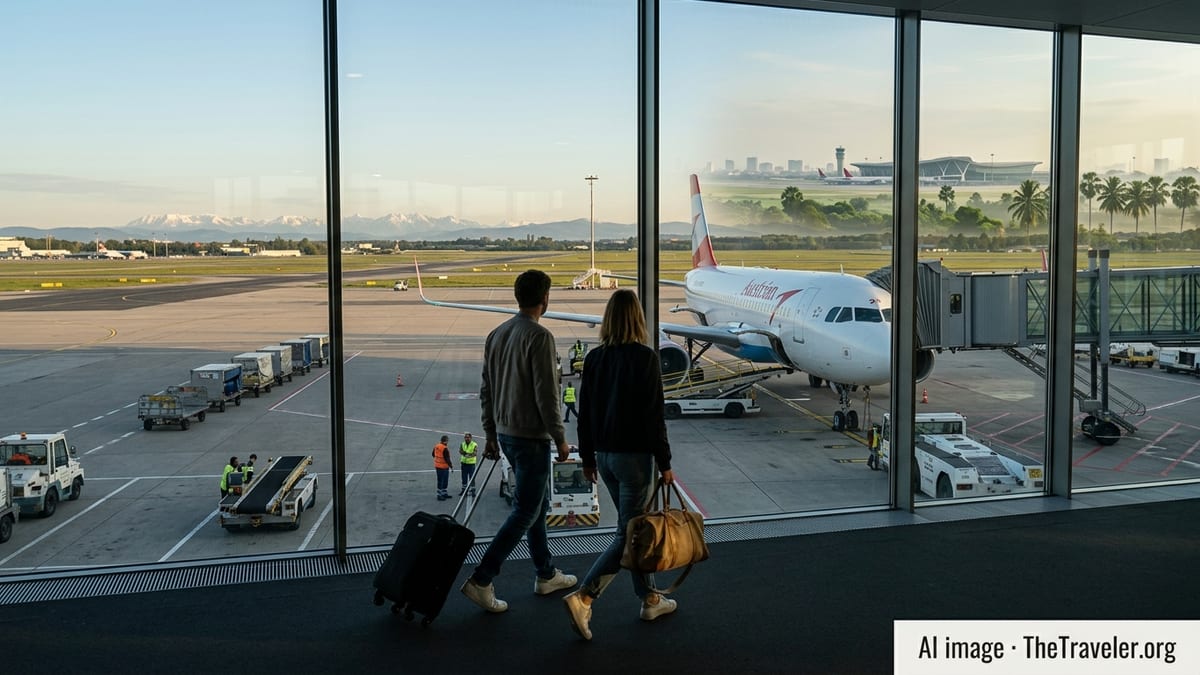
New Momentum Behind an Emerging Tourism Partnership
Publicly available information indicates that officials and industry representatives in Austria and Cambodia are increasingly aligning on tourism as a strategic sector for cooperation. Austria’s tourism sector has long relied on diverse long-haul markets, while Cambodia is seeking to broaden its visitor base beyond traditional regional and Chinese arrivals. Shared interests in cultural tourism, heritage sites and nature-based experiences are helping frame a complementary partnership.
Recent presentations from Austrian tourism bodies highlight Southeast Asia as a growth region, with Cambodia’s Angkor-era temples, coastal resorts and emerging eco-tourism draws viewed as potential additions to multi-country itineraries starting in Vienna. At the same time, Cambodian policymakers have been engaging more actively with European counterparts, including within broader European Union discussions on sustainable tourism investment and air connectivity.
Industry observers note that this convergence comes as both countries are reassessing their tourism strategies after the pandemic. Austria is looking to maintain high-yield, value-oriented arrivals, while Cambodia is intent on lifting visitor spending and length of stay. A more structured partnership between the two could support both goals by encouraging longer, more immersive trips that combine Central Europe with mainland Southeast Asia.
Direct Flights in Focus as Cambodia Builds New Air Hub
Cambodia’s rapid expansion of aviation infrastructure is central to any prospect of future direct links with Austria. Phnom Penh’s new Techo International Airport, developed as a multi-billion-dollar joint venture and now operating as the capital’s main gateway, is designed to handle tens of millions of passengers annually and position the country as an air hub for the Mekong region. The facility’s scale, runway capacity and modern terminals are viewed by analysts as key attractions for long-haul carriers evaluating new routes.
Over the past year, new and planned services from Turkish Airlines and Etihad Airways have strengthened Cambodia’s long-haul connectivity, effectively shortening the distance between European cities and Phnom Penh by offering one-stop itineraries via Istanbul and Abu Dhabi. Reports indicate that the Istanbul–Phnom Penh route, in particular, is being marketed as a bridge between European capitals and Cambodia, giving Austrian travelers additional options to reach Phnom Penh on through-ticketed services.
Route-mapping platforms currently show no non-stop flights between Austrian and Cambodian airports, but aviation reforms and market incentives in Cambodia are explicitly geared toward attracting more direct services from Europe. Business groups in Phnom Penh have publicly urged further expansion of point-to-point routes, arguing that reliable long-haul connectivity is essential to secure new hotel, resort and meetings-industry investments that could appeal strongly to European travelers.
Investment Opportunities Across Hospitality and Infrastructure
The intensifying focus on connectivity is matched by a growing pipeline of tourism-related investment opportunities in Cambodia that could interest Austrian companies. The opening of Siem Reap–Angkor International Airport, followed by the launch of Techo International Airport, has created new zones for airport city development, logistics hubs, business parks and hospitality clusters around key gateways. These locations are being promoted as platforms for international hotel brands, conference facilities and mixed-use projects.
Cambodia’s tourism data in recent seasons point to a solid recovery in arrivals, but also reveal pressure points such as uneven demand between destinations and sensitivity to regional geopolitical tensions. Policy responses have included targeted tax incentives in key provinces, visa facilitation measures and a push to diversify markets toward Europe, the Middle East and India. For Austrian investors, analysts suggest this environment combines relatively low entry costs with rising demand for quality accommodation, experiential travel products and technology-driven visitor services.
Areas frequently highlighted by international financial institutions and regional tourism experts include sustainable coastal development, community-based tourism and heritage conservation. Austrian firms with expertise in alpine eco-resorts, spa and wellness tourism, and sustainable building technologies are seen as well placed to adapt their know-how to Cambodian settings, particularly in cooler upland regions and national park buffer zones.
Cultural Tourism and Multi-Destination Itineraries
On the demand side, both countries offer strong cultural tourism assets that lend themselves to joint promotion. Cambodia’s Angkor Archaeological Park, Phnom Penh’s royal and colonial-era landmarks, and emerging circuits around Battambang and Kampot pair well with Austria’s imperial architecture in Vienna, classical music heritage, and alpine landscapes. Travel designers in Europe are increasingly experimenting with long-haul itineraries that combine a Central European city break with an in-depth cultural journey in Asia.
Travel trade reports indicate that Austrian and wider European tour operators are monitoring Cambodia’s new air links closely, assessing whether shorter travel times and more competitive fares could support expanded Southeast Asia programs that move beyond established hubs. The growing presence of international hotel brands and boutique properties in Phnom Penh and Siem Reap is also seen as an enabler, providing familiar standards for European guests while leaving room for locally owned lodges and homestays to showcase Cambodian hospitality traditions.
For Cambodian travelers, Austria offers a contrasting appeal built around music festivals, Christmas markets, mountain sports and UNESCO-listed historic centers. Improved one-stop connections via emerging hubs could make such trips more accessible to a small but growing middle-class outbound market in Cambodia, adding a modest two-way dimension to the partnership.
Policy Alignment and the Road Ahead
Published coverage suggests that both governments are steadily aligning regulatory and promotional frameworks to support greater tourism flows. Cambodia’s aviation reforms, combined with its long-term airport master plan and tourism development strategies, are being framed as an invitation for more European carriers and investors. Austria, for its part, has been promoting sustainable tourism standards and climate-conscious travel, themes that increasingly feature in international cooperation programs and could be shared through training, education and joint projects in Cambodia.
Sector analysts note that any eventual launch of direct flights between Austria and Cambodia is likely to follow a phased approach, with code-sharing arrangements, seasonal charters and expanded one-stop connectivity serving as interim steps. Market performance on new routes between Europe and Phnom Penh, as well as Cambodia’s success in raising average visitor spending, will be watched closely as indicators of viability.
As 2026 progresses, the partnership between Austria and Cambodia in tourism appears to be moving from exploratory dialogue toward more concrete opportunities tied to aviation, investment and product development. While much will depend on global economic conditions and airline fleet strategies, the pieces now being put in place suggest that direct air links and deeper tourism investment are no longer distant ambitions but emerging possibilities in a rapidly evolving regional travel landscape.