

Austria’s calendar is packed with festivals that reflect its alpine landscapes, imperial heritage and deep-rooted regional traditions. From candlelit winter processions and glittering opera nights in Vienna to open-air concerts in Salzburg and harvest celebrations in village vineyards, each season brings its own mood and reasons to visit. Understanding how the year unfolds helps travelers match their trip to the experiences they value most, whether that is culture, cuisine, scenery or a mix of all three.
Understanding Austria’s Festival Calendar
Austria’s festival year roughly follows the rhythm of the seasons, with major peaks in winter during Advent and the Vienna ball season, and again in summer when music and performance festivals occupy cities and alpine valleys. Shoulder seasons in spring and autumn are increasingly filled with regional food, wine and cultural events that attract visitors seeking a quieter, more local atmosphere. While headline festivals make international news, many of the most memorable experiences are small-scale village celebrations or neighborhood markets that offer a direct glimpse into everyday Austrian life.
Public holidays and religious observances still shape the timing of many events. Easter and Christmas periods are especially dense with markets, concerts and folk customs, while early summer often aligns with school holidays and open-air programming. Travelers should be prepared for popular events to sell out accommodation and tickets well in advance, particularly in Vienna, Salzburg, Innsbruck and the main lake and ski regions. Planning around these peaks, rather than against them, allows visitors to experience Austria at its most expressive.
Climate also plays a role. Snow and reliable cold in the mountains support winter sports events, ice rinks and Advent markets, while mild, often sunny days from late May through September create ideal conditions for outdoor performances, lakeside festivals and hiking-linked cultural programs. Autumn’s cooler air and changing foliage in wine regions set the stage for harvest weekends, culinary festivals and relaxed cycling tours between small-town celebrations.
For travelers, the key to enjoying Austria’s festivals is flexibility and a willingness to follow regional leads. While marquee events such as the Salzburg Festival or Vienna’s New Year’s Concert receive global attention, pairing them with lesser-known village parades, local brass band evenings or a seasonal farmers’ market can provide a richer impression of the country’s cultural rhythm.
Winter Magic: Advent, Christmas Markets and Alpine Traditions
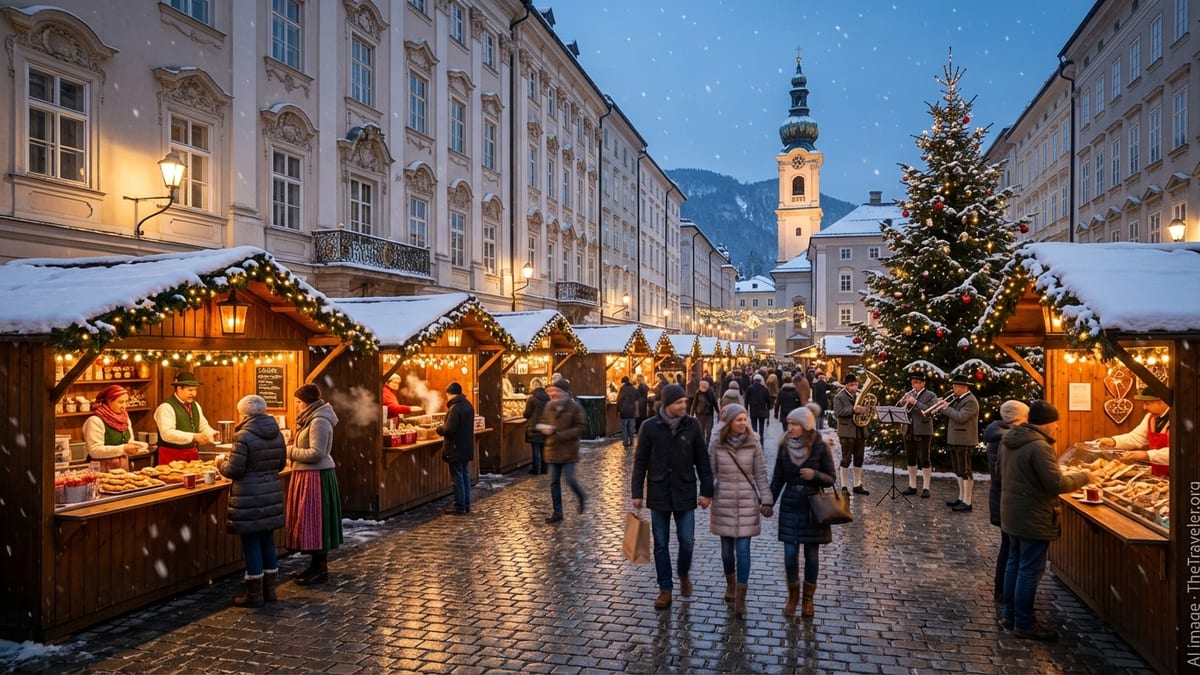
Winter in Austria is strongly associated with Advent and Christmas markets, particularly from late November through December. Cities such as Vienna, Salzburg, Graz and Innsbruck set up ornate market villages on main squares, combining wooden stalls, twinkling lights and seasonal food with choral performances and family activities. Smaller towns across the provinces run their own Advent markets, often centered around historic churches or castle courtyards, offering a more intimate experience and locally produced crafts.
Beyond the familiar market scenes, winter also highlights regional customs that can be far more dramatic. In alpine areas of Salzburg and Tyrol, traditional Krampus and Perchten runs usually occur from late November into early December, when costumed figures with carved wooden masks parade through streets accompanied by bells and torches. These events can be intense, blending ancient folklore with modern spectacle, and are often organized by local associations that treat the preparation of costumes and masks as a serious craft.
In many ski resorts, winter festivals mix sport, music and seasonal atmosphere. Torchlight descents, outdoor concerts in snow-covered village centers and themed ski weeks appear regularly on resort calendars, especially around New Year and school holiday periods. Night skiing combined with fireworks or laser shows provides a family-friendly way to experience the mountains after dark, while smaller villages might stage church concerts, brass band evenings or storytelling events to mark Advent Sundays.
For those less focused on skiing, winter city trips to Vienna, Salzburg or Innsbruck can be timed to coincide with classical music events, seasonal exhibitions and church choirs performing Advent and Christmas repertoires. Many cathedrals and major churches schedule special services and concerts where visitors are welcome, creating an opportunity to experience winter traditions in a quieter, more reflective setting alongside the more commercial festivities of the markets.
Vienna in Season: Balls, Opera and Urban Festivals
Vienna’s social calendar is most famous for its winter ball season, which typically runs from January into early March. Dozens of formal balls take place in historic venues, from the State Opera to gilded city palaces and guild halls. While many balls cater to specific professions or student groups, an increasing number sell a limited allocation of tickets to international visitors. Attending usually requires adherence to strict dress codes and some preparation, but even without stepping onto the dance floor, visitors can feel the city’s heightened sense of occasion during these weeks.
Alongside the balls, winter and early spring in Vienna are dominated by a dense schedule of performances at the State Opera, Musikverein and Konzerthaus. Special New Year and Easter programs often attract international audiences who combine concerts with museum visits and café culture. In recent years, independent venues and smaller festivals have added contemporary performance, world music and experimental theater to the winter and spring mix, offering alternatives to the main classical institutions.
By late spring and early summer, attention shifts to open-air events and citywide festivals. The Wiener Festwochen, Vienna’s major international performing arts festival, typically spans several weeks across May and June, showcasing theater, music and cross-disciplinary projects in venues large and small. The city also hosts film, design and contemporary music festivals that take advantage of warmer evenings and outdoor spaces, from riverside promenades on the Danube Canal to courtyard stages in historic buildings.
Summer in Vienna is often surprisingly relaxed, despite the rich cultural offering. Many residents spend weekends at lakes or in the nearby hills, leaving central districts quieter than in peak winter. Travelers can attend evening concerts in palaces and parks, catch free outdoor film screenings, or join neighborhood festivals that combine food stalls, live music and informal seating on closed-off streets. These smaller events can be especially rewarding for visitors who want to see how Vienna’s districts express their own identities beyond the grand imperial center.
Salzburg and the Summer of Music
Salzburg’s reputation as a festival city rests primarily on its longstanding summer festival, founded in the early twentieth century and now considered one of the world’s leading events for opera, classical music and theater. Held over several weeks from late July to the end of August, the Salzburg Festival transforms the baroque old town into a dense network of performance venues, from historic theaters and churches to modern halls carved into the rock below the Mönchsberg. Tickets for major productions are in high demand and often purchased months in advance.
The festival’s programming typically balances large-scale opera productions, symphonic concerts and chamber music with a handful of spoken-theater works. A recurring highlight is the staging of a morality play in the open air on Cathedral Square, an event that connects the city’s cultural present with its theatrical heritage. During festival weeks, the atmosphere in Salzburg is markedly cosmopolitan, with visitors from around the world sharing cafés and narrow lanes with performers, critics and local residents.
Beyond the flagship festival, Salzburg offers a varied musical calendar that extends through spring and into autumn. Easter and Whitsun festivals bring top-level performances tied to the liturgical year, while smaller series focus on early music, organ recitals or contemporary compositions. In the surrounding region, summer evenings often feature brass band concerts in village squares, choral performances in churches and lakeside stages hosting lighter classical or crossover programs.
Travelers who want to experience Salzburg’s musical side without committing to the full summer festival can look for shoulder-season events that are easier to access, both financially and logistically. Weekend packages in spring or autumn sometimes combine concerts with guided walks, culinary tastings or boat trips on nearby lakes, offering a more relaxed but still culturally rich alternative to the high-intensity summer weeks.
Alpine Seasons: Ski Events, Mountain Music and Summer Pastures
Outside the cities, Austria’s alpine regions maintain their own cycle of festivals and seasonal highlights. In winter, ski resorts host international competitions, local races and themed weeks centered on particular sports or music genres. While major World Cup events draw large crowds and media attention, smaller local races and ski club events provide a more grass-roots view of mountain culture, often ending with gatherings in village inns or slope-side huts.
As the snow recedes in late spring, mountain communities pivot toward hiking, cycling and wellness tourism. Many regions organize mountain opening weekends or early-summer festivals that celebrate the return of cattle to high pastures, the opening of alpine huts and the start of the hiking season. These occasions frequently include processions with flower-adorned animals, brass band performances and traditional dances performed in village squares or meadow clearings.
Summer in the high valleys often features music festivals that blend scenery and sound. Open-air jazz, folk or classical concerts may take place against backdrops of glaciers and peaks, with audiences seated on temporary stands, lawns or even picnic blankets. Some events link concerts with mountain railways or cable cars, inviting participants to ride up in the late afternoon, attend the performance and descend at dusk as the sky changes color over the ranges.
By autumn, alpine festivals turn toward harvest and transhumance. The return of cattle from high pastures is marked by decorated herds passing through villages, accompanied by farmers in traditional dress and mobile stalls serving local food and drink. At the same time, mountain towns host produce festivals that highlight regional cheeses, cured meats and seasonal dishes, offering visitors a structured way to taste and purchase specialties directly from producers.
Wine, Harvest and Autumn Culture
Austria’s wine regions, particularly in eastern provinces and along the Danube, come into their own from late summer into autumn. As grapes ripen on terraced hillsides and in flatland vineyards, towns and villages organize wine-focused weekends, open cellar days and harvest celebrations. Visitors can sample young wines and regional dishes in traditional taverns, often accompanied by live music ranging from folk ensembles to small jazz groups.
One of the distinct pleasures of autumn in wine regions is the chance to walk or cycle between events, using well-marked paths that connect villages and viewpoints. Harvest festivals often extend beyond wine to include pumpkins, chestnuts and other seasonal crops, creating an opportunity to taste hearty dishes designed for cooler evenings. Markets may feature stalls selling jams, vinegars, baked goods and crafts, adding a shopping element to the culinary focus.
Cities also mark the season with cultural programming tailored to autumn’s mood. Film and literature festivals, design weeks and contemporary art events typically take place during these months, drawing local and international audiences to galleries, cinemas and venues in Vienna, Graz, Linz and other urban centers. Shorter days and more changeable weather make indoor cultural experiences especially appealing, and many institutions coordinate late-opening nights or combined tickets across multiple sites.
For travelers, autumn is often a strategically good time to visit. Temperatures tend to be moderate, landscapes are visually striking with changing foliage, and major attractions are less crowded than in peak summer. Pairing a wine or harvest festival with time in a nearby city or alpine region can create a balanced itinerary that samples both rural and urban sides of Austrian life at a comfortable pace.
Christmas to Carnival: Seasonal Customs and Local Events
The period stretching from late December through Carnival in February is rich in customs that vary by region but share a focus on community and continuity. In many towns, Christmas extends beyond December 25, with nativity scenes remaining on display and choirs performing into early January. In some areas, groups of carol singers travel from house to house around Epiphany, collecting donations for charity while maintaining a tradition that blends music, religion and neighborhood ties.
New Year brings its own events, from large-scale fireworks over city centers to more modest village gatherings and brass band serenades. In Vienna and other major cities, open-air celebrations often combine stages with live music, food stands and temporary skating rinks, creating a festival atmosphere that draws both residents and visitors. The famous New Year’s Concert has become a global symbol of Austrian culture, even for those who only encounter it through broadcasts.
Carnival, which peaks in the weeks leading up to Lent, is another important marker in the seasonal cycle. Urban centers host costume parties, parades and themed evenings in clubs and cultural venues, while rural areas maintain distinct customs that can involve elaborate masks, processions and ritualized performances. Confectioneries highlight traditional baked goods associated with the season, adding a culinary layer to the celebrations.
Between these large seasonal markers, local calendars fill with smaller-scale events. Winter sports clubs organize races, volunteer fire brigades host fundraising evenings with music and food, and cultural associations stage concerts and amateur theater performances. For travelers who enjoy discovering everyday life alongside headline attractions, attending one of these local events can be as rewarding as a major festival, offering direct contact with residents and their traditions.
Planning Your Trip Around Austrian Festivals
Choosing the right time to visit Austria depends largely on the kind of festival atmosphere a traveler is seeking. Those who are drawn to winter scenes, classical music and formal events may gravitate toward December for Advent markets and late December or January for concerts and ball season. Skiers and snowboarders might prefer mid-winter when snow conditions in alpine regions are typically most reliable and resort calendars are full of evening entertainments.
Spring is well suited to visitors interested in a blend of culture and nature, with Easter-related events, early-season hiking in lower elevations and the first outdoor performances in urban parks and plazas. Late spring and early summer often combine comfortable temperatures with major festivals in Vienna and other cities, although travelers should anticipate higher demand for accommodation and tickets around these periods.
Summer appeals to those who want to experience Austria’s music and performance calendar at its most intense, particularly in Salzburg and at various lake and mountain festivals. To avoid the busiest crowds, travelers can target early June or early September, when many events are still underway or just concluding, but overall visitor numbers may be slightly lower than at peak times. In wine regions and some alpine valleys, late summer to mid-autumn remains a relatively relaxed but culturally rich window.
Regardless of season, practical planning matters. Booking accommodation early is advisable when travel dates coincide with major festivals, especially in compact historic centers where rooms are limited. Checking local tourism offices and regional event calendars close to the travel date can reveal smaller festivals and markets that may not be widely advertised abroad but provide valuable additions to an itinerary. Allowing some flexibility in daily plans helps when weather or crowds require adjustments.
The Takeaway
Austria’s festivals and seasonal highlights reveal a country that takes its cultural life seriously while integrating it into everyday routines and landscapes. Whether in the form of a world-renowned summer opera production, a village harvest celebration or children riding a carousel at an Advent market beneath snow-dusted rooftops, these events show how tradition and contemporary life intersect. For travelers, engaging with this calendar provides a way to move beyond checklist sightseeing and into more layered encounters with place and people.
Matching travel dates to particular seasons can shape the entire character of a trip. Winter offers ornate city interiors, candlelit rituals and a sense of historic continuity, while summer opens courtyards, lakeshores and alpine meadows to music and shared celebration. Spring and autumn bridge these poles with quieter yet still vibrant experiences that favor reflection, regional flavor and slower-paced exploration in both cities and the countryside.
Ultimately, there is no single best time to visit Austria, only different expressions of what the country has to offer. A traveler who returns in multiple seasons will find familiar landmarks framed by entirely new atmospheres, from brass bands echoing off winter facades to cicadas humming in vineyards where harvest festivals unfold under warm autumn light. Planning with the festival calendar in mind ensures that whatever the chosen season, the trip aligns with a living rhythm rather than standing apart from it.
FAQ
Q1. When is the best time of year to visit Austria for festivals?
The best time depends on your interests. Winter is ideal for Advent markets and Vienna’s ball season, while late spring and summer suit major music and performance festivals.
Q2. Do I need to book tickets in advance for major Austrian festivals?
Yes, for headline events such as the Salzburg Festival or major Vienna concerts, tickets often sell out months ahead, so advance planning is strongly recommended.
Q3. Are Austria’s Christmas markets open only in December?
Many markets open in late November and run until just before Christmas, while some in larger cities and ski resorts continue with a winter market format into early January.
Q4. Can visitors attend Vienna’s traditional balls?
Many balls sell a limited number of tickets to the general public. Visitors are welcome if they observe dress codes and purchase tickets early, especially for the most popular events.
Q5. Is it possible to experience festivals without speaking German?
Yes. Major festivals are accustomed to international guests, and many events are either non-verbal, music-based or supported by basic English information, particularly in cities.
Q6. How do festivals affect hotel prices and availability in Austria?
During major festivals and holiday periods, prices typically rise and central accommodation can book out quickly. Securing rooms early or staying slightly outside the center can help.
Q7. Are there family-friendly festivals and events in Austria?
Many Advent markets, village harvest celebrations and summer open-air concerts actively cater to families, offering children’s activities, gentle performances and relaxed atmospheres.
Q8. What should I wear to Austrian festivals and seasonal events?
Dress codes vary. City concerts and balls may require formal attire, while outdoor markets and alpine festivals call for weather-appropriate, comfortable clothing and sturdy footwear.
Q9. Are Austrian festivals generally expensive to attend?
Costs range widely. Prestigious concerts and formal balls can be costly, but many markets, local parades and open-air events are free or involve only modest food and drink spending.
Q10. How can I find out about smaller local festivals during my trip?
Local tourism offices, hotel reception desks and community notice boards are useful sources for information about village festivals, markets and neighborhood events during your stay.