

Austria and Germany sit at the heart of Europe, sharing language roots, mountain ranges, and centuries of intertwined history. Yet for travelers, they deliver distinctly different moods: Austria leans alpine, elegant, and compact; Germany feels bigger, bolder, and more urban. Choosing between them is less about which country is better and more about which one matches the way you like to travel.
Overall Vibe and First Impressions
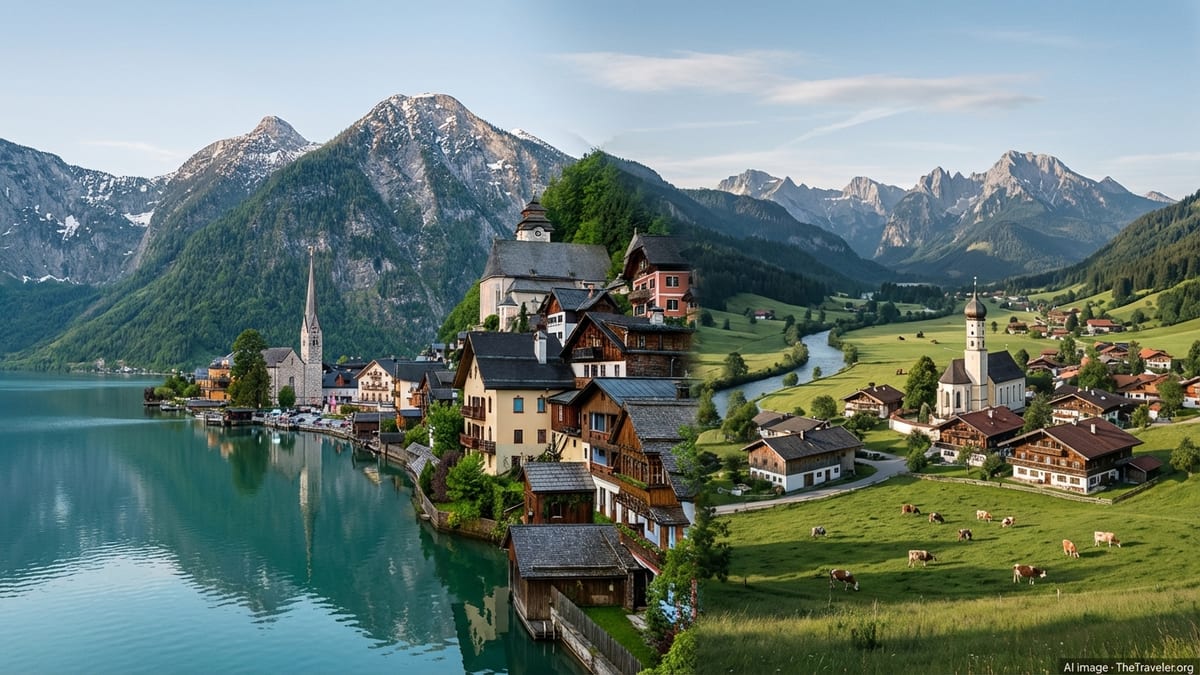
For many visitors, the contrast between Austria and Germany is clear within a day or two on the ground. Austria tends to feel smaller scale and more polished, with pastel baroque city centers, café culture built around long conversations, and a strong emphasis on classical music and alpine scenery. Even its capital, Vienna, wraps imperial architecture in a calm, almost stately atmosphere, with trams gliding past palaces and locals lingering over coffee and cake.
Germany, by comparison, feels bigger and more varied, from the cool grit of Berlin to the storybook streets of Rothenburg ob der Tauber and the industrial landscapes of the Ruhr. It is a country of regional contrasts: Bavaria can look and feel more like a cousin of Tyrol, while northern ports and western financial hubs have an unmistakably modern, global energy. Visitors often describe Germany as more experimental and edgy, especially in its cities, while still offering plenty of traditional villages and timbered towns.
If you are drawn to a neatly packaged, highly scenic trip with easy access to mountains, lakes, and classical culture, Austria can feel instantly rewarding. If you want to experience Europe’s contemporary arts, nightlife, and social debates alongside medieval streets and castles, Germany’s scale and diversity may suit you better. Many travelers find that Austria excels for shorter, focused itineraries, while Germany works well for longer, exploratory trips that hop between very different regions.
Another difference is language comfort. Both countries speak German as the main language, but English is widely used in tourism. Larger German cities and Austrian resorts are generally easy for English speakers, though Austria’s smaller rural areas may feel slightly more traditional. In both, a few basic German phrases are appreciated and can make local interactions warmer.
Cities: Vienna vs Berlin and Beyond
Most itineraries begin in a flagship city, and the comparison between Vienna and Berlin captures much of the Austria versus Germany debate. Vienna is famous for its grand Ringstrasse boulevard, opera houses, and coffeehouses. It tends to appeal to travelers who love architecture, classical music, and a slower urban rhythm. You can spend days wandering its museums, churches, and palaces, then cap the evening with a concert or a performance at a historic venue.
Berlin, on the other hand, is one of Europe’s most dynamic capitals, known for its contemporary art scene, nightlife, and layers of 20th century history. Visitor numbers have remained high in recent years, and the city continues to rank among the most popular European city-break destinations. Its museums, memorials, and street art offer a deep dive into recent history, from the Second World War to the Cold War and reunification, all within a city that still feels in the midst of reinvention.
Beyond the capitals, Vienna’s main Austrian rival is Salzburg, a baroque gem framed by hills and fortresses, and Innsbruck, a mountain-ringed city where alpine views are part of the skyline. Smaller cities like Graz and Linz add a more relaxed, local feel without losing good cultural infrastructure. Austria’s cities are compact, easy to walk, and often only a short hop from hiking trails or ski lifts, which makes combining culture and nature straightforward.
Germany offers a much broader urban palette. Munich blends beer gardens and high culture with easy access to the Alps. Hamburg is a port city with maritime history and a vibrant music and nightlife scene. Cologne offers its towering cathedral and Rhine-side setting, while cities like Leipzig, Dresden, and Nuremberg reward travelers interested in history and architecture. Because Germany is larger, you will likely need more time to sample this variety, but its rail network makes city-hopping practical.
Landscapes, Nature, and Outdoor Adventures
When it comes to dramatic alpine scenery, Austria often takes the spotlight. Much of the country is mountainous, and tourism revolves around the outdoors in both winter and summer. Tyrol, Salzburg province, and Vorarlberg are particularly famous for skiing and snowboarding, and recent winter seasons have seen tens of millions of overnight stays across Austrian resorts. In summer, these same slopes transform into networks of hiking trails, cycling routes, and high-mountain lakes, while regions like Carinthia and Styria are known for warm lakes and rolling hills.
Germany shares sections of the Alps along its southern border, especially in Bavaria, where the landscapes around Garmisch-Partenkirchen, Berchtesgaden, and the Allgäu offer snow sports and alpine hiking similar to Austria’s. However, most of Germany is defined by gentler scenery: the Rhine and Moselle valleys lined with vineyards and castles, the forested hills of the Black Forest, the wide plains of northern Germany, and the Baltic and North Sea coasts with their sandy islands and seaside resorts. For travelers who prefer varied landscapes over high mountain drama alone, Germany’s geography offers more diversity within a single country.
Outdoor enthusiasts will find that Austria is highly optimized for mountain sports. Ski infrastructure is dense, and many resorts are directly connected to villages, often with efficient lifts, ski buses, and ski-in, ski-out accommodations. Summer brings well-marked hiking routes, mountain huts, and via ferrata options. Germany’s alpine facilities, while excellent in Bavaria, are fewer and more concentrated, but the country makes up for it with cycling routes along rivers, lowland hiking trails, and water sports opportunities on lakes and coastlines.
If your priority is a classic alpine holiday focused on skiing, snowboarding, or high-mountain hiking, Austria has the edge. If you prefer a broader mix of gentle scenic drives, river cruises, forest walks, and the occasional mountain excursion, Germany offers a wider range of landscapes without leaving the country. In both destinations, public transport can get you to trailheads or lift stations, though in more rural areas a rental car adds flexibility.
Culture, Food, and Local Experiences
Culturally, Austria is deeply associated with classical music, imperial heritage, and café traditions. Vienna’s concert halls, opera houses, and long list of composers who lived and worked there give the country a strong identity built around music and the arts. In Salzburg, music is equally central, thanks in part to the city’s role in The Sound of Music mythos and its annual festivals. Many visitors build their itinerary around performances, museum visits, and elegant evenings at historic venues.
Germany’s cultural story is more diffuse and contemporary. It has world-class classical institutions, particularly in cities like Berlin, Munich, and Dresden, but it is equally known for modern art galleries, cutting-edge theater, and a strong underground music scene. Street festivals, Christmas markets, and local fairs create a sense of regional identity throughout the year. Travelers who enjoy mixing historic sites with current cultural experiments often find Germany’s larger cities especially rewarding.
On the food front, the two countries share certain Central European staples, such as schnitzel, sausages, and hearty dumplings, yet each has its own flavor. Austrian cuisine leans toward rich, refined comfort food and world-famous pastries. Dishes like Wiener Schnitzel, Tafelspitz, and Kaiserschmarrn are staples, and the ritual of coffee and cake in an atmospheric café is almost a cultural requirement. Wine regions in eastern Austria and the heuriger wine taverns around Vienna add another dimension for food-focused travelers.
Germany’s culinary scene is far more regionally varied, from the beer and pretzels of Bavaria to the fish dishes of the north and the wine culture of the Rhine and Moselle. Its big cities have become notable for international food scenes, vegan and vegetarian options, and experimental restaurants. Beer culture remains central, with countless local breweries and beer gardens that act as social hubs. For travelers seeking a broad range of culinary experiences, particularly modern and global cuisines, Germany offers more variety; for those enamored with traditional cafés, pastries, and alpine comfort food, Austria holds strong appeal.
Costs, Transport, and Practicalities
Costs are a key factor for many travelers, and Austria and Germany are relatively similar overall, though local differences can be noticeable. In both countries, major cities and prime alpine resorts typically have higher accommodation and dining prices than smaller towns. Germany’s wider range of destinations can make it slightly easier to find budget-friendly options, especially in lesser-known cities and rural regions, while Austria’s most popular ski areas and resort towns can feel premium in peak season.
Transport is one of the strongest points for both countries. Germany’s rail network is extensive, connecting large cities, regional hubs, and many smaller towns. High-speed trains link major centers in a few hours, while regional trains and local transit systems make it possible to get around without a car. Austria’s network is smaller but highly efficient, with frequent intercity connections and an increasing number of modern long-distance services. Recent investments in new rail routes within Austria and better links to neighboring countries have shortened journey times and made cross-border travel easier.
Within cities, public transport is reliable and generally easy for visitors to navigate. Berlin and Vienna both have comprehensive systems of U-Bahn or metro lines, trams, and buses, with clear signage and frequent services. Most tourists rely on day passes or city cards for unlimited travel. For regional excursions to vineyards, lakes, or historic towns, trains and buses cover many popular routes, though rural schedules can be limited, especially in the evening. Renting a car can be useful if you plan to explore remote alpine valleys or scattered villages in both countries.
From a practical standpoint, both Austria and Germany are part of the Schengen Area, so border formalities between them are minimal for most travelers once inside the zone. Payment by card is widely accepted, though small cash payments are still common in certain local businesses, especially in rural areas. Safety levels are generally high, with both countries considered stable, orderly destinations where standard precautions against petty theft in busy areas are usually sufficient.
Seasons, Weather, and When to Go
A key difference between Austria and Germany is how sharply tourism seasons are defined, particularly in alpine regions. Austria’s visitor numbers surge in winter for the ski season and again in summer for hiking and lake holidays. Recent statistics show very strong winter and summer overnight stays, reflecting its dual identity as a snow and sun outdoor destination. Shoulder seasons in many mountain areas can be quieter, with some lifts and smaller hotels closing between peak periods, though cities like Vienna and Salzburg remain lively year-round.
Germany’s seasonality is more moderate overall, with steady city tourism throughout much of the year. Berlin, Munich, Hamburg, and other large cities attract visitors in every season, peaking in summer but also drawing crowds for events such as Christmas markets and major festivals. River valleys and wine regions are most pleasant from late spring through early autumn, when vines are green and outdoor terraces are open. The coasts and islands in the north are popular in summer, while Bavaria sees both winter sports visitors and those coming for autumn events.
Weather patterns reflect the geography. Austria’s alpine regions can see cold, snowy winters and mild to warm summers, with cooler temperatures at altitude even in July and August. This is ideal for travelers seeking reliable snow during the winter season or cooler hiking conditions in summer. Germany’s climate is more varied: the north tends to be cooler and windier, especially along the coasts, while the south can be quite warm in summer and cold in winter, particularly in higher areas near the Alps. Urban heat can make some German cities feel hot in midsummer, though extensive parks and green spaces help balance it out.
If you are focused on skiing, snowboarding, and winter sports, planning for Austria between December and March is often the safest bet. For city-hopping, cultural festivals, and river landscapes, late spring through early autumn works well in both countries. Travelers who prefer fewer crowds and lower prices may favor shoulder months such as April, May, September, and October, accepting some weather uncertainty in exchange for quieter streets and more availability.
Trip Types and Who Each Country Suits Best
Because Austria and Germany excel in different ways, it is useful to think in terms of traveler profiles. Austria is particularly strong for romantic getaways, short cultural breaks centered on Vienna or Salzburg, and focused ski or hiking trips. Honeymooners and couples often appreciate the country’s combination of scenic lakes, mountain villages, and candlelit restaurants. Families who ski may gravitate toward Austrian resorts where villages are compact and slopes are close at hand, while culture lovers can easily build a week around opera, museums, and day trips to nearby wine regions.
Germany, by contrast, is well suited to exploratory itineraries, road trips, and travelers who want a mixture of big-city energy and small-town charm. Those interested in 20th century history, contemporary arts, and nightlife often prioritize Berlin and other major cities, then add a few days in places like Heidelberg, Bamberg, or the Middle Rhine to balance the trip. Germany is also a strong option for travelers who prefer not to focus solely on alpine activities but still want some mountains in the mix, combined with coastal landscapes, forests, and river valleys.
Budget also plays a role in choosing between the two. While neither country is a bargain destination by global standards, Germany’s wider range of cities and rural areas can offer more flexibility for travelers who want to control costs by staying outside prime tourist zones. Austria’s most famous ski regions and postcard-perfect villages can be price-sensitive at peak times, though smaller towns and lesser-known valleys still provide good value, especially if you are willing to travel slightly off the beaten path.
For many visitors, the ideal solution is not Austria or Germany but Austria and Germany. Their shared border, common language, and strong rail connections make it easy to design an itinerary that includes both. A classic combination might link Berlin and Munich with Salzburg and Vienna, or pair a week in Austria’s mountains with city time in Munich or Hamburg. Even with limited vacation time, it is feasible to experience both countries in a single, well-planned trip.
The Takeaway
Austria and Germany are close neighbors with shared roots, but they offer distinctly different flavors of European travel. Austria is compact, scenic, and heavily oriented toward alpine and cultural experiences, from Vienna’s opera houses to Tyrol’s ski slopes and Salzburg’s baroque skyline. It is a natural choice for travelers who want an elegant, mountain-framed trip that combines classical culture with outdoorsy days in all seasons.
Germany, much larger and more varied, rewards those who like to roam. Its cities range from the experimental atmosphere of Berlin to the traditional charm of Bavaria and the maritime character of Hamburg. Landscapes shift from vineyards and castles along the Rhine to the Baltic coast and the Alpine foothills, allowing you to combine very different experiences in one itinerary.
In practice, the best choice depends on your priorities. Choose Austria if you want concentrated alpine scenery, classical music, and café culture in a relatively small, easy-to-navigate package. Opt for Germany if you favor big-city culture, varied landscapes, and a wider range of regional identities. If your schedule and budget allow, combining both countries can turn a single vacation into a rich cross-section of Central Europe, with each destination highlighting what makes the other unique.
FAQ
Q1. Is Austria or Germany better for a first-time trip to Europe?
For a first-time trip, Germany offers more big-city variety and famous historic sites, while Austria provides a compact mix of culture and alpine scenery. If you want breadth, choose Germany; if you prefer a focused, scenic experience, Austria is often easier.
Q2. Which country is generally more affordable for travelers?
Prices are broadly similar, but Germany’s wider range of cities and rural areas can make it slightly easier to find budget options. Austria’s major ski resorts and high-demand alpine towns tend to be more expensive at peak times.
Q3. Where will I find better skiing, Austria or Germany?
Austria usually wins for skiing, thanks to its extensive alpine terrain and large, well-developed resort networks in regions like Tyrol and Salzburg. Germany has good ski areas in Bavaria but on a smaller scale.
Q4. Which is better for city lovers, Vienna or Berlin?
Vienna is ideal if you love classical music, grand architecture, and café culture, while Berlin is better for contemporary art, nightlife, and modern history. Both are rewarding, but they offer very different urban experiences.
Q5. Do I need a car to travel around Austria or Germany?
No, you can see a great deal of both countries using trains and public transport. A rental car is useful for remote alpine valleys or rural regions, but it is not essential for most classic itineraries.
Q6. Which country is better for family travel?
Both work well for families. Austria is strong for family ski and lake holidays in compact resorts, while Germany offers varied city attractions, castles, and gentle outdoor activities like river cruises and easy hiking.
Q7. How many days should I plan for Austria vs Germany?
Austria works well for trips of about five to ten days focused on one or two cities plus the mountains. Germany’s size makes it better suited to longer itineraries of ten days or more if you want to visit several regions.
Q8. Is English widely spoken in Austria and Germany?
Yes. In both countries, English is commonly spoken in major cities, tourist areas, hotels, and restaurants. In smaller villages, especially in rural Austria, English may be less common but basic communication is usually possible.
Q9. Can I easily visit both countries in one trip?
Yes. Frequent train connections link major cities such as Vienna, Salzburg, and Munich, making it straightforward to combine Austria and Germany in a single itinerary without long travel days.
Q10. Which destination is better for Christmas markets?
Both countries host atmospheric Christmas markets. Germany is famous for its long-established markets in cities like Nuremberg, Munich, and Cologne, while Austria’s markets in Vienna, Salzburg, and Innsbruck offer a more alpine, fairy-tale feel.