

The Alps stretch across both Austria and Switzerland, but the experience of traveling in each country can feel surprisingly different. From price tags and train passes to city culture and ski slopes, both destinations offer outstanding scenery and infrastructure while catering to slightly different types of travelers. Comparing them side by side helps clarify which one fits your style, interests and budget.
Overall Vibe and First Impressions
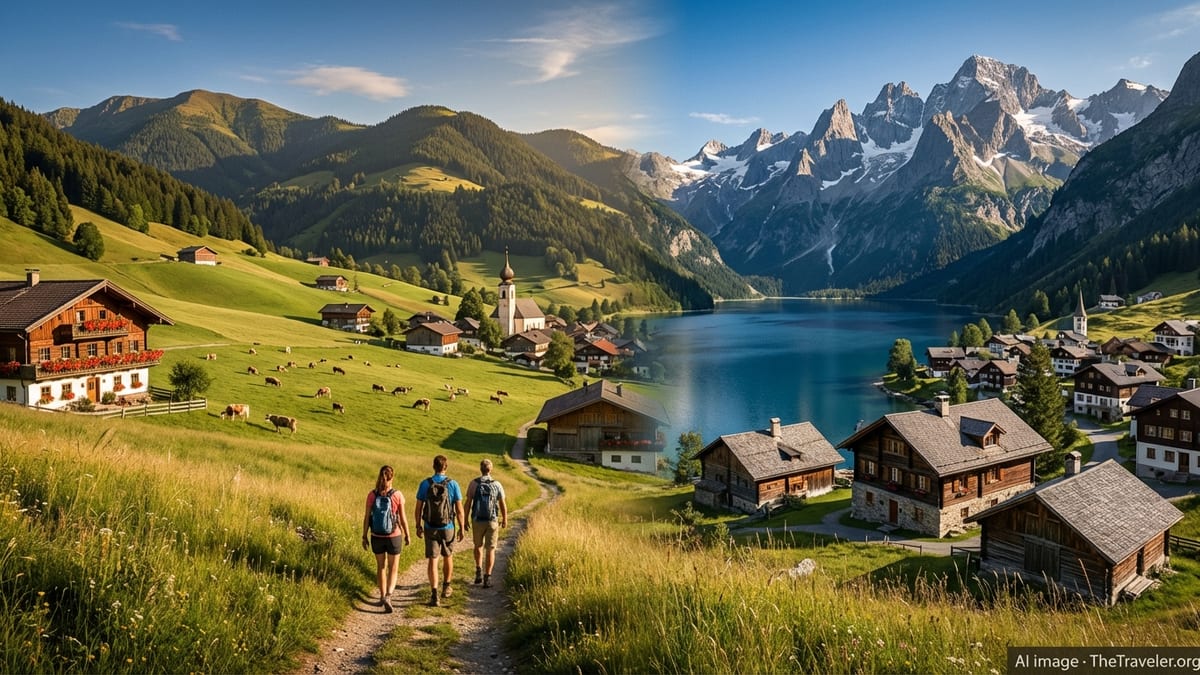
Austria and Switzerland share a dramatic Alpine backdrop, immaculate villages and efficient public transport, yet the mood on the ground is not the same. Many visitors describe Austria as slightly more relaxed and down to earth, with a strong café and concert culture layered over imperial architecture. Switzerland tends to feel more polished and orderly, with postcard-perfect lakes and mountains framed by meticulously run cities and resorts.
In Austria, the atmosphere in cities like Vienna, Salzburg and Graz is steeped in music history, coffeehouse traditions and a lived-in elegance that often feels less formal than the country’s grand buildings suggest. In Switzerland, hubs such as Zurich, Geneva and Basel project a more corporate, international character, offset by historic old towns and easy escapes to nearby lakes and peaks.
For many travelers, the deciding factor is emotional rather than practical: Austria often appeals if you are drawn to classical music, imperial history and gemütlichkeit, that untranslatable sense of warmth and ease. Switzerland resonates if your dream trip centers on flawless transport, iconic lakes-and-peaks views and time outdoors, with an emphasis on precision and calm.
Costs, Value and Trip Budgets
When it comes to budgeting, most travelers will notice that Switzerland is one of Europe’s most expensive destinations, while Austria, though not cheap, tends to offer better value for money. Accommodation, restaurant meals and mountain excursions usually cost noticeably more in popular Swiss cities and resorts than in their Austrian counterparts.
Approximate daily budgets for a typical visitor reflect this gap. In Austria, a budget-conscious traveler staying in hostels or guesthouses and eating simply might manage on a moderate daily spend, while mid-range travelers often find that three to four star hotels and restaurant meals remain relatively attainable. In Switzerland, the same level of comfort can require a significantly higher daily budget, especially in financial centers like Zurich and Geneva or luxury resorts such as St. Moritz and Zermatt.
Mountain activities are where the difference can become stark. Swiss scenic railways and high-altitude cable cars are justifiably famous, but they come with premium price tags, and ski passes in top-tier Swiss resorts can be among the priciest in Europe. Austrian ski areas, by contrast, are often more affordable while still offering extensive terrain and modern lifts. For travelers planning an active Alpine itinerary on a finite budget, Austria generally stretches the money further without sacrificing quality.
Cities, Culture and Nightlife
Austria usually has the edge for travelers whose main focus is culture-rich cities. Vienna, regularly ranked among the world’s most livable cities, blends grand Habsburg palaces with world-class museums, opera houses and a thriving contemporary food scene. Salzburg charms visitors with baroque streetscapes and a strong connection to Mozart, as well as festivals that keep the city’s musical heritage alive.
Swiss cities offer a different sort of appeal. Zurich pairs a handsome old town and lakeside promenades with a strong banking and tech sector, drawing a cosmopolitan crowd and supporting high-end dining and shopping. Geneva, home to numerous international organizations, feels more diplomatic and global than overtly touristic, while Basel has become known for its art and design museums and a lively contemporary culture scene.
In terms of nightlife, both countries can feel quieter than major party capitals in Europe, but they offer plenty of bars, breweries and clubs in bigger cities and ski towns. Austria leans into gemütlich evenings in traditional taverns, wine bars and late-night cafés, with a particular flair for live music. Switzerland’s nightlife is more concentrated in Zurich, Geneva and some resort towns, where clubs and cocktail bars cater to a mix of locals and international visitors, often at higher price points.
Alpine Landscapes and Outdoor Adventures
Travelers rarely leave either country disappointed by the scenery. Switzerland’s landscapes are instantly recognizable: bright-blue lakes such as Lucerne, Thun and Geneva, framed by sharp Alpine peaks and tidy lakeside towns. Famous viewpoints like the Jungfraujoch, Gornergrat above Zermatt and the regions around Interlaken have become global icons for good reason, combining dramatic elevation with polished visitor infrastructure.
Austria’s landscapes are equally compelling, though sometimes a little softer in profile and less internationally hyped. The Salzkammergut lake district, the Tyrolean valleys and Vorarlberg’s rugged ranges provide long vistas, traditional villages and extensive networks of hiking and cycling routes. Summer visitors can access thousands of kilometers of marked trails and mountain bike paths, often with lift systems running to help day hikers reach high viewpoints without strenuous climbs.
For hikers and casual walkers, both countries offer well-marked trails, reliable mountain huts and a strong safety culture. Switzerland stands out for the sheer density of railways and cable cars reaching alpine viewpoints, which makes high-altitude experiences accessible even to travelers with limited mobility or time. Austria counters with somewhat quieter trails in many regions and prices that enable longer stays for the same budget, appealing to visitors who prefer a slower pace with frequent outdoor days.
Skiing, Winter Sports and Seasonal Travel
Skiers and snowboarders are often at the heart of the Austria versus Switzerland debate. Switzerland has name recognition on its side, with luxury destinations such as Zermatt, Verbier and St. Moritz associated with glamorous slopes, fine dining and upscale hotels. Austria, by comparison, is famed for its combination of expansive ski domains, strong snowmaking, lively après-ski and more approachable prices.
Resorts in both countries offer extensive lift networks and modern facilities. In Austria’s Arlberg region, including Lech and Zürs, and in Tyrolean hubs such as Kitzbühel and Obertauern, visitors can ski hundreds of kilometers of interconnected pistes, enjoy efficient lift systems and choose from a broad range of lodgings, from simple guesthouses to high-end hotels. Switzerland’s major ski valleys deliver similarly large-scale terrain, but lift passes and on-mountain dining often cost more, contributing to the country’s image as a premium winter destination.
Seasonality is also similar across the two countries. Winter brings reliable snow to higher resorts, busy Christmas markets in cities and popular New Year and school holiday periods that drive up prices. Spring and autumn can be shoulder seasons with fewer crowds and lower rates, though some mountain services close between ski and hiking seasons. Summer is prime time for hiking, biking and lake swimming, and both countries see strong domestic and international tourism when the high alpine areas are accessible.
Transport, Rail Passes and Getting Around
Public transport in both Austria and Switzerland is efficient, clean and well integrated, but Switzerland stands out internationally as a benchmark for scenic and reliable rail travel. Trains link even small mountain towns with major hubs, and popular panoramic routes cross high passes and skirt lakeshores, making the journey part of the experience rather than a simple transfer from point A to B.
Switzerland’s nationwide passes cover trains, buses and many boats, offering convenience for visitors who plan to move frequently and take advantage of mountain railways and cable cars. Although these passes represent a substantial upfront cost, they can simplify logistics and reduce the hassle of buying multiple tickets, especially on longer itineraries with several base towns.
Austria’s rail network, anchored by high-speed Railjet connections between Vienna, Salzburg, Innsbruck and other key cities, is known for reliability and relatively competitive fares. A national climate-focused annual transit ticket has made public transport more attractive for residents and long-stay visitors, reflecting the government’s push toward sustainable mobility. For tourists, standard rail tickets and regional passes are often enough to keep costs manageable, and driving is somewhat easier in parts of Austria where mountain roads feel less restricted than in Switzerland.
For most travelers deciding between the two, the key difference is not quality but cost and coverage. Switzerland provides unparalleled scenic rail experiences and near-total coverage with a single pass, at premium prices. Austria offers strong intercity trains and good regional links at lower fares, making car-free travel quite feasible, but with fewer ultra-scenic flagship routes that are attractions in their own right.
Food, Drink and Local Character
Culinary traditions in Austria and Switzerland share some Alpine staples, yet they diverge in personality and presentation. Austrian cuisine is strongly shaped by Vienna’s role as a former imperial capital, pulling influences from Central and Eastern Europe into a repertoire that includes hearty meats, seasonal vegetables and famous pastries. Coffeehouse culture remains central, and lingering over cake and a melange in an ornate café can be as memorable as any museum visit.
Swiss food reflects the country’s linguistic regions: German-speaking areas favor dishes familiar to neighboring Germany and Austria, while French- and Italian-speaking cantons incorporate more Mediterranean flavors and dining styles. Fondue and raclette are emblematic of the Swiss Alps, complemented by a range of local cheeses and cured meats. Lakeside towns highlight freshwater fish, and cosmopolitan cities support a broad spectrum of international restaurants.
Wine and beer also differ subtly between the two. Austria has a well-regarded wine scene, especially white varieties from regions along the Danube and in the east of the country, and traditional heuriger wine taverns near Vienna give visitors a relaxed way to sample local vintages. Switzerland produces notable wines too, much of which is consumed domestically, with terraced vineyards along lakes providing particularly scenic tasting backdrops. Beer is widely available in both countries, though Austria arguably has the stronger everyday beer culture, visible in its pubs and festivals.
Overall, travelers who prioritize coffeehouses, pastries and classical dining rooms often lean toward Austria, while those intrigued by cheese-focused mountain meals and a blend of German, French and Italian influences may find Switzerland’s culinary mosaic especially compelling.
Safety, Practicalities and Travel Ease
Both Austria and Switzerland regularly score highly in international assessments of safety, healthcare and quality of life, and visitors generally report feeling secure in cities and rural areas alike. Petty theft can occur in crowded places, as it does across Europe, but violent crime rates affecting tourists are low. Tap water is safe to drink, and hygiene standards are high in both destinations.
Entry requirements are similar for many nationalities because both countries are part of the shared European border-free area, which means that travelers who need a short-stay visa can often visit both on the same trip under a single approval. Exact rules depend on citizenship and purpose of travel, so it remains important to check current regulations before departure and be aware of any planned changes to digital entry systems or travel authorization schemes.
Language is straightforward for most visitors. In Austria, German is the primary language, with regional dialects that can sound distinct from textbook German but rarely pose serious problems for travelers. Switzerland has four official languages: German, French, Italian and Romansh, with German-speaking regions dominating in population and visitor numbers. English is widely spoken in tourist areas in both countries, particularly among younger people and those working in hospitality.
For practical planning, both destinations benefit from excellent online resources and tourist offices, clear signage at transport hubs and well-established booking platforms. Mobile connectivity is generally strong, and contactless payments are widely accepted. The main practical distinction between the two remains cost: insurance coverage, emergency funds and contingency budgets often need to be higher for Switzerland than for Austria, especially for longer stays or multi-resort trips.
The Takeaway
Choosing between Austria and Switzerland is less about finding a single “best” country and more about matching a destination to your priorities. Both nations deliver spectacular Alpine scenery, safe travel conditions, dependable public transport and a mix of historic cities and mountain towns that can anchor a memorable itinerary.
If you are budget-conscious, drawn to grand but approachable cities like Vienna and Salzburg, and keen on lively ski resorts and coffeehouse culture, Austria often emerges as the stronger fit. Its blend of imperial history, music heritage and extensive yet affordable mountain infrastructure offers depth and value for first-time and repeat visitors alike.
If, instead, you dream of classic lakes-and-peaks vistas, iconic panoramic trains, high-altitude resorts and a polished, orderly feel, Switzerland may be worth the premium. The country’s transport network makes even complex, multi-stop itineraries straightforward, and its mix of linguistic regions provides variety within relatively short travel distances.
For many travelers, the ideal answer is ultimately “both,” visited on separate trips or combined in a single journey that crosses borders by train. If time or budget limits you to one, use your own travel style as the deciding factor: culture-first and budget-aware points toward Austria, while scenery-first with a higher budget tips the scales toward Switzerland.
FAQ
Q1. Which country is cheaper for travelers, Austria or Switzerland?
Austria is generally more affordable than Switzerland for accommodation, dining, transport and ski passes, making it the better choice for most budget-conscious travelers.
Q2. Which is better for first-time visitors to Europe, Austria or Switzerland?
Both are excellent for first-time visitors, but Austria often suits those prioritizing culture-rich cities and music history, while Switzerland is ideal for classic lake and mountain scenery.
Q3. Is public transport better in Austria or Switzerland?
Public transport is efficient in both, but Switzerland is widely regarded as having the more comprehensive and scenic rail network, with extensive coverage even in remote mountain areas.
Q4. Which country has better skiing, Austria or Switzerland?
Neither is objectively better; Switzerland offers famous luxury resorts and dramatic peaks, while Austria provides equally extensive terrain, vibrant après-ski and generally lower prices.
Q5. Can I visit both Austria and Switzerland on the same trip?
Yes, many itineraries combine both countries using trains or rental cars, and shared regional border rules often allow travelers to visit both under the same short-stay authorization.
Q6. Which destination is better for summer hiking and lakes, Austria or Switzerland?
Both excel in summer; Switzerland is known for dramatic lake and peak combinations, while Austria offers extensive trail networks and often quieter paths at slightly lower costs.
Q7. Do I need to speak German to travel in Austria or Switzerland?
No, English is widely spoken in tourist areas in both countries, though learning a few basic German phrases is appreciated and can enhance interactions with locals.
Q8. Which country is better for cultural experiences and classical music?
Austria generally has the edge for classical music and imperial history, with Vienna and Salzburg offering renowned concert halls, opera houses and music festivals.
Q9. Is Switzerland worth the higher cost compared with Austria?
Many travelers find Switzerland’s iconic scenery, panoramic trains and high-altitude resorts worth the premium, especially if budget allows and outdoor experiences are the main focus.
Q10. If I have one week, should I choose Austria or Switzerland?
With one week, it is usually best to focus on a single country: choose Austria if you lean toward cities and value, or Switzerland if you prioritize lakes, peaks and scenic rail journeys.