

More news on this day
Austrian Airlines is set to deepen its European network in summer 2026 with a new nonstop route between Vienna and Bilbao, a move that reinforces Vienna’s role as a central hub and tightens air links between Central Europe and Spain’s Atlantic north.
Get the latest news straight to your inbox!
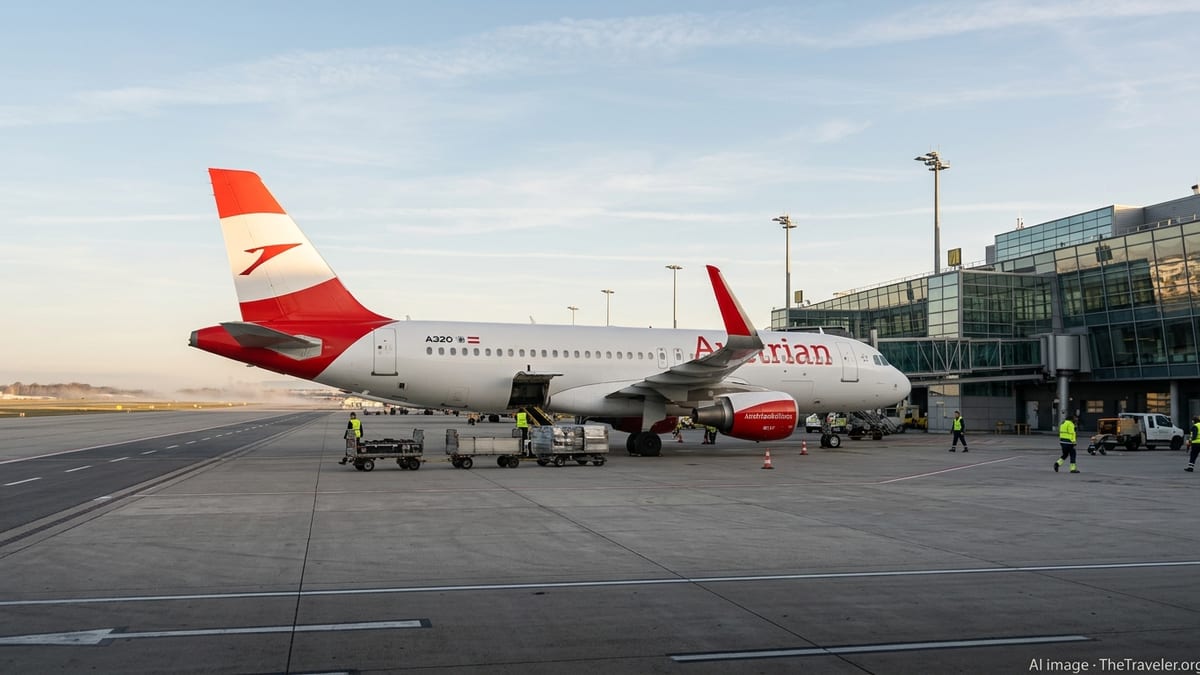
New Vienna–Bilbao Route Targets Summer 2026 Demand
Publicly available schedule data and airline information show that Austrian Airlines will begin operating nonstop flights between Vienna and Bilbao from March 29, 2026, as part of its newly announced summer timetable. The connection links Austria’s main hub with the Basque Country’s principal airport, offering travelers a direct option on a route that has so far required connections via other European gateways.
The carrier plans to serve the Vienna–Bilbao route twice weekly, on Wednesdays and Sundays, during the core summer season running through late October. Indicative schedules suggest a flight time of around two hours and forty minutes, making the service competitive with rail and road options for travelers starting or ending their journeys in Central Europe.
The launch is part of a broader expansion for the airline’s European portfolio in 2026. Company publications on its summer schedule outline 133 destinations in total, including 113 short and medium-haul routes and 20 long-haul services, with Bilbao listed among seven new seasonal points being added across the continent.
Industry reports indicate that Austrian Airlines is positioning the route to appeal both to leisure travelers seeking coastal and cultural experiences and to business passengers active in the Basque Country’s industrial and technology sectors, who will gain new one-stop access to cities across the airline’s European and long-haul network via Vienna.
Strengthening Vienna’s Role as a Connecting Hub
The Vienna–Bilbao link fits into a wider strategy to consolidate Vienna as a transfer hub at a time of shifting competition in Central Europe. Airline statements and airport presentations highlight that Austrian Airlines plans to operate more destinations and higher frequencies in summer 2026 in response to capacity reductions announced by several low-cost carriers at Vienna.
Carrier documentation on the summer program describes an increase to 133 destinations from Vienna, up from 127 the previous year, supported by the addition of aircraft from a wet-lease partner. Observers note that this extra capacity is being directed partly toward Spain and northern Europe, reflecting demand for both classic sun destinations and emerging “cooler-climate” holidays.
The new Bilbao flights are scheduled to offer early-morning departures from Vienna, timed to capture feeder traffic arriving on overnight and first-wave flights from Central and Eastern Europe. Returning services from Spain are expected to arrive back in Vienna with sufficient margin for same-day onward connections across the continent and to selected long-haul destinations.
Travel industry analysis suggests that this pattern strengthens Vienna’s position relative to nearby hubs such as Munich, Zurich and Budapest, where airlines are also vying to capture transfer passengers bound for Spain’s northern coast. With Bilbao now added to existing Spanish destinations, Austrian Airlines broadens the range of Spanish gateways that can be reached with a single connection through Vienna.
Bilbao’s Growing Profile as a City-Break and Gateway Airport
Bilbao Airport has been steadily expanding its European network as the Basque city’s profile grows among international travelers. Publicly available airport and tourism data point to rising visitor numbers drawn by the Guggenheim Museum, the city’s regenerated waterfront and a strong Basque culinary scene that includes both traditional pintxos bars and contemporary gastronomy.
The airport itself serves as a key access point to the wider Bay of Biscay region. From Bilbao, travelers can reach coastal resorts such as Getxo and Sopelana as well as inland landscapes in northern Spain, including rolling green hills and hiking routes in the Basque mountains. For Austrian travelers, the new route offers a direct alternative to connecting via Madrid, Barcelona or other European hubs.
On the return side, residents of northern Spain gain easier access to Vienna’s cultural attractions, from historic coffee houses and palaces to the city’s contemporary arts and music scene. Travel planners note that the new flights also create additional one-stop options from Bilbao to Central and Eastern European capitals via Vienna, an area where direct links have historically been more limited.
Tourism-focused publications suggest that the timing of the route, spanning late spring to early autumn, aligns closely with peak demand for city breaks and coastal escapes, when Bilbao and the Basque coast typically see their highest inflows of international visitors.
Part of a Wider Spanish and European Expansion
The Vienna–Bilbao service is being introduced alongside several other new routes from Vienna in summer 2026, including Alicante in Spain as well as destinations in Greece, Portugal, France, North Macedonia and Norway. Austrian Airlines’ published route overview for the season shows a particular emphasis on Spain, with the carrier set to serve eleven Spanish destinations across the mainland and islands.
Industry commentary interprets this strategy as an attempt to consolidate the airline’s position in a market where leisure demand remains resilient. By linking Vienna with Bilbao and Alicante for the first time, the carrier adds two cities that are popular with short-break travelers but have historically been more closely tied to other European hubs.
Network analyses from aviation-focused outlets indicate that the new routes distribute risk across both established and emerging destinations. While Mediterranean sun spots continue to attract volume, cities such as Bilbao also cater to travelers seeking cultural itineraries and milder summer temperatures, trends that have gained traction in recent years.
The wider European expansion includes additional flights to Northern Europe, tapping into demand for “coolcation” travel where visitors look for less crowded, temperate destinations during high summer. Within this context, the Vienna–Bilbao route is positioned as one piece of a broader adjustment of the network to changing travel preferences.
Faster Cross-Europe Connectivity for Business and Leisure
For many travelers, the most immediate impact of the new Vienna–Bilbao route will be shorter journey times and fewer connections between Central Europe and northern Spain. Flight schedules and booking platforms suggest that the nonstop service trims overall travel time compared with routings via larger hubs such as Frankfurt or Paris.
Business travelers are expected to benefit from early-morning departures from Vienna and evening or late-afternoon returns from Bilbao, allowing short two- or three-day trips with minimal time lost in transit. Analysts note that this pattern is well suited to project work and corporate travel in sectors that are active in both Austria and the Basque Country, including automotive, engineering and technology.
Leisure passengers from Austria and neighboring countries gain a straightforward entry point into the Basque Region for combined city-and-coast itineraries, while travelers from Spain obtain new one-stop options into Central and Eastern Europe. Travel agents and online booking platforms are likely to package the route into multi-city trips that pair Vienna with other European capitals reachable via the carrier’s hub.
With airlines across Europe fine-tuning summer schedules for 2026, the Vienna–Bilbao launch underscores how regional hubs are competing to offer faster, more direct cross-continent links. The new route, supported by an expanded Austrian Airlines network and additional aircraft capacity, positions Vienna to capture a larger share of the growing traffic between Central Europe and Spain’s Atlantic north.