

More news on this day
Austrian Airlines is set to deepen its European network with the launch of a new nonstop Vienna–Bilbao route for summer 2026, strengthening Vienna’s position as a Central European hub and opening fresh links to Spain’s dynamic Basque Country.
Get the latest news straight to your inbox!
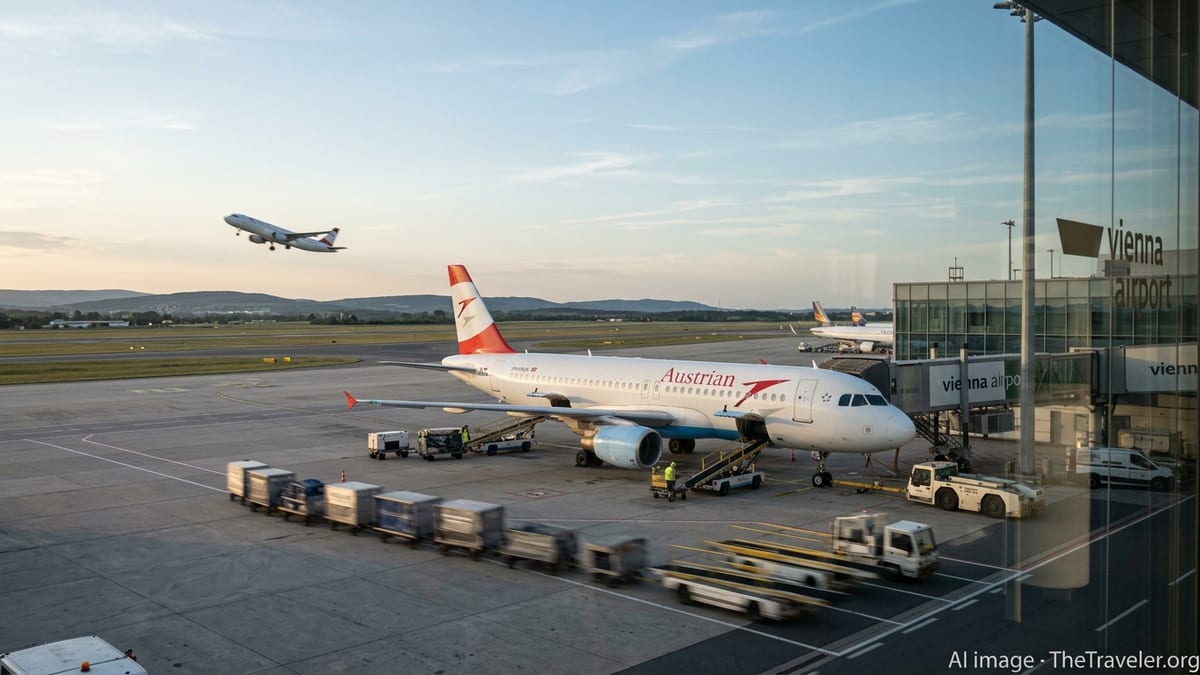
Seasonal Vienna–Bilbao Service Starts in Late March 2026
Publicly available information from Austrian Airlines and aviation industry coverage indicates that the carrier will introduce Vienna–Bilbao flights as part of its expanded summer 2026 schedule. The seasonal route is planned to operate from March 29 to October 24, 2026, aligning with the airline’s broader summer timetable from its Vienna base.
The new service to Bilbao joins Alicante as one of two fresh destinations on the Spanish mainland in Austrian Airlines’ program. These additions are part of a wider effort to diversify leisure and city-break options from Vienna, with the airline highlighting demand for both classic sun destinations and culture-focused urban gateways across Europe.
Operational data released for the 2026 summer schedule shows that Austrian Airlines will serve Bilbao twice weekly. Flights are scheduled on Wednesdays and Sundays, positioned to appeal to both long weekend travelers and those combining the Basque coast with longer itineraries across Spain and neighboring France.
Bilbao Airport listings and airline schedule materials suggest the route will typically be operated by Airbus A320 family aircraft, consistent with Austrian’s short and medium haul fleet. This allows the carrier to offer standard European cabin products and capacity while maintaining flexibility across its increasingly busy summer network.
Vienna Consolidates Its Role as a Strategic European Hub
The Vienna–Bilbao announcement fits into a larger expansion for Austrian Airlines in summer 2026. Company schedule information shows the airline intends to operate 133 destinations from Vienna that season, including 113 short and medium haul points and 20 long haul routes, up from 127 destinations the previous year. This growth underlines Vienna’s evolving role as a connection point between Central and Eastern Europe, the Mediterranean and long haul markets.
Traffic and route analyses from airport and aviation reports indicate that Vienna has been steadily reinforcing its position as a transfer hub, particularly for flows linking Western Europe, the Balkans and the Eastern Mediterranean. New spokes such as Bilbao provide additional options for passengers traveling beyond Austria, especially those connecting via Vienna to Central and Eastern European cities not served nonstop from Spain.
The airline’s 2026 strategy also includes added frequencies to northern destinations and several new holiday routes, supported by extra capacity from wet-leased aircraft. This reflects a competitive response to capacity reductions by some low cost rivals at Vienna and a broader trend of network carriers strengthening their hub operations to capture connecting traffic.
For Vienna Airport, the new Bilbao service contributes to an increasingly diversified portfolio that balances business, leisure and visiting-friends-and-relatives traffic. Industry observers note that the addition of culturally distinct regions such as Spain’s Basque Country broadens the airport’s appeal and supports tourism ties beyond the more traditional Mediterranean beach markets.
Bilbao Gains New Central European Access
For Bilbao and the wider Basque Country, Austrian Airlines’ entry provides a fresh nonstop link to Central Europe. Airport schedule summaries show that the Vienna route will add to an existing mix of domestic Spanish and international European services, giving the region direct access to Austria and one stop connectivity to Central and Eastern European cities through Austrian’s network.
Bilbao has spent the past two decades repositioning itself as a cultural and design forward destination, with its contemporary architecture and museums alongside traditional Basque gastronomy. Travel trade coverage suggests that a direct Vienna connection could appeal to city break travelers seeking a combination of food, coastal landscapes and urban culture within a manageable flight time of around two hours and forty minutes.
The new flights may also serve outbound demand from northern Spain. Travelers from the Basque region and surrounding areas gain an additional option for reaching Austria and onward destinations in Eastern and Southeastern Europe, where Austrian Airlines maintains a dense network. This could be particularly relevant for business ties, educational exchanges and niche tourism segments such as alpine travel and Central European city touring.
Regional tourism organizations in both countries are expected to highlight the route in joint promotional campaigns, based on patterns seen with previous new connections between Vienna and secondary European cities. This typically includes coordinated marketing around culture, food and events to stimulate demand during the first seasons of operation.
Part of a Wider Push to Strengthen European Connectivity
The Vienna–Bilbao launch is one element of a broader connectivity push by Austrian Airlines across Europe for summer 2026. Alongside Bilbao and Alicante in Spain, the carrier is adding routes to destinations including the Azores, Corsica, North Macedonia, Greece and Norway, according to published schedule overviews. Together, these additions target both classic holiday markets and emerging leisure trends such as cooler summer escapes in northern Europe.
Industry analysts point out that network carriers are increasingly using seasonal routes to fine tune capacity and respond quickly to changing travel patterns. In Austrian Airlines’ case, the choice of Bilbao reflects a focus on cities that combine strong local identity with growing international tourism recognition, while remaining small enough that new nonstop links can materially shift visitor flows.
From a competitive perspective, the new Vienna–Bilbao route reinforces the Lufthansa Group’s presence on links between Central Europe and Spain. While low cost carriers continue to dominate many Spanish leisure markets, hub based airlines are aiming to capture higher yielding connecting traffic and travelers looking for integrated itineraries across multiple European countries.
The move also supports broader European connectivity goals by offering additional one stop options between northern Spain and regions that lack direct air links. With carefully timed schedules at Vienna, the Bilbao flights are expected to connect into banks of departures toward Central and Eastern Europe, as well as selected long haul services, enhancing the practical utility of the new route beyond point to point demand.
Outlook for Summer 2026 Travel Demand
Forecasts from tourism bodies and airline capacity planners suggest that European leisure travel demand is set to remain strong into the 2026 summer season, helped by resilient city break traffic and continued interest in multi destination itineraries. Airlines such as Austrian are positioning new routes like Vienna–Bilbao to capture travelers who are willing to explore beyond traditional hotspots while still valuing convenient hub connections.
At the same time, the route reflects a cautious, seasonal approach. By limiting Vienna–Bilbao operations to the summer schedule and offering two weekly flights, Austrian Airlines can test demand, adapt pricing strategies and adjust future capacity based on performance. If the route proves successful, it could see extended seasonality or increased frequencies in subsequent years, following patterns seen elsewhere in the network.
For passengers, the key benefits will be shorter overall journey times between Austria and the Basque Country, fewer connections for many itineraries, and additional choice when combining Spain with Central and Eastern European destinations in a single trip. As airlines fine tune their networks for 2026, routes such as Vienna–Bilbao illustrate how targeted expansions can simultaneously strengthen hub positions and broaden Europe’s travel map.