

More news on this day
Austria is rapidly emerging as a powerhouse of European gastronomy, with a surge in Michelin stars and a strong focus on sustainability reshaping how international travelers plan their next food-focused trip.
Get the latest news straight to your inbox!
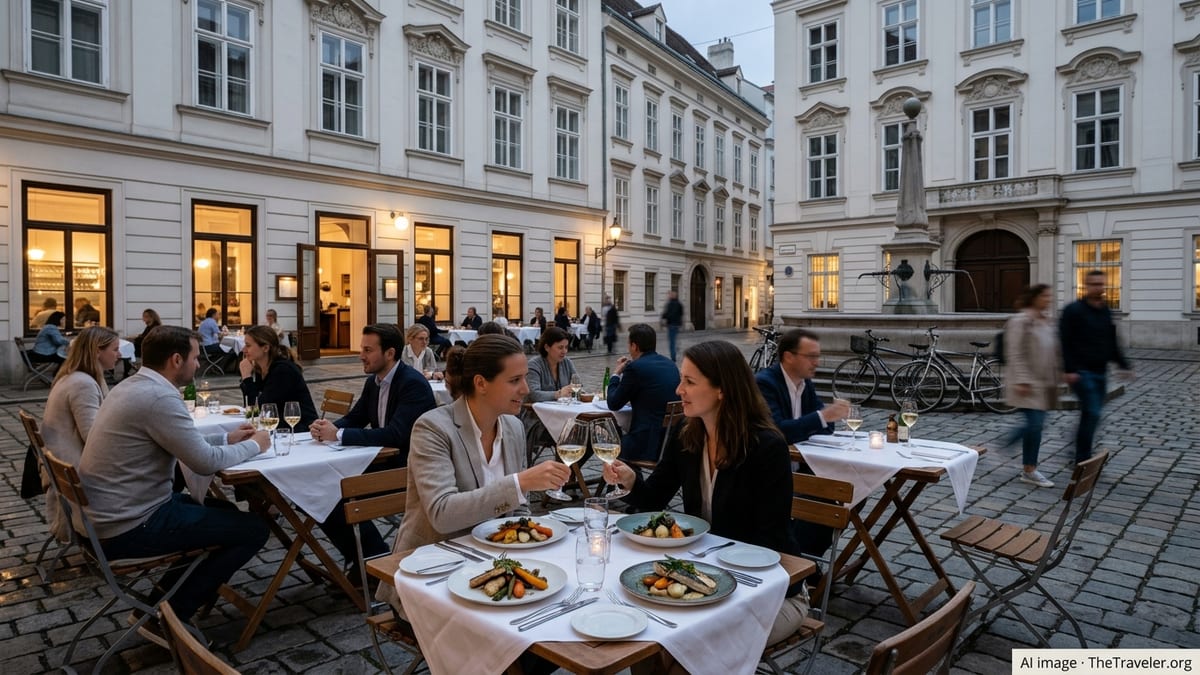
Michelin Returns With a Nationwide Map of Austrian Fine Dining
The relaunch of a national Michelin Guide for Austria has transformed the country’s culinary profile almost overnight. After years in which only Vienna and Salzburg were individually covered, the 2025 Austria-wide selection now presents 82 starred restaurants across the country, creating a coherent map for visitors who want to build their itineraries around high-end dining.
Publicly available information from Michelin indicates that Austria’s current tally includes multiple three star, two star and one star addresses, putting it firmly on the European fine-dining circuit. The return of a full national guide, after a long gap since the last comprehensive edition in 2009, is widely seen in tourism coverage as a vote of confidence in the maturity and diversity of the country’s restaurant scene.
For travelers, the update means that planning no longer needs to focus solely on Vienna and Salzburg. Starred restaurants now appear in Alpine regions, wine-growing areas and smaller historic towns, allowing visitors to pair skiing, hiking or cultural sightseeing with destination restaurants recognized at an international level.
Tourism presentations from Austria’s national and regional boards highlight this expanded Michelin coverage as a core selling point. Culinary experiences are now promoted alongside classical music, imperial architecture and winter sports, positioning the country as a place where world-class dining is an integral part of a broader travel experience.
Vienna and Salzburg Lead a New Era of Urban Food Tourism
Vienna, already known for its coffeehouse culture and classic pastry tradition, has reinforced its status as Austria’s fine-dining capital. Recent Michelin data shows that the city now concentrates a significant share of the country’s stars, including top-tier restaurants in and around the historic center and inner districts. Reports indicate that Vienna’s leading kitchens combine technical precision with a distinctly local identity built around seasonal produce and elegant reworkings of traditional dishes.
Salzburg, Mozart’s birthplace, has also emerged as a surprise hotspot. Travel features describe how this relatively small city now boasts a cluster of starred restaurants, which has helped it transition from a largely music and baroque architecture destination into a compact but serious gastronomic city. Visitors can now move within a short radius from a festival performance or fortress visit to a tasting menu that competes with larger European capitals.
Local tourism strategies increasingly frame both cities as culinary gateways to the rest of Austria. Vienna’s tourism authorities, for example, have emphasized gastronomy in recent campaigns, signaling a shift from purely heritage-led messaging to a blend of classic charm and contemporary food culture. Salzburg’s promotion focuses on the proximity of high-level dining to Alpine landscapes, lakes and cultural venues, encouraging longer stays that mix concerts, outdoor activities and restaurant visits.
This urban focus has practical implications for travelers. Concentrations of Michelin-starred venues in walkable districts, combined with efficient public transport, make it easier to plan multi-restaurant trips without relying on a car. At the same time, strong rail links from Vienna and Salzburg to regions such as Styria, Tyrol and Lower Austria open up the possibility of day trips that combine scenic rail journeys with lunch or dinner at rural starred restaurants.
Green Stars Spotlight Sustainability as a Selling Point
One of the most striking developments in Austria’s culinary landscape is the prominence of the Michelin Green Star, which recognizes restaurants at the forefront of sustainable practices. According to Michelin’s published summaries, Austria now counts 33 Green Star addresses within the national selection, an unusually high share compared with many other destinations.
These restaurants typically emphasize short supply chains, organic or biodynamic producers, and careful resource management in the kitchen and dining room. Public descriptions highlight practices such as whole-animal usage, low-waste menu design, reduced energy consumption and extensive collaboration with nearby farmers, foragers and winemakers. In many cases, these same establishments also hold one or more traditional Michelin stars, underscoring that sustainability and culinary ambition are being developed in tandem.
For international travelers increasingly attentive to the environmental impact of their trips, this focus has clear appeal. Green Star venues are often located in rural or semi-rural settings, such as wine regions in Styria or farmstead-style properties in eastern Austria, inviting visitors to experience local landscapes and producers alongside the meal itself. Coverage of these restaurants frequently notes that guests are encouraged to explore nearby vineyards, orchards or farms, turning a dinner reservation into a broader immersion in regional food ecosystems.
The prominence of Green Stars in Austria also aligns with broader European travel trends, where visitors are looking for destinations that can credibly claim to balance pleasure and responsibility. In this context, Austria’s combination of technical fine dining and visible sustainability metrics offers a clear narrative: travelers can indulge in multi-course menus while supporting kitchens that are actively rethinking their environmental footprint.
From Alpine Farms to City Tables: How Austria Cooks Local
Beyond the star counts, Austria’s culinary appeal rests on the way restaurants interpret local products. Many of the country’s best-known kitchens build their menus around Alpine ingredients such as lake fish, mountain herbs, pasture-raised meats and dairy, as well as vegetables and fruit from river valleys and wine regions. Current restaurant descriptions repeatedly reference foraging, preservation techniques and tight relationships with small-scale producers.
This approach is visible at all levels of the dining spectrum. High-end tasting menus may feature reinterpretations of classics such as Tafelspitz, schnitzel or strudel alongside contemporary plant-focused dishes, while more casual Bib Gourmand or recommended restaurants highlight hearty regional specialties in a lighter, more seasonal style. The common thread is an insistence on traceable sourcing and regional identity, which allows travelers to taste clear differences as they move from one province to another.
Wine plays a central role in the experience. Austria’s white wines from regions like Wachau, Kamptal and Südsteiermark, along with increasingly prominent red and natural wines, feature heavily on Michelin-listed wine lists. Specialist wine bistros and Green Star venues in Vienna in particular are noted for featuring small estates, low-intervention producers and by-the-glass programs that encourage exploration of lesser-known regions.
For visitors designing an itinerary, this emphasis on locality suggests tailoring routes to ingredients and seasons. Spring and early summer favor wild herbs, asparagus and freshwater fish, while autumn brings game and harvest festivals in wine country. Even in major cities, seasonal market halls and neighborhood restaurants echo these rhythms, allowing travelers to encounter the same products in casual settings that they have seen refined in the country’s starred dining rooms.
Planning a Michelin-Focused, Low-Impact Trip Through Austria
The convergence of high-level gastronomy and sustainability in Austria is shaping how travelers organize their time in the country. Tourism information encourages visitors to cluster restaurant reservations in a way that minimizes transfers, using rail connections between Vienna, Linz, Salzburg, Graz and Innsbruck as a backbone for culinary itineraries. Many starred and Green Star restaurants are reachable by train plus a short taxi or bus ride, which can significantly reduce the carbon footprint compared with car-heavy trips.
Travel reports also point to an emerging pattern of combining gastronomy with slow travel experiences such as multi-day hiking routes, cycling along the Danube or wine-region touring using local transport. In practical terms, this might mean booking a base in a wine village with a Michelin-starred inn, exploring vineyards or river paths during the day, and returning in the evening for a tasting menu built around local produce.
For long-haul visitors, Vienna often serves as the entry point, with a mix of classic coffeehouses, modern bistros and top-level restaurants within a compact area near major hotels and cultural venues. From there, itineraries frequently expand to Salzburg for a more intimate urban food scene, then onward to Alpine or wine regions for immersive Green Star experiences. This structure allows travelers to experience how Austrian cuisine shifts from imperial city to mountain village, all within a framework guided by Michelin’s contemporary criteria.
As more travelers place food and sustainability at the center of their decision-making, Austria’s combination of dense Michelin coverage, visible Green Star leadership and strong transport infrastructure positions the country as one of Europe’s most compelling destinations for responsible culinary tourism. The current moment offers an opportunity to experience a maturing scene where technique, terroir and environmental awareness are evolving together.