

More news on this day
A major avalanche combined with a severe late-season snowstorm has blocked the sole road approach to Yamunotri Dham in Uttarkashi district, disrupting early movements for the 2026 Char Dham Yatra and leaving groups of pilgrims and workers temporarily stranded just weeks before the pilgrimage is scheduled to begin.
Get the latest news straight to your inbox!
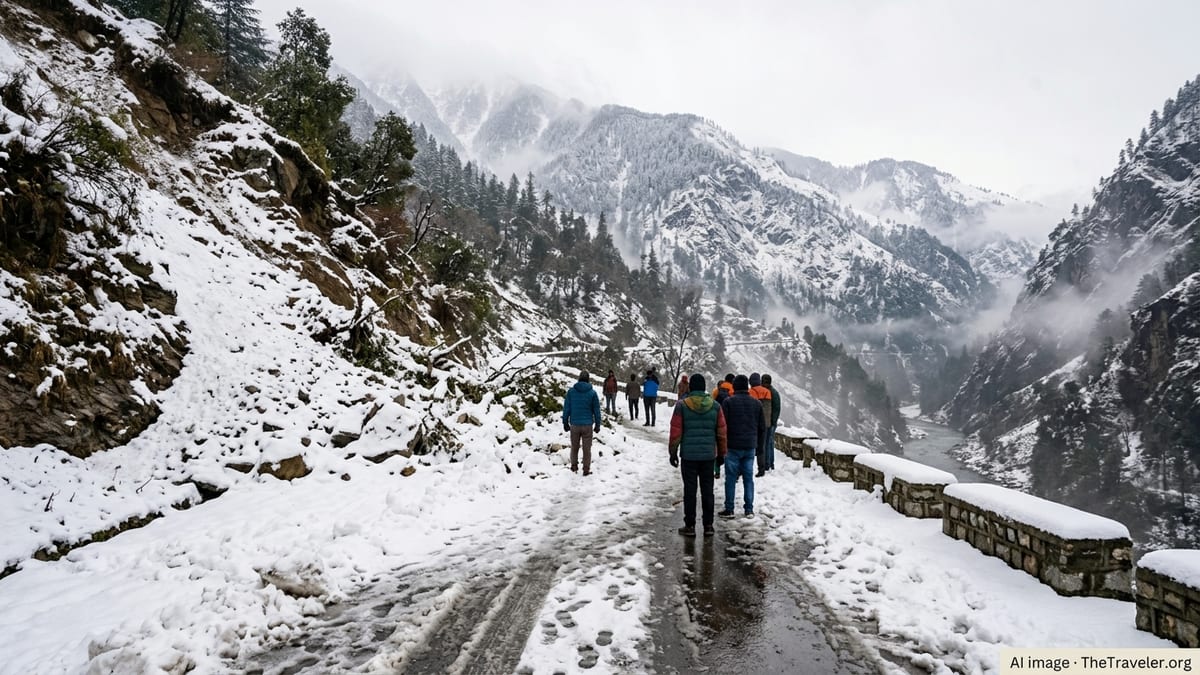
Yamunotri Route Cut Off by Snow and Debris
Initial reports from Uttarkashi district describe a large mass of snow, ice and rock crashing down on a vulnerable stretch of the Barkot–Janki Chatti corridor, which serves as the main access route to Yamunotri, the westernmost shrine of the Char Dham circuit. The avalanche was followed by intense snowfall at higher elevations, creating layered snowpacks and unstable slopes that have made clearance operations difficult.
The affected zone lies near the upper reaches of the Yamuna valley, where the motorable road narrows and runs close to steep, avalanche-prone faces above the river. Published coverage of recent seasons highlights how this corridor has repeatedly faced landslides, cloudbursts and short-term closures, but the current combination of avalanche debris and fresh snow is being described as unusually disruptive for this time of year.
Local transport links between Barkot, Hanuman Chatti and Janki Chatti are reportedly operating only on a limited basis, with long delays or diversions where the road is partially passable. For now, the traditional last-leg trek and pony route from Janki Chatti to Yamunotri remains inaccessible due to deep snow, blocked footpaths and safety concerns about further slides.
Stranded Pilgrims and Seasonal Workers Face Uncertain Wait
The weather shock has caught a small but significant number of people on the move ahead of the formal opening of the 2026 Char Dham season. These include early-arriving pilgrims seeking a head start on the journey, seasonal workers heading to lodges and shops near Janki Chatti, and logistical teams preparing facilities along the route.
Reports from the region indicate that many of those stranded are currently sheltering in roadside guesthouses, dharamshalas and village accommodations at lower elevations while they wait for road clearance and improved weather. Some travel groups that had already reached Barkot or nearby staging towns are reportedly weighing whether to continue toward Yamunotri once conditions stabilize or divert to other shrines first.
The disruption is also affecting supply runs of essential goods to hamlets and businesses that depend on the pre-season window to stock up before the main influx of pilgrims. Vendors who cater to the Yamunotri trek, including pony operators, palki bearers and small food stalls, are facing delays in setting up for the season, adding economic uncertainty to the immediate safety concerns.
Char Dham Yatra 2026 Timeline at Risk of Early Jolt
The Char Dham Yatra 2026 is scheduled to begin on April 19, when the portals of Yamunotri and Gangotri are expected to open on Akshaya Tritiya, followed by Kedarnath and Badrinath in subsequent days. Publicly available information from government portals and travel advisories has emphasized that registration for the 2026 season is already active, with expectations of large pilgrim volumes over the spring and summer months.
With the avalanche arriving so close to the planned opening, questions are emerging about how quickly the Yamunotri approach can be made safe and fully operational. While temporary weather-related closures are a familiar feature of this high-altitude pilgrimage, a severe blockage just ahead of the season’s start has the potential to compress already tight preparation timelines for road repairs, trail maintenance and crowd-management infrastructure.
Travel-focused analyses of recent Char Dham seasons note that Yamunotri is often the starting point for many pilgrims following the traditional clockwise circuit. If the shrine’s access remains compromised for longer than expected, tour operators and individual travelers may need to reverse their routes, begin with other dhams, or postpone itineraries, complicating transport schedules and accommodation bookings that were made months in advance.
Safety, Climate Risks and the Fragility of Mountain Infrastructure
The incident has renewed attention on how Himalayan weather volatility and fragile slopes intersect with expanding pilgrimage infrastructure. Research and policy discussions in recent years have highlighted that the Char Dham region is increasingly exposed to extreme events including intense rainfall, cloudbursts, landslides and avalanches, particularly along road cuttings and widened highway sections.
Several expert assessments of Uttarakhand’s mountain corridors describe a pattern in which heavier construction, slope excavation and traffic loads, combined with warming temperatures and erratic snowfall, can increase the risk of slope failures. The Yamunotri approach, carved into steep terrain and already constrained by the topography of the Yamuna valley, is seen as especially sensitive when prolonged snowfall is followed by rapid warming or fresh storms.
The current avalanche and snowstorm underline how even short-lived events can ripple through pilgrimage planning, insurance assumptions and emergency preparedness. Observers are pointing to the need for more real-time monitoring of avalanche-prone stretches, improved early-warning communication to pilgrims before they set out, and more robust contingency plans for accommodation and evacuation when key stretches of road are suddenly cut off.
Travel Plans, Registrations and What Pilgrims Should Watch
With registrations for Char Dham Yatra 2026 already underway through state-backed digital platforms, the latest blockage around Yamunotri is injecting new uncertainty into plans that were carefully laid for April and May departures. Travel advisories circulated for earlier seasons have consistently reminded pilgrims that registration is a prerequisite, not a guarantee of uninterrupted access, especially where mountain weather is involved.
Travel planners are likely to urge prospective visitors to build more flexibility into their itineraries, including extra buffer days, refundable arrangements where possible and route options that allow swapping the sequence of dhams if one corridor is temporarily closed. Helicopter-based packages, which have grown in popularity for Yamunotri and Kedarnath, may offer alternatives in some phases of the season, but these too depend on clear weather and safe landing conditions.
Prospective pilgrims monitoring the situation are being encouraged by public information sources and travel guidance platforms to track official weather bulletins and route-status updates for the Yamunotri approach, rather than relying solely on static itineraries. Until snow conditions stabilize and full clearance of the avalanche debris is confirmed, any plan that places Yamunotri at the very start of a tightly scheduled journey may face heightened risk of disruption.
For now, the blocked approach to Yamunotri Dham serves as an early reminder that the 2026 Char Dham Yatra will unfold in a landscape where devotion, infrastructure and a changing mountain climate are in constant and delicate balance.