

More news on this day
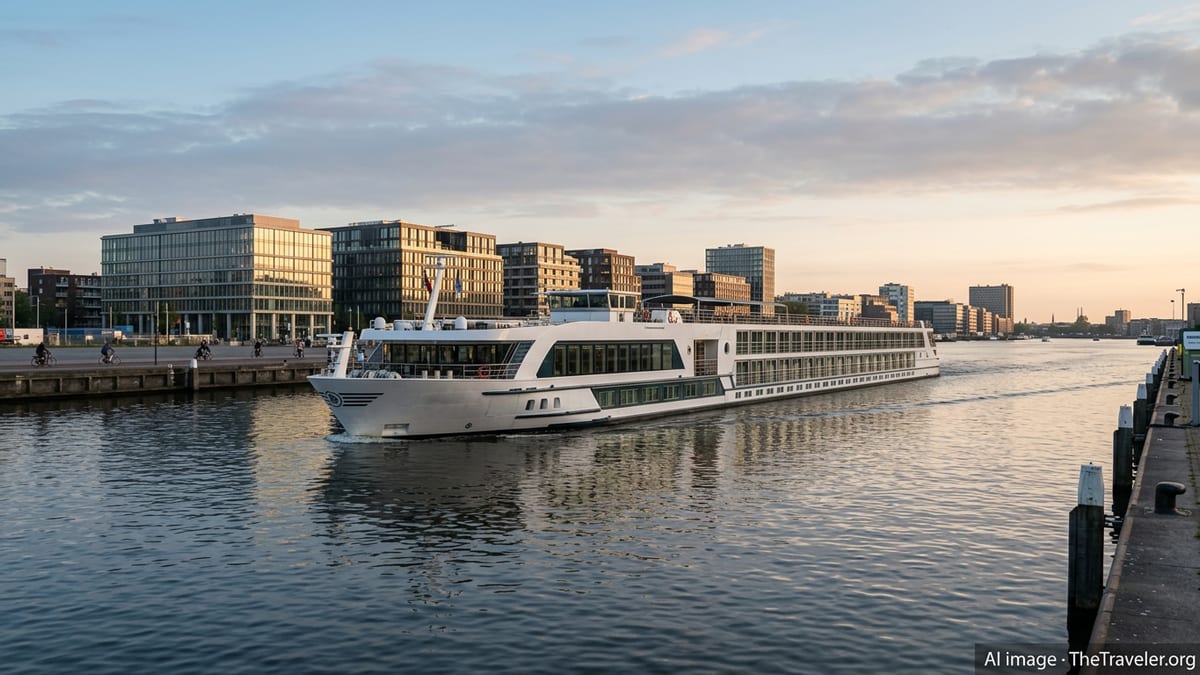
Avalon Waterways is taking an unusual pause in its steady shipbuilding cadence, skipping a year of new vessel launches while positioning itself for a high-profile 2028 European river cruise debut that will test how premium lines adapt to Amsterdam’s tightening limits on river cruise calls.
Get the latest news straight to your inbox!
Strategic Pause as Europe’s River Cruise Market Rebalances
The European river cruise sector is entering a new phase of capacity discipline, and Avalon Waterways appears to be leaning into that shift. Industry data for Europe’s inland waterways shows a slowing pace of new ship deliveries compared with the immediate post-pandemic period, as operators seek to balance robust demand with congestion at marquee ports and stricter environmental rules.
Within that context, Avalon is understood to be skipping a year of new ship launches, a noticeable change for a brand that has grown its Suite Ship fleet steadily over the past decade. Publicly available information and fleet listings point to a period of consolidation, with the company instead focusing on refurbishments, product differentiation and itinerary design rather than adding more berths at any cost.
Analysts following the river cruise segment note that capacity management has become as important as new tonnage. With more operators crowding the Rhine and Danube and newcomer brands entering the space, a pause in new construction can help preserve yields while lines gauge how regulatory changes, especially in the Netherlands, will affect deployment.
For travelers, the decision is unlikely to reduce near-term choice on Europe’s key rivers. The continent still fields hundreds of dedicated river cruise vessels, and recent reports indicate at least dozens more on order for delivery between 2025 and 2028 across all brands. Instead, the move signals that Avalon is playing a longer game, reserving a major fleet moment for what it sees as a pivotal year in 2028.
Amsterdam Tightens the Tap on River Cruise Calls
The 2028 marker is not arbitrary. Amsterdam has confirmed a plan to halve the number of river cruise visits over a multiyear period, targeting a cap of around 1,150 river ship calls annually by 2028, down from roughly 2,000 visits in recent seasons. Local tourism and port planning documents describe the move as part of a broader effort to rein in visitor numbers in the historic center and reduce emissions from ships.
Reports from European cruise trade publications indicate that city officials want to cut the number of river cruise tourists by about 250,000 by 2028. At the same time, Amsterdam is advancing a roadmap to relocate its main ocean cruise passenger terminal away from the city center by 2035 and to require cruise vessels to use shoreside power as it becomes available, in line with the city’s climate goals.
For river cruise lines, the new limits create a more competitive landscape for berths in one of Europe’s best-known embarkation points. Industry commentary suggests that some operators have already shifted select departures to Rotterdam and other Dutch ports, while others are rebalancing itineraries so that Amsterdam appears as a mid-cruise call or is combined with overland touring rather than serving as the primary start and end point.
Amsterdam’s policy direction does not eliminate river cruising, but it does reframe it as a premium, capacity-limited experience. That dynamic favors brands with strong repeat business, differentiated onboard product and the flexibility to tweak itineraries while preserving marquee experiences such as tulip-time sailings and Rhine river routes that have traditionally begun or ended in the Dutch capital.
Avalon’s 2028 Play: Fewer Ships, Bigger Impact
Against this backdrop, Avalon Waterways’ decision to line up a “showpiece” 2028 moment looks less like a simple ship order and more like a strategic deployment bet. Industry observers expect the company’s next major European ship debut to be tightly aligned with the new Amsterdam capacity regime, emphasizing efficiency, sustainability and itinerary flexibility over raw berth count.
The brand has already positioned its Suite Ships as lower-density alternatives to some competitors, prioritizing spacious cabins and panoramic windows over maximum headcount. In a market where Amsterdam will handle fewer ships and passengers, that premium positioning may become a competitive advantage, allowing Avalon to market scarce Amsterdam-linked departures as elevated, high-value products rather than volume plays.
Environmental performance is also moving up the priority list. Port of Amsterdam documentation notes that shore power is being expanded for river vessels and that future calls will be expected to plug into the grid rather than run engines at berth. A next-generation Avalon vessel entering service in 2028 would likely be designed around these shore power requirements and other efficiency measures, helping the line secure slots in a more tightly regulated port ecosystem.
Rather than racing to add capacity every year, Avalon appears to be banking on the appeal of a headline-grabbing 2028 debut that dovetails with a reshaped Amsterdam cruise calendar. The brand’s recent marketing emphasis on curated excursions, active touring and themed sailings suggests that future hardware will be matched with experiences tailored to travelers who are willing to pay more for limited, high-demand departures.
What the Shift Means for Travelers Eyeing Amsterdam Cruises
For travelers who dream of cruising into or out of Amsterdam, the combination of a capacity squeeze and a high-profile new ship era carries mixed implications. On one hand, fewer ships and stricter rules could reduce crowding along the city’s waterfront and canal district, improving the quality of the visit for those who do secure a berth. On the other, reduced inventory is likely to push up fares on peak-season itineraries and make advanced planning essential.
Travel advisors who specialize in river cruising are already urging clients to book Amsterdam-linked sailings earlier, especially for popular periods such as tulip season and Christmas markets. As 2028 approaches and Avalon’s anticipated new ship enters the mix, competition for these departures may intensify further, particularly if other lines also time major launches to coincide with the new era of regulated river cruising in the Netherlands.
Prospective guests may also see more creative routings that keep Amsterdam in the picture without relying on limited dock space. These can include one-way sailings that use alternative Dutch ports, itinerary designs that bracket cruises with hotel stays in the city, or river routes that spotlight lesser-known Dutch and Belgian towns while still providing rail or coach access to Amsterdam for day visits.
For many travelers, the trade-off will be acceptable. Published coverage of Amsterdam’s tourism plans underscores a shift toward “quality over quantity,” a philosophy that aligns with river cruising’s traditional appeal of smaller ships, slower travel and immersive cultural experiences. Avalon’s 2028 strategy appears to assume that guests will value a more controlled, sustainable version of Amsterdam cruising over the high-churn model of previous years.
Broader Ripple Effects Across Europe’s Rivers
Amsterdam’s recalibration and Avalon Waterways’ measured expansion are likely to ripple well beyond the Netherlands. As one of the most recognizable gateways for Rhine and Dutch waterways itineraries, Amsterdam has historically anchored marketing campaigns and first-time river cruise bookings. With fewer slots available, other cities along the Rhine, Main and Danube stand to gain.
Reports from European tourism boards and river cruise associations suggest strong interest from secondary ports eager to attract displaced ships and guests. Towns that once saw only occasional transit calls may emerge as new embarkation hubs, offering less congested terminals, easier coach access and room for growth that Amsterdam no longer has.
For Avalon and its competitors, this opens the door to fresh storytelling around “new classic” routes and discovery-focused itineraries that still feature marquee capitals but devote more time to smaller riverside communities. A flagship 2028 ship debut, built with these patterns in mind, could be deployed flexibly across the Rhine-Danube corridor while treating Amsterdam as a high-value, limited-availability highlight rather than an automatic embarkation point.
The coming years will show whether this quieter, more strategic form of expansion can satisfy both traveler demand and local calls for more sustainable tourism. What is clear already is that 2028 is shaping up as a watershed year for European river cruising, with Avalon Waterways choosing to skip a short-term launch in favor of a bigger, Amsterdam-framed statement to come.