

More news on this day
Avelo Airlines has introduced a new nonstop route linking Detroit and Lakeland, Florida, strengthening the carrier’s growing Lakeland base while giving Michigan travelers a low-cost, time-saving gateway to Central Florida’s theme parks, beaches and spring training baseball.
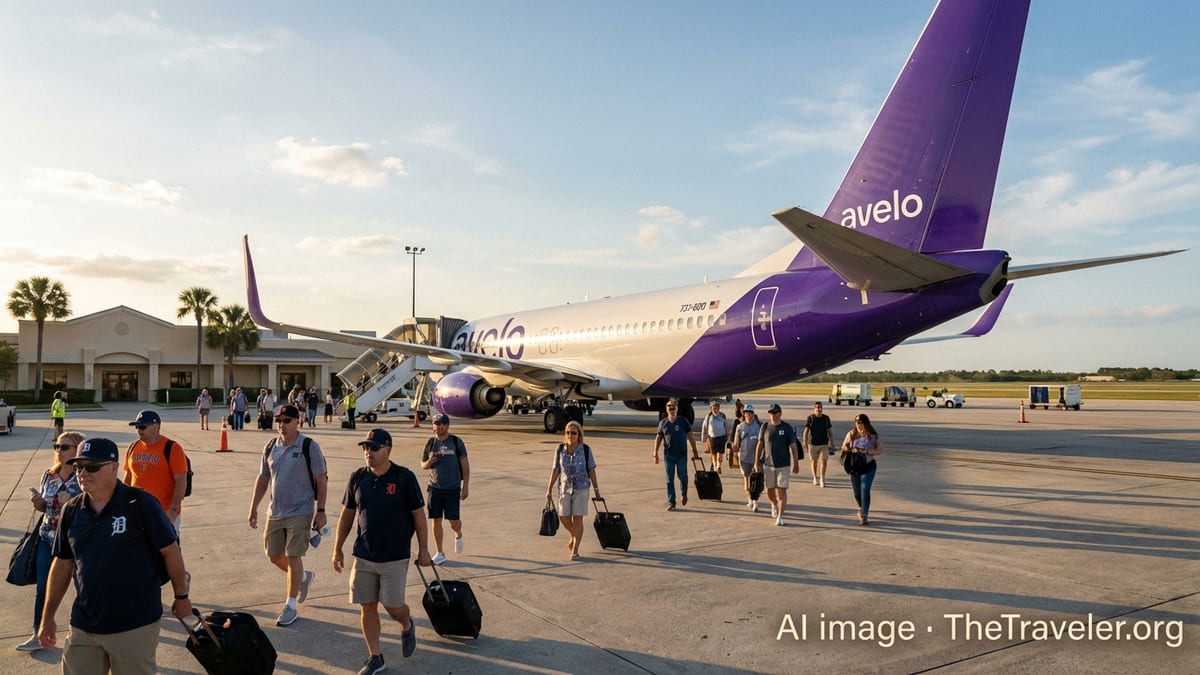
Nonstop Link Between Detroit and Central Florida
The new Detroit to Lakeland service positions Avelo as the only airline currently offering nonstop flights between the Motor City and Lakeland International Airport, located between Tampa and Orlando. The route sharply reduces travel time for Michigan passengers headed to Central Florida, who previously relied on lengthier drives from larger airports or connecting itineraries through major hubs.
According to route data published by aviation industry outlet Air Service One, Avelo’s Detroit–Lakeland service spans approximately 1,585 kilometers and operates twice weekly, on Wednesdays and Saturdays, using 189-seat Boeing 737-800 aircraft. The schedule is designed to capture both long weekend leisure trips and extended stays in Florida’s winter sunshine.
By focusing on a secondary, congestion-free airport, Avelo is betting that travelers will trade large-terminal amenities for shorter lines, faster boarding and quick access to nearby highways. For Detroit-area passengers, the new flights offer a point-to-point alternative to busy Florida gateways such as Orlando and Tampa, where higher fares and fuller flights have become common during peak travel seasons.
The route also underscores Avelo’s broader strategy of stitching together mid-sized markets with nonstop service that bypasses traditional hubs. Detroit joins a growing list of cities connected to Lakeland, which has quickly emerged as one of the carrier’s key bases for Florida flying.
Boost for Lakeland’s Tourism and Spring Training Economy
The launch of Avelo’s Detroit–Lakeland route comes at a pivotal moment for Lakeland’s tourism sector. The city is home to the Detroit Tigers’ long-standing spring training complex, and the new connection from Michigan is timed to tap into strong seasonal demand from baseball fans traveling south to follow their team.
Local tourism officials expect a tangible uptick in visitor numbers from the Detroit region, as fans gain direct access to Lakeland’s stadium, practice facilities and surrounding attractions. The twice-weekly schedule caters to typical spring training travel patterns, allowing visitors to arrive midweek, attend several games and depart over the weekend without a lengthy drive from other Florida airports.
Beyond baseball, Lakeland is marketing itself as a quieter Central Florida base for travelers who want proximity to major theme parks in Orlando and Gulf Coast beaches near Tampa without staying in large, high-priced resort corridors. The city’s historic downtown, lakeside parks and growing food scene add to its appeal as an affordable alternative to more crowded destinations.
With Avelo investing in Lakeland as an operating base and expanding its schedule through fall 2026, local leaders view the Detroit route as part of a longer-term effort to diversify visitation. Additional nonstop connections into Lakeland from cities like Nashville and Atlanta are already broadening the catchment area, and the Detroit service extends that reach deep into the Midwest.
Affordable Fares Anchor Avelo’s Value Proposition
Avelo’s entry into the Detroit–Lakeland market leans heavily on its low-fare model, which has been central to the airline’s expansion across more than 30 U.S. destinations. The carrier continues to advertise one-way base fares starting in the tens of dollars on select routes and travel dates, while maintaining a simplified product that charges separately for extras such as checked bags, carry-ons and pre-assigned seats.
The airline’s recent extension of its overall schedule through mid-November 2026, including Lakeland routes, gives travelers in both Michigan and Florida additional flexibility to plan ahead for fall getaways. By publishing flights well in advance, Avelo is courting budget-conscious families and retirees who typically book early to secure lower prices and specific travel dates.
Avelo also emphasizes customer-friendly touches within its low-cost framework, such as seating children 14 and under with a traveling adult at no additional charge. The carrier argues that these policies, combined with operations from smaller, less crowded airports, can reduce travel stress and total trip cost for families heading to Florida’s attractions.
For Detroit flyers, the new service introduces a fresh competitive dynamic on Florida-bound travel, where legacy carriers and larger low-cost operators have long dominated. Even travelers who continue to use other airports may benefit from the downward pressure on fares that additional capacity and competition can create in a region’s broader Florida market.
Strengthening Avelo’s Lakeland and Midwest Footprint
The Detroit–Lakeland route further cements Avelo’s commitment to Lakeland International Airport, which the airline has elevated from a niche gateway to a central Florida base with service to multiple cities. From Lakeland, Avelo already connects to destinations including Nashville and Atlanta, positioning the airport as a regional hub for visitors arriving from the Southeast and Midwest.
By adding Detroit, Avelo taps into one of the largest metropolitan areas in the Great Lakes region, home to a sizable population of snowbirds and leisure travelers who routinely seek winter and spring escapes to Florida. The route also has potential to capture business and visiting-friends-and-relatives traffic, especially among former Michigan residents who have relocated to central or coastal Florida communities within driving distance of Lakeland.
On the operational side, the use of Boeing 737-800 aircraft offers Avelo the scale to carry substantial numbers of passengers while keeping unit costs low across its network. The twice-weekly schedule gives the airline flexibility to adjust capacity seasonally, increasing frequency during peak periods or redeploying aircraft to other high-demand routes when necessary.
Industry analysts note that Avelo’s focus on underserved city pairs like Detroit–Lakeland differentiates it from many competitors that concentrate on major hubs. If the new route performs well, it could pave the way for additional Midwest connections into Lakeland, broadening the airport’s reach and reinforcing Avelo’s role as a specialist in point-to-point leisure markets.
Convenience and Connectivity for Michigan Travelers
For travelers in Metro Detroit and across Michigan, the most immediate benefit of the new service is convenience. Nonstop flights eliminate the need for connections in busy hubs, which can add hours to travel time and introduce the risk of missed flights or delays. Flying directly into Lakeland also cuts driving time to many Central Florida communities compared with arrivals into Orlando or Tampa during peak traffic periods.
The route is expected to appeal particularly to families traveling with young children, retirees seeking extended stays in Florida and sports fans heading to spring training. The Wednesday and Saturday pattern supports weeklong vacations and shorter, flexible trips, giving passengers multiple itinerary options around school, work or event schedules.
As the service ramps up, travel agents and online booking platforms are likely to feature Detroit–Lakeland as a niche but attractive option for customers prioritizing cost and simplicity over frequent daily frequency. If demand holds, Avelo could consider adding flights or tweaking departure times to better align with connecting ground transportation or popular check-in windows at area resorts and rentals.
For now, the launch of Avelo’s affordable nonstop link between Detroit and Lakeland signals another step in the carrier’s effort to rewire leisure travel patterns in the United States. By connecting Midwestern cities directly to emerging secondary airports in Florida, the airline is betting that many travelers will choose a smoother, more affordable journey to the sun over traditional hub-and-spoke routes.