

More news on this day
Avelo Airlines is cutting more than 3,000 flights and shrinking its second-quarter schedule by nearly a third, as the ultra-low-cost carrier pushes ahead with a sweeping network rationalization following a turbulent 2025 that reshaped its fleet, route map and growth ambitions.
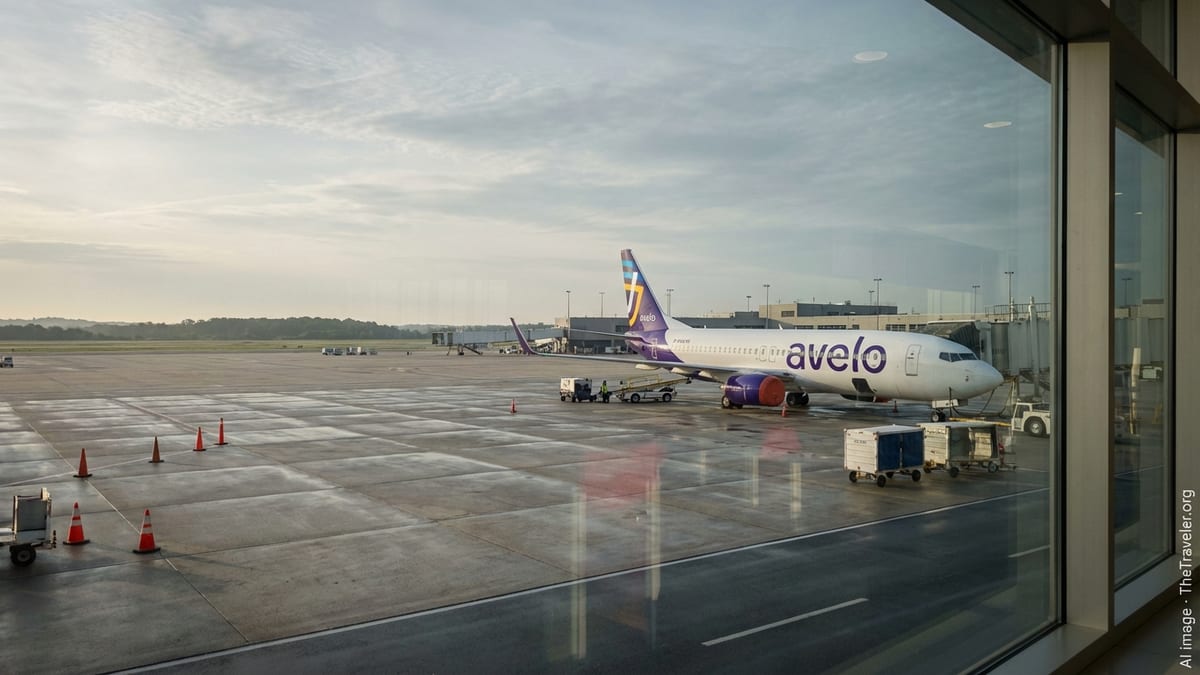
Deep Flight Cuts Mark a Turning Point for the Young Carrier
The latest schedule adjustments will see Avelo remove over 3,000 flights in the second quarter of 2026, equating to roughly a 29 percent reduction in operations compared with the same period a year earlier. The cuts, which span multiple regions and markets, follow a year in which the airline exited the entire U.S. West Coast and began dismantling parts of its original network blueprint.
Industry analysts say the scope of the reductions is striking for a carrier that, as recently as early 2025, was touting aggressive growth plans, adding new routes from East Coast bases and leaning into secondary airports. The pullback underscores how quickly fortunes can change for emerging ultra-low-cost carriers when demand softens on key routes or operating costs outpace expectations.
For Avelo, the move is being framed as a necessary reset rather than a retreat. Executives have signaled that the airline is intentionally stepping back from weaker segments of its network to steady finances, simplify operations and position itself for a more sustainable growth phase later in the decade.
The cuts add to a recent pattern of contractions across North America’s low-cost sector, where several smaller carriers have been trimming capacity, abandoning marginal routes and rethinking strategies built on rapid expansion and opportunistic market entry.
West Coast Exit and Base Closures Reshape the Route Map
The most visible shift in Avelo’s strategy has been the carrier’s decision to abandon the West Coast, including its original base at Hollywood Burbank Airport in California. In 2025 the airline accelerated its departure from the region, moving its final West Coast flights forward and leaving customers in cities such as Redmond, Oregon, scrambling to rebook travel with other carriers after schedules were pulled earlier than planned.
The shutdown of the Burbank base ended a short but highly publicized chapter in which Avelo marketed itself as a nimble challenger on point-to-point routes connecting smaller West Coast cities with Southern California, Las Vegas and regional leisure destinations. With that footprint now gone, the airline’s operational heart has shifted decisively to the Eastern United States.
Alongside the West Coast exit, Avelo is also closing additional bases on the East Coast as part of its rationalization drive. The company is consolidating flying into a smaller number of core airports, particularly in the Northeast and Mid-Atlantic, where it has invested heavily in recent years. That includes Tweed New Haven Airport in Connecticut and airports in Florida and the Carolinas, which had been central to its 2024 and 2025 growth announcements.
More than 20 routes are expected to disappear entirely as Avelo pares back underperforming city pairs, leaving some secondary airports without the low-fare options they briefly enjoyed. Other routes will see sharply reduced frequencies, especially off-peak services that no longer fit the airline’s tighter capacity plans.
Fleet Simplification and Capacity Discipline Drive the Strategy
Behind the schedule cuts sits a major shift in Avelo’s fleet strategy. The carrier is removing six Boeing 737-700 aircraft from service, leaning instead on the larger 737-800 as its primary workhorse. Simplifying down to a single main variant on the Boeing narrowbody platform allows the airline to streamline crew training, maintenance and spare parts, all of which are critical cost drivers for a small operator.
The retirement of the 737-700s also reduces overall available seats, aligning the fleet more closely with a trimmed network. While this naturally lowers capacity, it can improve aircraft utilization and load factors on remaining routes if demand is concentrated effectively. For an ultra-low-cost carrier that depends on high seat occupancy and rigorous cost control, matching capacity to demand is often the difference between profit and persistent losses.
Avelo’s leadership has characterized the consolidation as a deliberate pause, not a permanent reversal of its national ambitions. The airline continues to frame its 2026 plan as a bridge to a future fleet that will include new-generation Embraer E2 regional jets, which are expected to begin arriving around mid-2027 and could open the door to thinner, underserved markets that are ill-suited to larger Boeing aircraft.
By adopting a more disciplined approach to capacity now, Avelo is seeking to conserve cash, reduce operational complexity and buy time for that next stage of its fleet transition. Whether the strategy pays off will depend on how effectively the airline can maintain relevance in key markets while shrinking its footprint elsewhere.
Passengers Face Cancellations, Rebookings and Fewer Low-Fare Choices
For travelers, the headline figure of more than 3,000 flights removed translates into very real disruption. Customers with bookings on affected routes in the coming months are being notified of cancellations and offered rebooking options or refunds, though experiences can vary by market and the timing of schedule changes. In some smaller communities where Avelo was the only low-cost entrant, the exit leaves limited alternatives at similar price points.
Frequent flyers on leisure routes from East Coast secondary airports to Florida, the Caribbean and select Midwestern cities are among those feeling the pinch. Many of Avelo’s cuts are concentrated on less established routes with seasonal or highly variable demand, meaning travelers who had come to rely on those connections for budget-friendly vacations may now face higher fares or longer itineraries on competitors.
The reduction in network breadth also risks weakening the appeal of Avelo’s brand proposition, which has been built around simple, nonstop connections from smaller, more convenient airports. As routes disappear and bases close, some customers may question whether the carrier can offer the reliability and stability they seek for future travel planning.
At the same time, passengers on remaining core routes may eventually benefit from a more focused operation if the airline can deliver improved on-time performance and fewer last-minute schedule changes. With fewer moving parts and a tighter concentration of aircraft and crews, Avelo has an opportunity to shore up its operational reliability, a key factor for winning repeat customers in the ultra-low-cost segment.
Competitive Ripples as Rivals Move to Fill the Gaps
Avelo’s retreat from several markets is already prompting competitive responses. On the West Coast, larger carriers and rival low-cost operators have been quick to add or expand service on routes vacated by Avelo, particularly from Burbank and other regional airports in California and the Pacific Northwest. These moves are designed both to capture displaced demand and to reinforce existing market positions before new entrants emerge.
In Redmond and other former Avelo cities, airlines such as Alaska and Breeze have stepped in to offer new connections, highlighting how quickly capacity can be redeployed when a challenger carrier withdraws. For local airports, the transition is a mixed blessing: while the immediate loss of an airline can hurt traffic and revenue, the arrival of more established operators can restore stability and broaden connectivity over time.
On the East Coast, Avelo’s decision to concentrate on a narrower set of bases may open space for competitors at airports where it is reducing or ending service. Ultra-low-cost rivals and regional carriers are closely watching the changes, weighing whether to launch new point-to-point routes that replicate some of Avelo’s former links between secondary cities and leisure destinations.
The broader U.S. market context is also important. After several years of rapid capacity growth among discounters, the industry is now in a phase of recalibration. High fuel costs, aircraft delivery delays and uneven leisure demand have made it harder for smaller players to sustain thin-margin routes. Avelo’s network rationalization is being viewed by some analysts as a case study in the challenges facing newer entrants attempting to scale quickly in a volatile environment.
2025 Turbulence Sets the Stage for a Cautious 2026
The roots of Avelo’s current restructuring stretch back through a difficult 2025. Over the past year, the carrier has juggled a mix of expansion announcements and contraction moves, from adding new international routes out of Hartford and East Coast bases to quietly exiting multiple smaller markets that failed to meet performance targets.
The airline’s decision to wind down its West Coast operations signaled that early assumptions about sustaining dual networks across opposite sides of the country had proved overly optimistic. Operating a relatively small fleet in two distant geographies without connecting flows added complexity and cost, especially when demand patterns shifted and competitive pressures intensified.
At the same time, Avelo has been navigating reputational and political scrutiny tied to its role in government charter work and its rapid-fire route changes. While such factors may not be the primary driver of its current capacity cuts, they have contributed to a challenging backdrop as the airline works to cement its identity with travelers and local communities.
By the start of 2026, it had become clear that the carrier would need to prioritize consolidation over further expansion. The extensive second-quarter reductions and base closures announced this month formalize that pivot and give a clearer picture of what Avelo’s interim, post-2025 network will look like.
Airports and Local Economies Brace for Reduced Service
Airports that had championed Avelo’s arrival as a catalyst for growth are now confronting the downside of relying heavily on a single low-cost operator. Some secondary airports invested in terminal upgrades, marketing campaigns and incentives to attract and support the carrier, banking on sustained growth in passenger volumes and visitor spending.
The withdrawal or downsizing of Avelo service threatens to dent those expectations. Fewer flights can mean lower parking, concession and airline fee revenues for airports, as well as fewer visitors feeding into local tourism, hospitality and retail sectors. Communities that had embraced Avelo as a symbol of renewed air connectivity now face the task of recruiting replacement service or persuading existing airlines to expand.
For airports in Connecticut, Florida and the Mid-Atlantic, where Avelo still maintains a presence, the network rationalization introduces a new layer of uncertainty. Officials are working to reassure travelers that core services remain in place while also acknowledging that schedule adjustments are likely as the airline continues to fine-tune its footprint.
Local tourism boards and business groups are similarly recalibrating. While some markets have already attracted other carriers to backfill lost capacity, others may struggle if demand volumes are not yet strong enough to support multiple operators at sustainable fare levels.
A Leaner Avelo Looks Ahead to a Different Growth Path
Despite the near-term pain of thousands of flight cuts and the closure of multiple bases, Avelo insists that its long-term outlook remains intact. Executives have pointed to the upcoming introduction of Embraer E2 jets, which promise lower fuel burn and better economics on thinner routes, as a key pillar of the airline’s next phase of expansion from 2027 onward.
In the meantime, the carrier’s challenge is to prove that a smaller, more focused network can still generate enough customer loyalty to support those future ambitions. Success will hinge on delivering reliable operations from its remaining bases, maintaining genuinely low fares where possible and rebuilding trust in communities that have experienced rapid shifts in service levels.
The coming months will offer an early test of whether Avelo’s network rationalization is a prelude to a more stable business model or a sign of deeper structural struggles. For travelers and airports alike, the message is clear: the era of aggressive, everywhere-at-once growth for the young airline is over, at least for now, replaced by a leaner, more cautious approach to where and how it flies.