

More news on this day
Avianca is set to double its air service between Bogotá and Caracas with the launch of a second daily flight from March 28, a move aimed at boosting tourism, business travel and long-sought regional reconnectivity between Colombia and Venezuela.
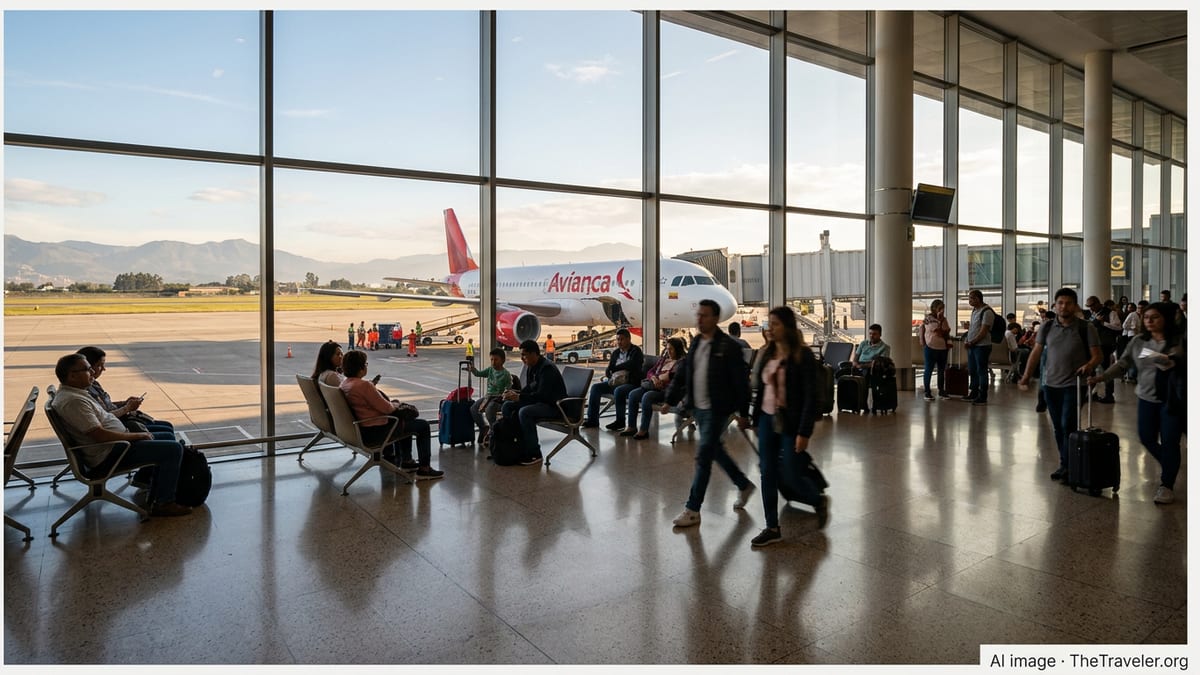
Second Daily Frequency Strengthens a Reopened Corridor
The new frequency on the Bogotá–Caracas route comes just weeks after Avianca reinstated daily operations between the two capitals, marking a rapid ramp-up of service in response to rising demand. The carrier had relaunched the route earlier this year after coordinating operational and safety conditions with aviation authorities in both countries.
From March 28, Avianca will operate two daily round trips between El Dorado International Airport in Bogotá and Simón Bolívar International Airport serving Caracas. The additional rotation effectively doubles the number of weekly flights and significantly expands options for travelers moving between the neighboring nations for family, tourism and commercial purposes.
According to the airline’s announcements in regional media, the expanded schedule will be operated with Airbus A320 aircraft configured with around 180 seats. This will allow Avianca to offer more than 5,000 seats per week on the route, making it one of the most robust air links currently available between Colombia and Venezuela.
The decision underlines how quickly air connectivity is being rebuilt after several years of severely limited commercial links, influenced by political tensions, regulatory constraints and pandemic-related disruptions that curtailed cross-border air travel.
Hub Connections Open a Wider Travel Network
Beyond point to point demand, Avianca’s second daily flight is designed to leverage Bogotá’s role as a major regional hub. With two daily departures in each direction, passengers originating in Caracas will have more opportunities to connect the same day to a broad network of destinations throughout the Americas and Europe.
The airline has highlighted that travelers will be able to link via Bogotá to popular leisure destinations in the Caribbean, as well as key markets in Argentina, Brazil, Peru, Ecuador, Mexico and Central America. Connections to cities in the United States and Spain will further extend the reach of the Bogotá–Caracas service well beyond the two capitals themselves.
For Colombian travelers, the reinforced schedule offers a more reliable gateway into Venezuela for business, visiting friends and relatives, and emerging tourism to destinations such as Caracas and coastal resorts. The flexibility of two daily departures can reduce layover times, improve missed-connection recovery and make multi-city itineraries more viable for both leisure and corporate travelers.
Industry observers note that strengthening Bogotá’s hub function with more Venezuela capacity also aligns with Avianca’s broader network strategy in Latin America, as it increasingly positions the Colombian capital as a connecting bridge between South America, North America and Europe.
Tourism and Family Travel Expected to Benefit
Travel agencies and tourism stakeholders on both sides of the border are forecasting a noticeable boost in visitor flows as the additional frequency comes online. The route has strong underlying demand from Venezuelans with family ties in Colombia and from Colombians interested in rediscovering Venezuela as a nearby cultural and coastal destination.
Lower travel friction, in the form of more seat availability and better-timed flights, can make short trips for family reunions, medical visits or special events significantly easier to plan. The presence of two daily flights also creates more resilience against delays or cancellations, an important factor for travelers who may have had limited alternatives in the past.
Tourism boards and private operators are watching closely to see whether the enhanced air bridge translates into higher hotel occupancy and tour bookings in both countries. Even modest increases in cross-border tourism can have an outsized impact on local economies when they stimulate spending on hospitality, transportation, dining and cultural activities.
The second daily frequency also sends a symbolic signal that Colombia and Venezuela are moving toward more normalized mobility, which could encourage hesitant travelers to consider trips they had postponed during years of restricted connectivity.
Regional Connectivity Recovering After Years of Disruption
Avianca’s move is part of a broader pattern of gradual reactivation of commercial air links with Venezuela by airlines across the region. Carriers have cautiously added capacity back into the market as regulatory frameworks stabilize and demand for travel rebounds from both business and diaspora segments.
For Colombia, robust air connections with Venezuela are crucial not only for tourism but also for trade, logistics and cross-border services. Bogotá’s role as a regional air hub means that each additional flight to Caracas can generate onward economic benefits across a much wider geography than the bilateral route alone might suggest.
Aviation analysts point out that the airline’s decision to allocate scarce aircraft and crew resources to a second daily Bogotá–Caracas flight reflects confidence in the route’s commercial prospects. If the new frequency performs well, it could encourage further schedule refinements or the deployment of larger aircraft during peak seasons.
At the same time, the expansion underscores ongoing competition among regional hubs to capture flows to and from Venezuela, as neighboring countries seek to position themselves as preferred gateways for international travelers heading to the Venezuelan market.
Implications for Travelers and the Aviation Market
For passengers, the immediate impact will be more choice in departure times, improved odds of finding seats during busy periods and potentially more competitive fares as capacity increases. Travel planners expect that the second daily flight will be particularly attractive for business travelers seeking day-of connections and for leisure customers aiming to minimize overnight layovers.
The enhanced schedule may also prompt rival carriers to evaluate their own strategies on Colombia–Venezuela and broader northern South America routes. Additional capacity from other airlines, if it materializes, could further expand options and reinforce the trend toward normalized air traffic with Venezuela.
While challenges remain, including evolving security advisories and regulatory considerations, the decision to double daily service between Bogotá and Caracas marks a clear step toward more stable and predictable regional mobility. For now, Avianca’s added frequency stands out as a concrete example of how airlines are rebuilding cross-border connectivity in northern South America, one flight at a time.