

More news on this day
Passengers traveling between Colombia and the United States faced fresh disruption on March 24 as flight status boards in Bogotá, Cali and Houston showed a new wave of cancellations and delays involving Avianca and United Airlines, affecting nearly a dozen departures and arrivals across key routes in the Americas.
Get the latest news straight to your inbox!
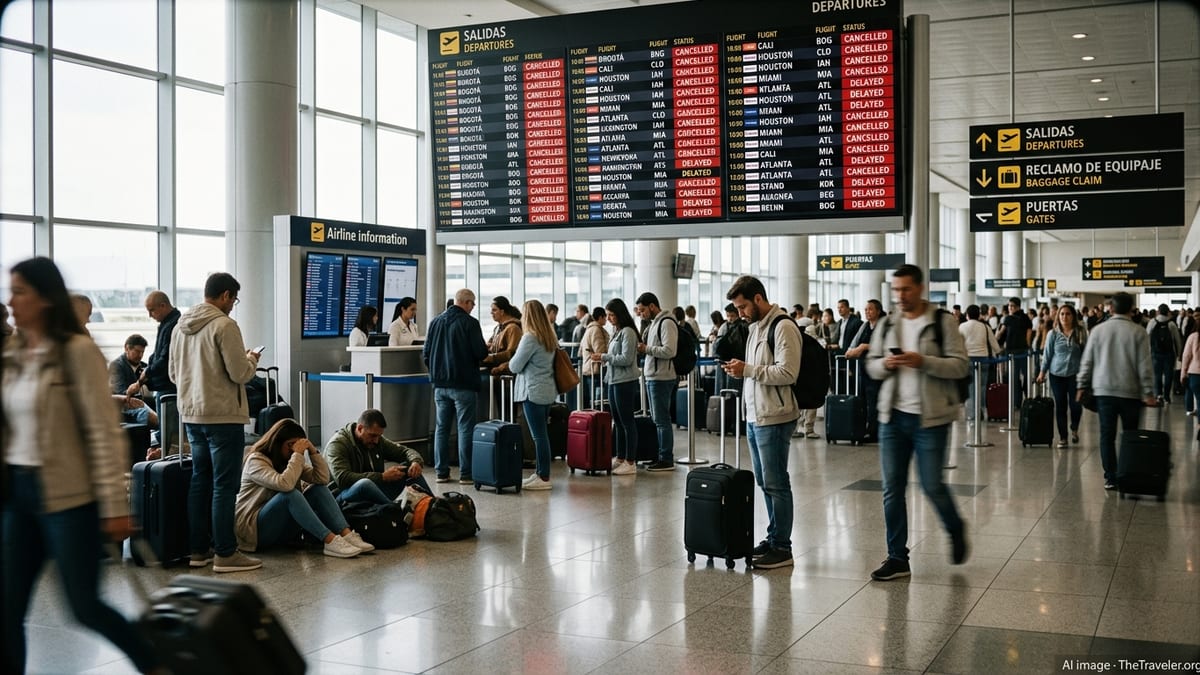
Wave of Cancellations Hits Colombia U.S. Routes
Publicly available flight tracking data for March 24 indicates that Avianca and United have canceled or significantly delayed multiple services touching Colombia, including routes linking Bogotá and Cali with Houston and other major hubs in the Americas. The disruption follows a turbulent travel weekend in the region, with schedules already strained by operational challenges and adverse weather in parts of North and South America.
On routes between Bogotá El Dorado International Airport and Houston George Bush Intercontinental, several morning and evening departures either did not operate or were reassigned, forcing passengers to rebook onto later services or alternative connections via Central America and other U.S. gateways. Travelers reported seeing their flights marked first as delayed and later as canceled, sometimes within just a few hours.
In Cali, Alfonso Bonilla Aragón International Airport experienced similar turbulence, with Avianca adjusting its domestic and international schedule and United’s connectivity through Houston reduced. While the total number of affected flights on March 24 appears to be under a dozen, the knock-on impact across connecting itineraries has been considerably wider, as missed links reverberate through the rest of the day’s network.
The pattern of disruption is not limited to direct Colombia United States routes. Some flights linking secondary Colombian cities with Central American and Caribbean hubs, which feed long haul services to North America, have also seen retimings, aircraft changes and rolling delays.
Operational Strain Follows Earlier Network Pressures
The latest schedule problems come against a backdrop of broader operational pressures on both carriers. In recent weeks, United has issued a series of travel waivers for Houston linked to storms and infrastructure constraints, allowing passengers more flexibility to rebook when weather systems or airport congestion threatened reliability. That pattern has contributed to tighter crew and aircraft rotations, leaving less room to absorb additional disruption.
Avianca, for its part, has been managing a dense flight program across Colombia and the wider Americas, including expanded connectivity through Bogotá for travelers heading to and from the United States. Recent traveler accounts circulating on consumer forums describe short notice schedule changes, earlier departures than originally booked and overbooked flights, suggesting that the airline is continually fine tuning capacity to match demand while navigating operational limits.
When both carriers adjust schedules on the same day, the effect on Colombia U.S. connectivity can be pronounced. Passengers who might ordinarily be reprotected on a different airline or rebooked through an alternative hub instead find fewer options, particularly on high demand corridors such as Houston to Bogotá, Houston to Cali and onward connections into Central America and Mexico.
Industry analysis notes that late March is already a busy period for travel between North and South America, as business travel mixes with early holiday traffic. Any disruption during these weeks typically leads to fuller standby lists and reduced availability for same day rebooking.
Impact on Passengers Across the Americas
For travelers, the most immediate effect of the March 24 cancellations has been missed connections and extended layovers in transit hubs. Passengers connecting in Houston on their way from Colombia to destinations across the United States and Canada face the prospect of overnight stays or significant reroutes via cities such as Miami, Panama City, San Salvador or Mexico City, depending on available seats.
Colombian travelers heading to leisure destinations in Mexico and the Caribbean are also feeling the strain. With Houston functioning as a key northbound and westbound transfer point for United’s network, any reduction in flights can leave customers reliant on limited alternative paths, especially when downstream flights are already heavily booked due to earlier disruptions and ongoing travel waivers in other regions.
Travelers in the opposite direction, flying from the United States toward Bogotá and Cali, likewise encounter challenges. Those whose flights are canceled may receive automatic rebooking on later services, but in high load periods the next available seat can be many hours or even a full day away. This can be especially disruptive for short business trips or time sensitive family visits, where tight schedules leave little flexibility.
In some cases, passengers with multi segment itineraries spanning the Americas are discovering that a cancellation of a single United or Avianca leg through Houston or Bogotá can force a complete reconfiguration of their journey. This is particularly true for those relying on one carrier for the entire trip, where cross airline rebooking options may be limited or unavailable under the purchased fare conditions.
What Travelers Can Expect and How to Prepare
Publicly available information from both airlines suggests that further short notice adjustments on Colombia related routes remain possible while operations stabilize. Travelers booked between March 24 and the end of the month on Avianca or United itineraries touching Houston, Bogotá, Cali or other major American hubs should be prepared for changes in departure times, aircraft types and even routing.
Frequent flyers and travel advisors recommend proactive monitoring of reservations through airline mobile apps and airport departure boards, rather than relying solely on email notifications. Same day changes and rolling delays can sometimes appear in tracking tools or third party flight status platforms before formal notices reach customers, giving travelers a crucial extra window to request alternative options.
Passengers whose flights are canceled outright are generally being rebooked on the next available service in the same cabin, subject to seat availability. However, given the tight loads typical of late March, the practical reality can involve long waits at the airport or extended call and chat interactions while new itineraries are arranged. Some travelers with flexibility in their plans may find it easier to accept routings via less direct paths, such as connecting through other hubs in Central America or the Caribbean, in exchange for getting to their destination sooner.
Those with critical time constraints, such as onward international connections not covered on the same ticket, are advised to build in additional buffer time or, where possible, shift travel to dates outside the current peak disruption window. For trips that cannot be moved, arriving at the airport earlier than usual and having alternative routing ideas in mind can help when negotiating options at the check in desk.
Broader Questions Around Reliability on Key Latin America Corridors
The events of March 24 add to a growing narrative of fragility on some of the most important air corridors linking Colombia with the United States. As airlines have rebuilt networks after the pandemic era and adjusted to new patterns of demand, complex schedules that rely heavily on hub connectivity have sometimes proven vulnerable to localized shocks, whether from storms, infrastructure issues or operational constraints.
Houston’s role as a major connecting point for United, combined with Bogotá’s position as Avianca’s principal hub, means that simultaneous disruption at both ends of the network can cascade quickly through the broader Americas system. When schedule changes at one carrier coincide with weather or infrastructure pressures at the other, the impact for passengers traveling between Colombia and cities across North and Central America can be disproportionately large.
Travel industry observers note that ongoing adjustments to fleet deployment, crew availability and maintenance planning across the region may continue to generate periods of heightened disruption, particularly around peak travel dates. For Colombia bound travelers, carefully choosing flight times outside the busiest banks of connections, favoring earlier departures in the day and avoiding tight layovers may offer a measure of resilience against sudden schedule changes.
For now, the combination of Avianca and United cancellations on March 24 underscores the importance for travelers of staying informed, remaining flexible and building contingency time into itineraries that depend on the busy trunk routes linking Houston, Bogotá, Cali and other key destinations across the Americas.