

More news on this day
Travel across Colombia faced major disruption as Avianca cancelled around 40 flights and reported more than 100 delays, with the heaviest impact on key domestic and regional routes serving Bogotá and Medellín.
Get the latest news straight to your inbox!
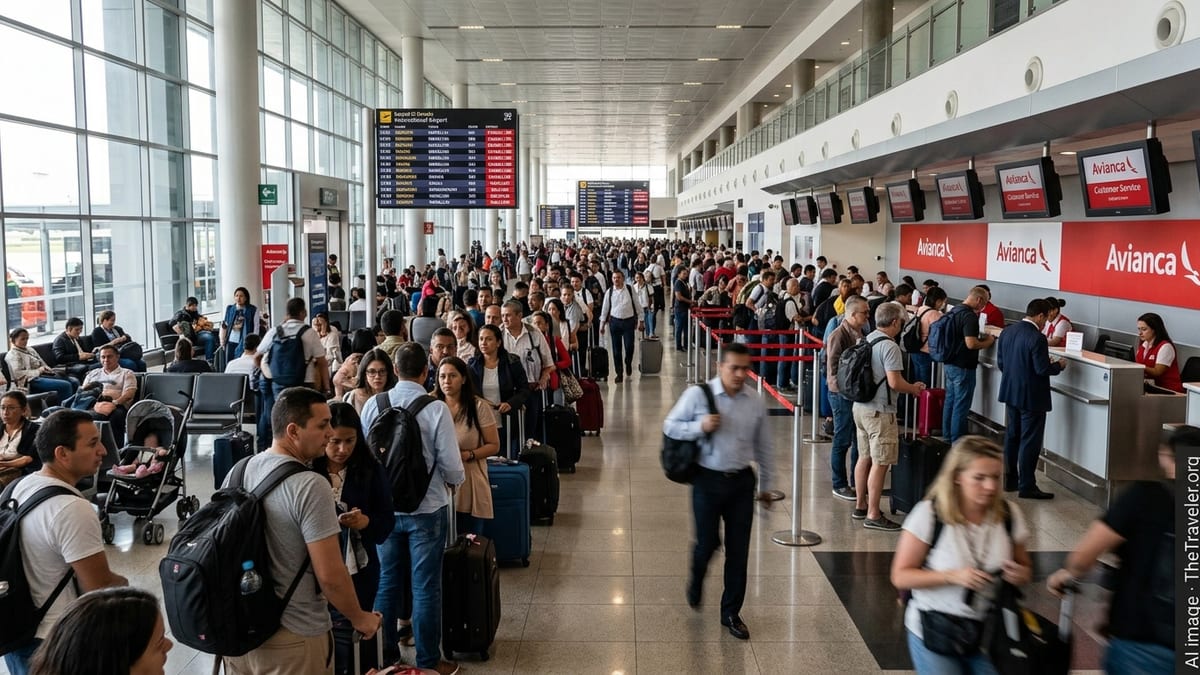
Widespread Operational Disruption at Major Colombian Hubs
Publicly available flight-tracking and airport information indicate that Avianca’s latest wave of disruptions has centered on Colombia’s two busiest hubs: Bogotá’s El Dorado International Airport and Medellín’s José María Córdova International Airport. The cancellations and delays span a mix of domestic trunk routes and regional connections, creating knock-on effects for travelers across the country and for those connecting onward to international destinations.
Capacity constraints in Bogotá are particularly evident on high-frequency routes linking the capital with Medellín, Cali, Cartagena and Barranquilla. Even where flights continue to operate, extended delays have compressed schedules, leading to missed connections and forcing many passengers to rebook at short notice. Reports from aviation data dashboards show that delayed departures often cascade into late arrivals, amplifying disruption through the rest of the day.
In Medellín, a combination of delayed inbound aircraft and rescheduled departures has limited options for travelers heading to Bogotá and other Colombian cities, as well as to regional destinations in Central and South America. Reduced operational flexibility, especially during peak morning and evening banks, has meant that even a relatively small number of grounded aircraft can ripple through the network and affect a much larger share of passengers.
Routes and Passengers Most Affected
The pattern of cancellations and delays suggests that Avianca has focused its limited flexibility on preserving long-haul and key regional links while trimming frequencies on shorter domestic segments. High-demand services between Bogotá and Medellín, normally among the most frequent routes in the country, have experienced a mix of outright cancellations and extended delays, squeezing available seat capacity during busy travel periods.
Travelers connecting through Bogotá to secondary Colombian cities appear especially vulnerable. When an initial sector into the capital is delayed or cancelled, alternative same-day connections may already be full or similarly affected. In such scenarios, passengers frequently face unplanned overnight stays or must reroute through different hubs, often at additional personal expense for accommodation and meals.
International travelers using Bogotá or Medellín as gateways to or from North America and Europe are also feeling the impact. Even when long-haul flights operate broadly on schedule, delayed feeder services from other Colombian cities have resulted in missed connections and a higher volume of last-minute rebookings. This dynamic increases pressure on ground staff and digital self-service channels, as more passengers simultaneously seek updated itineraries and travel options.
Operational Strains Highlight Fragility in Colombia’s Air Network
The latest disruptions at Avianca come against the backdrop of a Colombian air travel market that has already absorbed several shocks in recent years, including the collapse of low-cost rivals and ongoing adjustments to route networks and fleet plans. Industry analyses have previously noted that when a major carrier experiences even a temporary schedule disruption, there are limited alternative options in certain domestic markets, intensifying the impact on travelers.
Operational strains such as crew scheduling challenges, aircraft rotation issues and weather-related constraints around Bogotá’s high-altitude hub can quickly converge, given the airline’s dense banked schedules. When irregular operations occur, it can take multiple days for the network to fully stabilize, especially if spare aircraft and crews are already tightly utilized.
Observers of Colombia’s aviation sector point out that demand has rebounded strongly on leisure and visiting-friends-and-relatives routes, while business travel has returned in a more gradual but steady pattern. This recovery has pushed airlines to rebuild networks aggressively, leaving limited margin to absorb sudden shocks such as a cluster of cancellations concentrated on a single day.
Knock-on Effects for Tourism, Business and Connectivity
The scale of the latest Avianca disruption is being felt well beyond airport terminals. Tourism operators that rely on predictable domestic links report higher rates of last-minute itinerary changes, as travelers scramble to reach destinations such as Cartagena, Santa Marta and the Coffee Region after missing planned connections through Bogotá or Medellín.
Business travelers are also experiencing increased uncertainty. Meetings, site visits and regional conferences depend on tight scheduling, and disruptions on core routes can significantly reduce available time on the ground or force costly rearrangements. In competitive sectors such as finance, technology and oil and gas, delays of several hours can have outsized effects when teams are traveling across multiple cities within a short time frame.
Regional connectivity is another concern. Colombian hubs serve as vital links between smaller cities and international gateways. When schedules become unreliable, confidence in using these hubs for time-sensitive journeys may erode, encouraging some travelers to route through foreign hubs instead. Analysts have previously warned that prolonged instability on domestic links can gradually shift traffic toward competing carriers and alternative routings.
What Travelers Can Do When Flights Are Cancelled or Delayed
For travelers caught up in Avianca’s wave of cancellations and delays, publicly available guidance from consumer advocates and aviation regulators underscores the importance of acting quickly once a disruption appears on departure boards or airline apps. Passengers are often encouraged to monitor their booking status proactively, as itineraries may change before formal notifications arrive via email or text.
When a cancellation or significant delay becomes evident, many travelers seek to rebook through digital channels such as airline apps or web portals, which can sometimes process itinerary changes faster than airport counters during peak disruption. However, reports from recent episodes in Colombia and other markets suggest that systems can become overloaded, making persistence and flexibility essential.
Consumer information resources also emphasize the need to document all communications, boarding passes and receipts related to additional expenses. This documentation can be important when requesting vouchers, refunds or reimbursements in line with the airline’s published policies and any applicable regulations. Travelers are frequently advised to review the terms of their tickets and any travel insurance to understand what forms of compensation or assistance may be available.