

More news on this day
Travelers across Colombia are facing widespread disruption after more than 45 Avianca flights were cancelled on short notice, snarling key domestic routes to Bogota, Medellin, Cali, San Andres, and other major cities and triggering a wave of delays, missed connections, and overnight airport stays.
Get the latest news straight to your inbox!
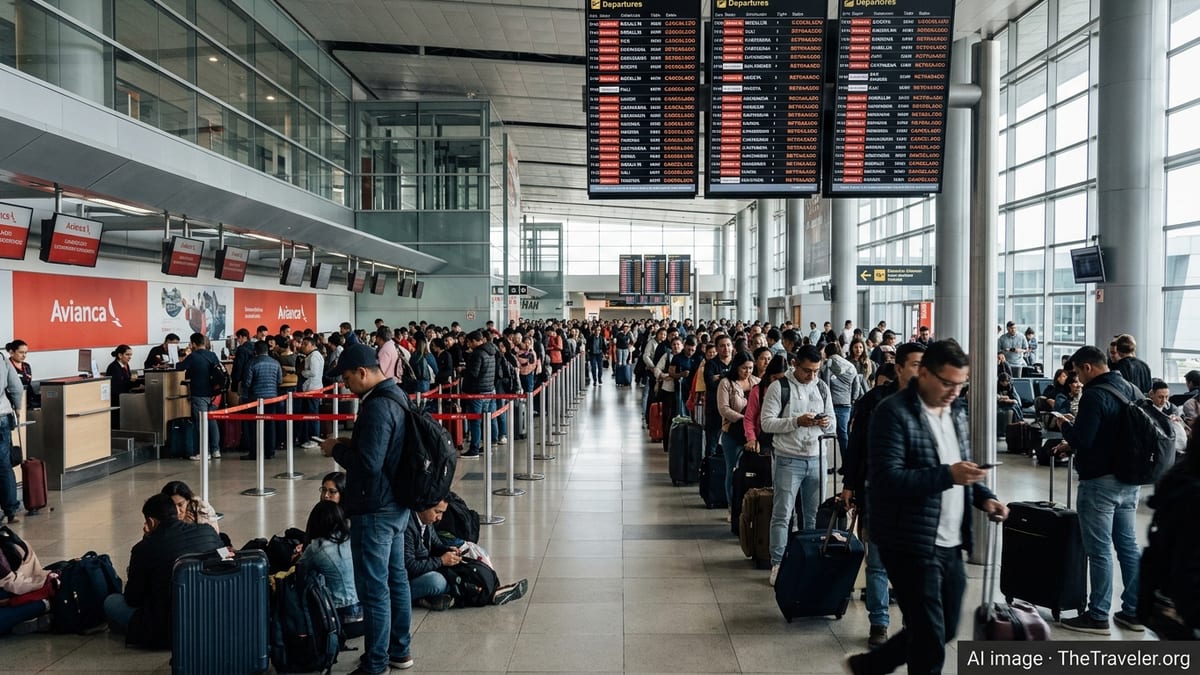
Widespread Cancellations Hit Colombia’s Core Domestic Network
According to operational data and local media coverage, Avianca has scrubbed over 45 flights within Colombia in a compressed time frame, affecting heavily used corridors such as Bogota–Medellin, Bogota–Cali, Bogota–Cartagena, and links to the island destination of San Andres. The interruptions are compounding pressure on an already busy domestic market, where Avianca remains one of the primary carriers connecting regional cities to the capital.
Published reports indicate that cancellations have clustered around El Dorado International Airport in Bogota, the airline’s main hub, with knock-on effects at Medellin’s Jose Maria Cordova International Airport and Cali’s Alfonso Bonilla Aragon International Airport. As aircraft and crews fall out of position, secondary cities have also seen schedule gaps, forcing passengers to rebook onto later departures or entirely different routings through the capital.
Domestic air travel in Colombia has grown rapidly in the past two years as carriers rebuilt networks after the pandemic and as long overland journeys remain slow on key intercity corridors. The sudden withdrawal of dozens of Avianca flights from the timetable is therefore having an outsized impact on travelers who rely on air links for work, family visits, and tourism across the country.
Early indications from booking systems show that some of the cancelled services are being consolidated into fewer, fuller flights, while others have disappeared entirely from near-term schedules, leaving limited same-day alternatives for impacted passengers.
Passengers Report Long Lines, Confusion, and Missed Connections
Travelers posting updates from airports in Bogota, Medellin, and Cali describe long lines at service counters, difficulty reaching Avianca through digital channels, and confusion over rebooking options. Many passengers say they only discovered their flights were cancelled when attempting online check-in or arriving at the airport, despite having active bookings and seat assignments.
Accounts shared on social platforms and travel forums refer to passengers queuing late into the night to obtain new itineraries, with some being reassigned to flights departing in the early hours of the morning or routed through additional stops. Others report being advised to manage changes solely through the airline’s app or website, even as high volumes of users strained those tools.
The disruption has been especially challenging for travelers with onward international connections, including itineraries linking Colombian cities via Bogota to North America and Europe. When domestic feeder flights are cancelled or heavily delayed, passengers can lose long-haul segments and face complex rebooking scenarios involving multiple tickets and fare rules.
Families with children and travelers on tight schedules appear particularly affected, with some reports of overnight stays in airport terminals when hotel vouchers or alternative flights were unavailable or difficult to secure at short notice.
Operational Strains and Tight Utilization Behind the Turbulence
While Avianca has not publicly detailed a single triggering event for this wave of cancellations, publicly available information about its recent operations suggests a combination of tight aircraft utilization, crew availability, and weather or air traffic issues can quickly ripple across the network. Analysts have previously noted that the carrier has been pushing higher daily use of its Airbus narrowbody fleet to support growth in both domestic and regional routes.
Under such conditions, even localized problems such as storms around Bogota or Medellin, runway constraints, or maintenance checks that take an aircraft out of service can cascade into widespread cancellations and delays. When crews time out on duty limits, additional rotations can be lost, intensifying the disruption.
In Colombia’s concentrated domestic market, where Avianca carries a large share of traffic on trunk routes, there is limited spare capacity for other airlines to absorb displaced passengers at short notice. Low cost competitors have increased their presence, but their schedules do not always align with affected travelers’ routes or dates, leaving many with few practical same-day alternatives.
Recent corporate presentations and financial documents also highlight the airline’s efforts to optimize its fleet and route map, which can lead to periodic schedule adjustments and route consolidations. When such changes intersect with operational challenges, the result is a sharper shock for passengers already booked on affected services.
Key Routes to Bogota, Medellin, Cali and San Andres Under Strain
Among the most severely affected are the high-frequency links connecting regional centers with Bogota, the main domestic and international gateway. Cancellations on these routes not only disrupt point-to-point travelers but also cut off onward connections to the rest of the Avianca network, magnifying the overall impact.
Flights between Bogota and Medellin, one of the busiest pairs in the country, are particularly sensitive to any schedule thinning. The same is true for Bogota–Cali and Bogota–Cartagena, which support both business travel and tourism flows. When multiple rotations on these corridors are cancelled within a day, seats on remaining departures can sell out quickly, leaving stranded travelers with few options.
The island of San Andres, heavily dependent on air links from mainland cities such as Bogota, Medellin, and Cali, is also vulnerable when carriers reduce or cancel services. Periods of disruption can limit arrivals, affect hotel occupancies, and complicate travel plans for residents who rely on regular flights for medical visits, education, and commerce on the mainland.
Tracking tools used by aviation enthusiasts and travel planners show irregular patterns on these routes, with some flights operating as scheduled, others delayed, and a notable cluster of cancellations concentrated into certain days and time bands, suggesting broader network balancing by the carrier.
What Travelers Need to Know and How to Minimize Disruption
For passengers booked on Avianca in the coming days, travel planners recommend closely monitoring reservations through the airline’s app or website and checking flight status several times before departure. Because some cancellations are being implemented within 24 hours of travel, relying solely on the original confirmation email may leave travelers unaware of significant changes.
Publicly available guidance on Avianca’s change and disruption policies indicates that when a flight is cancelled by the airline, customers are generally eligible for rebooking at no additional fare, subject to seat availability, and in some cases for refunds or travel credits. The specific options depend on the type of ticket purchased, the origin and destination, and applicable consumer protection rules in the countries involved.
Travel specialists advise arriving early at the airport if a booking shows any signs of irregular operation, such as repeated schedule changes or equipment swaps, to secure a place in line for assistance if needed. Keeping digital copies of reservations, receipts, and any written notifications from the airline can help when requesting compensation or reimbursement for additional expenses.
For future trips within Colombia, some experts suggest building longer connection times in Bogota or Medellin, avoiding the last flight of the day when possible, and considering travel insurance products that specifically cover missed connections and trip interruptions. While Avianca remains a key player in Colombia’s aviation market, the current wave of cancellations underscores the value of contingency planning for travelers navigating the country’s busy skies.